
Mangwon-dong has quietly become one of the most interesting coffee neighborhoods in Seoul. Unlike the more tourist-facing Seongsu or Hongdae, it operates primarily as a residential neighborhood — which means the cafes here serve the people who actually live on these streets, and tend to hold themselves to higher standards as a result.
This guide covers Lounge Clarimento (라운지 클라리멘토), a specialty filter coffee bar in the Mangwon-dong area of Mapo-gu. It includes the cafe’s concept and offerings, the cultural context of Seoul’s specialty coffee scene, the Mangwon-dong neighborhood, and practical visiting information for foreign travelers.
Mangwon-dong: Seoul’s Most Underrated Coffee Neighborhood
The Mapo-gu Coffee Belt
According to the Seoul Tourism Organization’s official cafe guide, “the densest concentration of serious roasters in Seoul sits in the Mapo-gu belt — Yeonnam-dong, Hapjeong, and Mangwon — within easy reach of Hongdae.” This compact corridor of Mapo-gu has developed into one of the most credible specialty coffee zones in the city, with independent roasters and filter coffee bars attracting serious coffee drinkers from across Seoul.
Mangwon-dong sits at the edge of this belt, bordering the Han River. Its position between the more commercial Hongdae area and the riverside has helped it retain a neighborhood character that more famous districts have lost to tourism and development.
What Makes Mangwon-dong Different
Daebak Korea’s coverage of Seoul’s coffee culture describes Mangwon-dong as “quieter and more local, with narrow alleys full of cocktail-and-coffee hybrid bars.” The key word is “local.” While Seongsu-dong draws tourists for its warehouse aesthetic and Yeonnam-dong has become a destination in its own right, Mangwon-dong’s cafes still primarily serve the people who live there.
This produces a specific quality: cafes that compete on substance rather than spectacle. The neighborhood’s independent coffee shops tend to have higher standards and more considered offerings than venues in more tourist-facing districts.
Mangwon Market and Mangnidan-gil Street
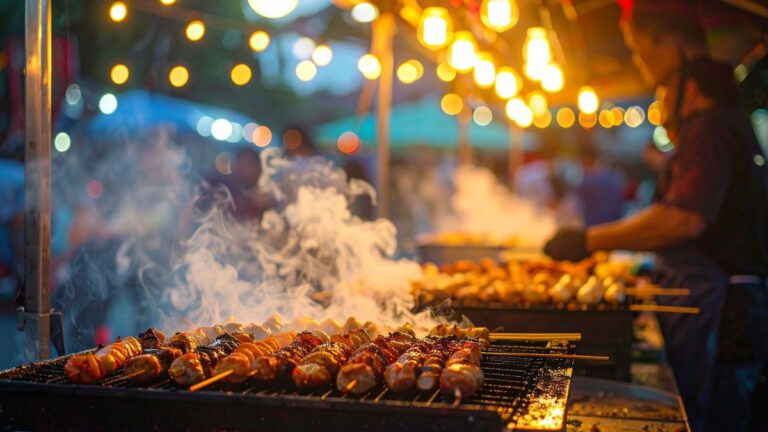
According to the Seoul Metropolitan Government’s official website, Mangwon-dong is home to Mangwon Market (망원시장) — a traditional neighborhood market full of street food vendors, fresh produce, and specialty food shops. Around the market, a commercial strip called Mangnidan-gil Street (망리단길) has developed, lined with independent cafes, restaurants, and vintage stores. This street and the market together form the neighborhood’s social and commercial core.
Visiting Clarimento in the context of the broader Mangwon neighborhood — rather than treating it as a standalone destination — is the recommended approach.
Korean Specialty Coffee Culture: A Brief Primer
Seoul’s Coffee Story
Seoul’s cafe culture has a surprisingly recent history. According to the Seoul Tourism Organization, “coffee arrived in Korea in the late 19th century — King Gojong was famously fond of it — but for most of the 20th century, ‘coffee’ meant dabang tea-room culture and sweet instant coffee mix.” The modern transformation came in two waves: a franchise boom in the 2000s, followed by a specialty coffee movement that began mid-decade and has matured significantly since.
What exists in neighborhoods like Mangwon-dong today represents the leading edge of that second wave: cafes where the coffee itself — bean origin, roasting approach, extraction method — is the primary focus.
What Is Batch Brew and Tap Coffee?
One format that visitors may not recognize from their home countries is batch brew (배치 브루) served as tap coffee — coffee brewed in large batches and dispensed like draft beer from a tap at the counter. This format, which Clarimento offers, allows high-quality filter coffee to be served at a lower price point (around ₩2,800) than a single-serve pour-over, while maintaining consistent quality. It’s a practical and genuinely good entry point for visitors who want to try specialty filter coffee without committing to the higher price of a curated single cup.
Lounge Clarimento: What Makes It Different
The Name and What It Means
According to Marie Claire Korea (2025), the name “Clarimento” is borrowed from oil painting terminology — specifically, a technique meaning “bright, vivid light” or clarity of illumination in a painting. The name reflects the bar’s approach to coffee: clarity and precision in bringing out the specific character of each bean.
The full name, Lounge Clarimento (라운지 클라리멘토), reflects its spatial concept: a coffee space modeled on a hotel lounge — somewhere to settle in, not just pass through.
Two Spaces, Two Moods
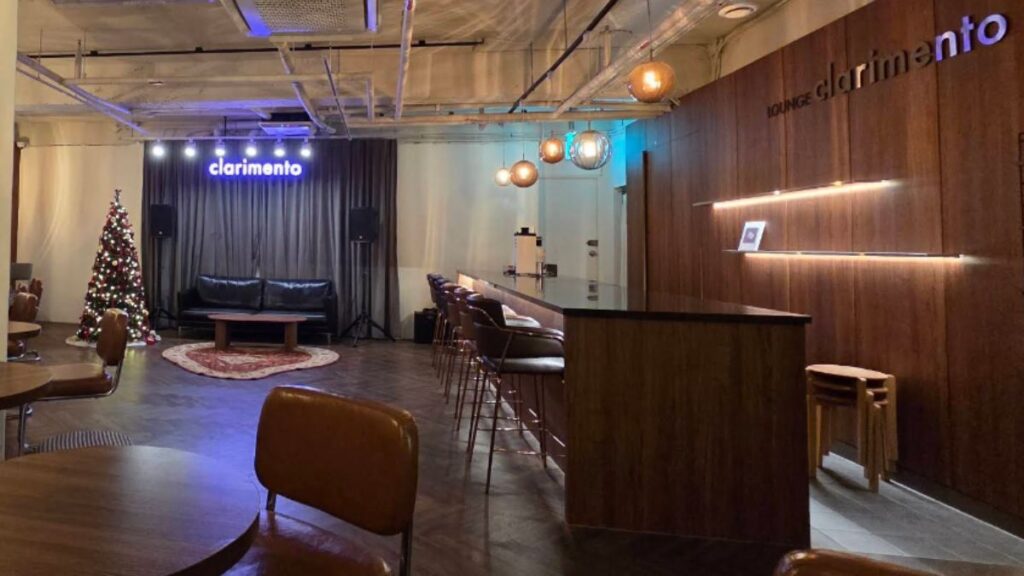
The venue operates across two levels. The ground floor is designed as a relaxed lounge — calm lighting, comfortable furniture, a pace that encourages staying rather than quick turnover. The basement runs as a jazz bar concept — darker, more atmospheric, suited to evening visits.
This split creates two genuinely different experiences within the same venue. A morning visit to the ground floor and an evening visit to the basement are meaningfully different from one another — which is an unusual quality in a cafe context.
The Coffee: High Acidity and Award-Winning Origins
Clarimento’s house style, as described by Marie Claire Korea, is “high-toned, clear acidity” — a flavor profile that emphasizes fruit character, brightness, and precision rather than heavy body or roasty bitterness. This is a deliberate stylistic choice and represents the specialty filter coffee approach at its most focused.
The bar uses beans from Eom Bo-ram, who won the World Barista Championship Roasting category in 2023. In 2024, Clarimento sourced rare beans from the Best of Panama (BoP) auction — one of the most closely watched specialty coffee procurement events globally — including Geisha Natural and Urina Natural varieties. These are not widely available coffees, and finding them in a neighborhood setting at accessible prices is a meaningful offering.
What to Order
Tap Coffee (배치 브루, ~₩2,800)
The most accessible entry point. Batch-brewed and served from a tap at the counter, this delivers quality filter coffee at the lowest price on the menu. For visitors new to specialty filter coffee, this is a low-commitment way to understand the house style.
Filter Coffee (필터커피, price varies)
Single-serve pour-over using the day’s featured bean. Price varies depending on the bean selected. This is the format that best showcases the specific origin and roast character — recommended for visitors who want to understand why a particular bean is on the menu.
Espresso (에스프레소)
For visitors who prefer concentrated formats, the espresso at Clarimento reflects the same clarity-focused approach as the filter offerings — more fruit-forward and precise than the darker, bitter espresso profiles common in chain cafes.
Handmade Desserts
Clarimento pairs its coffee with house-made desserts prepared daily. The offering changes, but typically includes options in the style of Basque cheesecake and other European pastry formats. The philosophy, consistent with serious filter coffee bars, is that desserts should complement rather than compete with the coffee — adding sweetness without obscuring the beverage’s flavor.
The Space: Why Atmosphere Is Part of the Experience
Seoul’s specialty cafes, at their best, treat the physical environment as seriously as the coffee. Clarimento follows this approach. The ground-floor lounge uses calm tones, considered furniture placement, and controlled lighting to create a space that functions well for solo visits, small conversations, and extended stays alike.
The background music volume, the acoustics, and the spatial layout are each elements that regular visitors note as part of what makes the experience work. A cafe that manages these details well tends to produce longer, more satisfying visits — and Clarimento’s reputation among Mangwon regulars suggests it succeeds on this level.
The basement jazz bar space extends this further: a different acoustic and visual environment that changes the nature of a visit entirely when accessed in the evening.
Practical Visiting Information
| 📍 Location | Mangwon-dong area, Mapo-gu, Seoul (서울 마포구 망원동 일대) |
| 🗺️ Map | Search “라운지 클라리멘토” or “Lounge Clarimento” on Naver Maps or Kakao Maps |
| @clarimento | |
| ⏰ Hours | Approximately 10:00 – 19:00 (confirm before visiting as hours may vary) |
| 💳 Payment | Cards accepted |
⚠️ Note on hours and menu: Specialty cafes in Seoul, particularly smaller independent venues, may adjust their hours and featured beans seasonally. Checking the cafe’s Instagram account (@clarimento) before visiting is the most reliable way to confirm current hours and what’s on the menu.
Getting to Mangwon-dong
The simplest route to Mangwon-dong is Seoul Metro Line 6 — Mangwon Station (망원역). Exit 1 places you close to Mangwon Market and Mangnidan-gil Street; Exit 2 is more convenient for some venues in the eastern part of the neighborhood. From either exit, most destinations in Mangwon-dong are a 5–10 minute walk.
From Hongdae (Hongik University Station), Mangwon-dong is walkable in approximately 20–25 minutes, or one stop on Line 6.
When to Visit
Weekday mornings and early afternoons are significantly less crowded than weekends. Per the Zuzu Korea Travel cafe guide (April 2026), “Saturday and Sunday afternoons bring more foot traffic — seating can get competitive by 2pm.” For a quieter experience — particularly in a space where the atmosphere is part of the offering — weekday timing is preferable.
Practical Tips for Foreign Visitors
① Order at the counter — no table service Korean specialty cafes are almost universally counter-service. Order at the bar, pay, receive a number or buzzer, and wait for your order to be called. This is standard across Seoul’s independent cafe scene.
② No tipping Tipping is not customary at Korean cafes. The price on the menu is the final price.
③ English menus are available Per Zuzu Korea’s 2026 guide, Mangwon-dong cafes generally “have menus with English and can handle basic English orders. Pointing and numbers work fine everywhere.”
④ Note the seasonal beans Clarimento changes its featured single-origin coffees regularly. If there’s a specific bean you want to try — particularly any Panama or competition-sourced varieties — checking Instagram in advance tells you what’s currently available.
Building a Mangwon-dong Day Around Clarimento
The Mangwon Market and Mangnidan-gil Combination
The most natural Mangwon-dong itinerary combines the traditional market with the independent cafe strip. Mangwon Market is best visited in the late morning when vendors are fully set up and street food is fresh. Walking the market for 30–45 minutes, followed by a filter coffee at Clarimento, provides a clean contrast: the noise and abundance of the market, then the quiet and precision of the cafe.
Hangang Riverside After Coffee
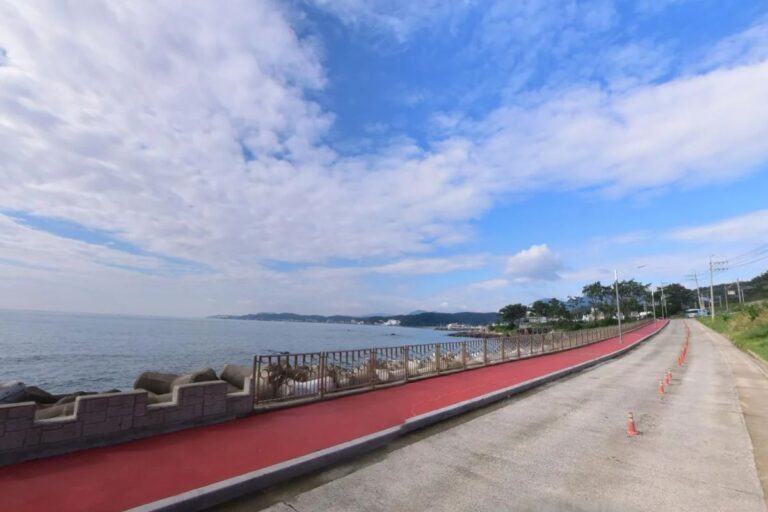
Mangwon-dong borders Mangwon Hangang Park (망원한강공원), a riverside park along the Han River that is one of the more relaxed sections of Seoul’s parkland. Walking from Clarimento to the river — approximately 10–15 minutes — makes for a natural second stop after coffee, particularly in the afternoon when the light on the river is at its best.
Combining with Hongdae or Hapjeong
Mangwon-dong connects easily to Hongdae (Hongik University area) to the east and Hapjeong to the southeast — both accessible on foot or by one subway stop. A half-day itinerary that covers all three areas provides a complete picture of Mapo-gu’s cafe and cultural scene: Hongdae for student energy and street music, Hapjeong for its independent shops, and Mangwon-dong for the quieter, more residential cafe experience.
Who Should Visit Lounge Clarimento
✅ Foreign travelers who have tried coffee at franchise cafes and want to understand what Korean specialty coffee actually looks like
✅ Visitors exploring Mapo-gu (Hongdae area) who want a quieter, more local alternative to Hongdae’s busier venues
✅ Coffee drinkers who want to try tap batch brew coffee — a format uncommon outside Korean specialty cafes — at a low price point
✅ Travelers interested in Seoul’s neighborhood cafe culture as it exists for residents, not tourists
✅ Anyone building a Mangwon-dong half-day itinerary that combines the market, local cafes, and Han River
A Final Note
Seoul’s specialty coffee scene has developed into one of the most sophisticated in Asia, and Mangwon-dong sits in the heart of its most concentrated geography. What Lounge Clarimento offers — clarity of concept, genuinely sourced beans, a dual-level space with distinct moods, and a neighborhood setting that keeps it grounded — represents the direction that Seoul’s best independent cafes have moved.
For visitors who want to understand Korean cafe culture at its most considered, Mangwon-dong is the right neighborhood, and Clarimento is a reliable starting point.
🇰🇷 Trend Culture covers Korean coffee, food, travel, and lifestyle for international audiences. More Seoul neighborhood guides coming soon.