
Sungsimdang (성심당) is a 70-year-old independent bakery in Daejeon that has become one of the most visited destinations in South Korea — not despite refusing to open branches in Seoul, but partly because of it.
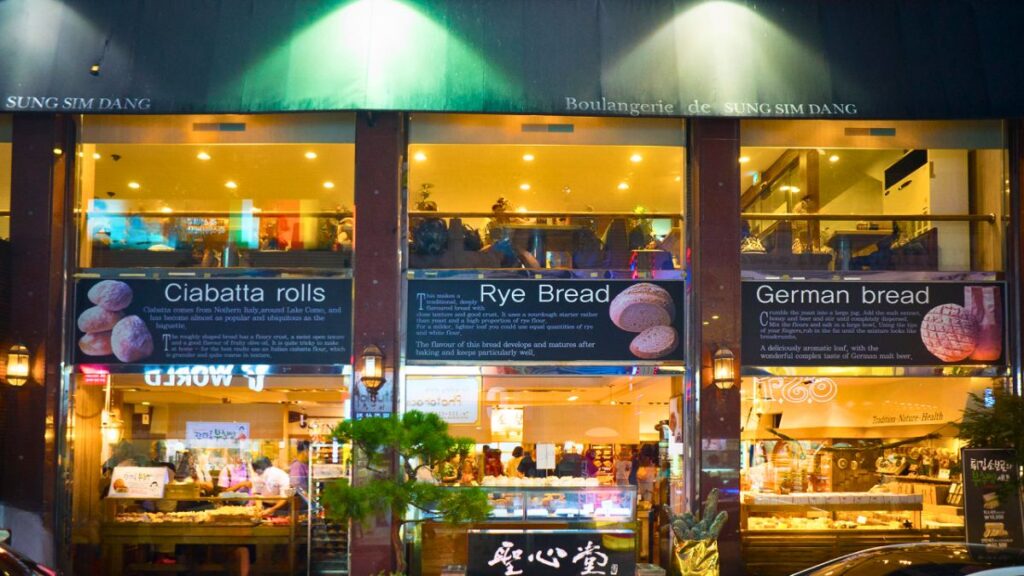
Established in 1956 as a small bakery in front of Daejeon Station, Sungsimdang has since become an iconic bakery that represents both Daejeon and Korea’s baked goods. Today it produces nearly 400 varieties of bread, operates four branches across Daejeon, and recorded sales of ₩124.3 billion Korean Won in 2023.
Living in Korea, whenever someone asks “why go to Daejeon?”, I give the same answer: go for Sungsimdang, stay for everything around it. This guide tells you everything you need to know before making the trip.
The Story Behind the Bread — Why Sungsimdang Is Unlike Any Other Bakery
Most famous bakeries become famous because of a brilliant product. Sungsimdang became famous because of a man who lost everything and a priest who gave him two sacks of flour.
Born From a War, Built From Kindness
On December 24, 1950, during the Korean War, the late founder Lim Gil-soon and his family boarded the evacuation ship ‘Meredith Victory’ and arrived on Geoje Island. Years later, attempting to relocate to Seoul, his fate was upturned in 1956 when the train broke down at Daejeon Station. Because they had nowhere else to go, the family went to Daeheung-dong Cathedral near Daejeon Station. The priest, moved by their plight, handed them two bags of flour.
Lim took the flour, made jjinbbang (steamed buns) that he sold in front of Daejeon Station, and named the bakery “성심당” — Sacred Heart Hall — in honor of the Sacred Heart of Jesus. What started as a street-side stall by a stranded war refugee became, over three generations, the most beloved independent bakery in the country.
The Decision That Made Sungsimdang a Legend
Here is the detail that separates Sungsimdang from every other famous Korean bakery: despite its nationwide fame, Sungsimdang has deliberately chosen not to expand beyond Daejeon. Large corporations and investors have approached the family with expansion offers to Seoul. The answer has always been no.
The current owners remain committed to staying in Daejeon, operating only branches within the city. This isn’t stubbornness — it’s a statement of identity. Sungsimdang is Daejeon’s bakery. It was built here, and it stays here.
The result is that if you want Sungsimdang bread, you come to Daejeon. That decision alone has turned the bakery into a travel destination.
When Pope Francis Came to Korea, He Had This Bread
In 2014, the late Pope Francis visited Korea and reportedly had Sungsimdang bread for breakfast. Since then, it has become a must-visit destination for tourists. In the same year, the founder was granted the Order of St. Gregory the Great — a Papal honor — as he had been donating bread to orphanages and nursing homes for decades.
Continuing the founder’s legacy, any unsold bread is donated to welfare centers, and the bakery gives away over 40 million won (around $30,000) worth of bread every month.
This is what separates a bakery from a cultural institution. Sungsimdang is the latter.
What to Buy: Sungsimdang’s Signature Items
With nearly 400 varieties, the range is overwhelming on a first visit. Here are the items worth knowing before you walk in.
Twi-So (튀김소보로) — The Original, the Iconic
Sungsimdang’s most famous bread is the “fried soboro bread” — called Twi-So — which became a symbol of the brand. The name was changed from Soboro Donuts to Twi-So when customers began calling them that. The signature bread is cooked to a crisp on the exterior with red bean paste packed within. In 2012, the brand received patent 10-1104547 for their soboro-ppang recipe — one of the few bakeries in Korea to hold a patent on a bread.
It’s crunchy, sweet, and filled with red bean paste. One is never quite enough.

Chive Bread (부추빵) — The One Locals Keep Coming Back For
If Twi-So is what tourists photograph, chive bread (부추빵) is what Daejeon residents buy weekly. A soft, lightly savory bread filled with chive — simple, balanced, and quietly addictive. Don’t skip it because it sounds plain.

Cake Boutique Specials — Seasonal and Worth Planning Around
The Cake Boutique branch carries Sungsimdang’s premium seasonal offerings: melon cake (메론케이크), mango sirutteok (망고시루), strawberry sirutteok (딸기시루), and other limited-run items. These are Instagram-favorite products that often sell out. Sungsimdang’s baked goods are all handmade using quality ingredients, with some breads using a slow-bread process requiring a 16-hour fermentation.
Understanding Korea’s “Bread Pilgrimage” Culture
To fully understand why Sungsimdang draws the crowds it does, you need to know about bbangjisunrye (빵지순례) — a phrase Koreans use for the act of traveling specifically to visit a famous bakery.
As Korean café and bakery culture has matured, certain regional bakeries have become travel destinations in their own right. People plan day trips around them. Sungsimdang is the original and most prominent example of this phenomenon — a bakery that turned a city into a destination.
For foreign travelers, this means something practical: you are not overreacting if you plan your Daejeon trip around a bakery. Every Korean visiting Daejeon does the same.
Visiting Strategy: How to Make the Most of Your Time
The Main Branch (본점) — Start Here
The main branch in Eunhaeng-dong is the largest, most comprehensive, and the one to prioritize on a first visit. It stocks the full range of bread, operates a second floor café where you can sit down with your purchases, and has the most staff to handle the volume.
Sungsimdang Bakery Head Store is located at 15 Daejong-ro 480beon-gil, Jung-gu, Daejeon. Operating hours are approximately 08:00–22:00 on weekdays, 23:00 on weekends — confirm the current hours before visiting as they may vary.
Timing: Arriving near opening time on weekdays significantly reduces waiting. On weekends and public holidays, longer queues are guaranteed regardless of arrival time. The queue moves faster than it looks — Sungsimdang’s staff and floor system are efficient.
The Cake Boutique (케익부띠끄) — A Separate Visit
The Cake Boutique is a distinct branch, a short walk from the main store, operating its own separate queue. The product lines don’t overlap — buy cake products at the Boutique and bread at the main branch. Trying to do both in one queue doesn’t work; they are independent operations.
If you have a seasonal cake on your list (melon cake, mango sirutteok), visit the Boutique first — those items sell out earlier in the day than the bread at the main branch.
How to Handle the Lines
The queues at Sungsimdang are real but manageable if you go in with the right expectations. The staff operate a clear system and the turnover is fast. Standing in line is also part of the experience — you’ll be surrounded entirely by Koreans who have come for the same reason, and that context is worth something.
Practical tip for foreign visitors: The queuing system is physical — follow the staff’s directions, not other customers. And bring a shopping basket from the entrance; you’ll fill it faster than you expect.
Getting to Daejeon
Daejeon is one of the most accessible cities in Korea from Seoul — and one of the most undervisited by international travelers because of it.
- KTX: Seoul Station → Daejeon Station, approximately 50 minutes. This is the recommended option for a day trip.
- Mugunghwa/ITX: Seoul Station → Daejeon Station, approximately 1 hour 40 minutes. Cheaper but slower.
- From Daejeon Station to the main branch: The bakery is within walking distance of Daejeon Station — approximately 10–15 minutes on foot, or a short taxi ride.
💡 Day trip timing: A 9:00 AM KTX from Seoul puts you at Sungsimdang by 10:00 AM, ahead of peak weekend crowds. A 7:00 PM return train gets you back to Seoul by 7:50 PM — a comfortable, complete day.
Day Trip Itinerary Options
Half-Day Route (4–5 hours)
Arrive Daejeon Station → Walk or taxi to Sungsimdang Main Branch (bread shopping, 45–60 min) → Walk to Cake Boutique (cake and seasonal items, 30 min) → Sit on the 2nd floor of the main branch with your purchases → Return to Daejeon Station → Train back to Seoul
Full Day Route (7–8 hours)
Morning arrival → Sungsimdang Main Branch → Cake Boutique → Lunch in Eunhaeng-dong → Daejeon O-World (theme park and zoo) or Expo Science Park or Hanbat Arboretum → Return to Sungsimdang for a second visit or final bread pickup → Evening train back to Seoul
Daejeon Beyond Sungsimdang
Sungsimdang is the anchor. These are the places worth building a full day around it.
Eunhaeng-dong Street (은행동): The district surrounding the main branch is Daejeon’s historic downtown — a mix of old architecture, independent shops, and modern cafes. Walking through it after buying bread is one of the most pleasant ways to spend an afternoon in the city.
Expo Science Park (엑스포과학공원): Built for the 1993 World’s Fair, this large park has both science exhibits and outdoor space — good for families and curious travelers.
Hanbat Arboretum (한밭수목원): Korea’s largest urban arboretum, in the center of the city. Walking here after a heavy bread purchase is a sensible use of the time.
Ppuri Park (뿌리공원): A distinctive park themed around Korean family surnames and clan history — unusual, photogenic, and very specifically Korean.
Practical Tips for Foreign Visitors
① The lines are real but fast Weekday mornings are the calmest. Weekend afternoons are the most congested. Even at peak times, Sungsimdang’s floor staff keep the queue moving efficiently.
② Pick up a basket at the entrance Trays and baskets are available at the door. Take one — it signals that you’re shopping and makes navigating the bread counters significantly easier.
③ Main branch and Cake Boutique are separate queues If you want both bread and cakes, plan two stops. Don’t expect the main branch to carry the Boutique’s seasonal items, or vice versa.
④ Summer visitors: bring a cooler bag for cakes Seasonal cakes and fresh cream products need refrigeration. In summer especially, carrying them without proper insulation risks the product on the journey home. A compact cooler bag is worth the trouble.
⑤ Cards are accepted Payment by credit and debit card works at Sungsimdang. Cash is also fine. No app or reservation is needed for bread — just queue and buy.
⑥ The 2nd floor café is a good place to recover After bread shopping, the second floor of the main branch is a seated café space where you can sit down, eat what you’ve bought, and decompress before exploring the rest of Eunhaeng-dong.
Who Should Make This Trip
✅ Any traveler spending time in central or western Korea — Daejeon is on the KTX mainline and easy to include in any itinerary
✅ Food travelers who want to understand why a bakery becomes a cultural institution
✅ Anyone who has heard of Sungsimdang through Korean friends, drama, or social media and wants to experience it in person
✅ Travelers doing the 청주공항 → 대전 → 천안 route — Sungsimdang is a natural anchor for that corridor
✅ Anyone looking for a half-day or full-day Seoul day trip that delivers something genuinely different from Seoul itself
One Final Thought
Living in Korea, I’ve come to understand that Sungsimdang’s fame isn’t really about bread. It’s about the decision to stay.
Despite offers from large companies to expand to Seoul, the current owners remain committed to staying in Daejeon. In a culture where expansion is the default measure of success, that refusal is a statement. If you want the bread, you go to Daejeon. That’s the deal.
The founder received two sacks of flour from a priest in 1956 and built something that recorded over ₩124 billion in annual sales in 2023 — entirely within one city. Every loaf and pastry sold in that time has been made in Daejeon, by people from Daejeon, for anyone willing to make the trip.
Take the KTX. It’s 50 minutes from Seoul. Arrive before 10 AM on a weekday. Buy more than you think you need — you’ll have eaten half of it before you reach the station on the way home. That’s the Sungsimdang experience, and it’s entirely worth the trip.
🇰🇷 Korea Experience series continues — more regional discoveries beyond Seoul, coming soon.