Seoul has tens of thousands of cafes. So why do travelers from all over the world make a specific point of coming to Seongsu-dong? A specialty coffee bar wedged between aging brick factories. A contemporary art gallery operating inside a rusted iron frame. This strange, magnetic combination is pulling K-culture fans — and now mainstream global travelers — into one of Seoul’s most talked-about neighborhoods.
Seongsu-dong is called the Brooklyn of Seoul, and the comparison is earned. Just like Brooklyn, a gritty industrial heritage has been transformed by a wave of young creatives — and the result is a neighborhood unlike anywhere else in the city.
Adidas chose Seongsu-dong as the location for its first-ever global community hub, fusing the neighborhood’s industrial character with the brand’s own aesthetic in a space that serves coffee, hosts concerts, and runs weekend events. Dior, Gucci, and Hermès have all followed with their own flagship pop-ups in the area.
When the world’s biggest brands start queuing up for a single neighborhood, you know something real is happening there.
This guide covers the three coffee shops that best capture what makes Seongsu-dong so compelling — with honest details on what to order, when to visit, and exactly what to expect when you walk through the door.
What Is Seongsu-dong? — Know the Neighborhood Before You Go
Seongsu-dong was originally one of Seoul’s working industrial districts. Auto repair shops, handcrafted shoe factories, printing houses.
From the early 2010s, young designers, artists, and cafe owners began moving into the old factory buildings — keeping the raw structure, reinventing everything inside. Today it’s Seoul’s leading creative district: pop-up stores, independent streetwear boutiques, and specialty cafes packed into walkable blocks near Seoul Forest.
And at the center of all of it is cafe culture.
1. Café Onion — Seongsu-dong’s Living History
Cafe Onion Seongsu-dong Seoul Guide: How a 1970s Metal Factory Became Seoul’s Most Iconic Cafe
If you ask anyone where Seongsu-dong’s cafe culture actually started, the answer is almost always the same. Café Onion.
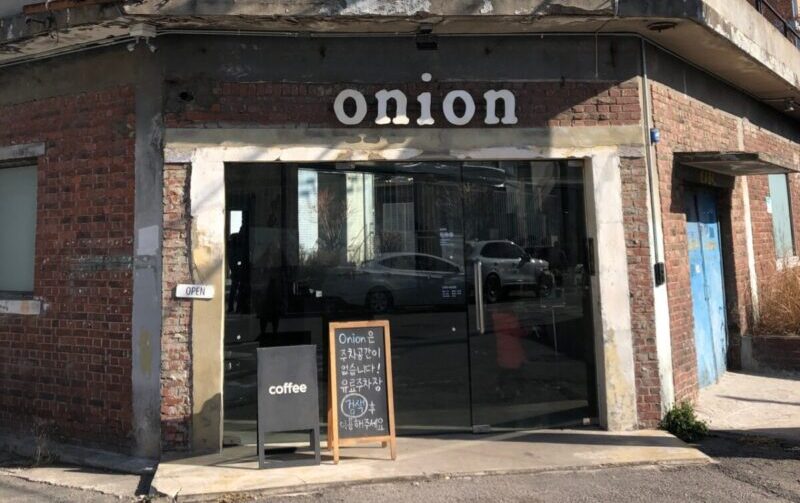
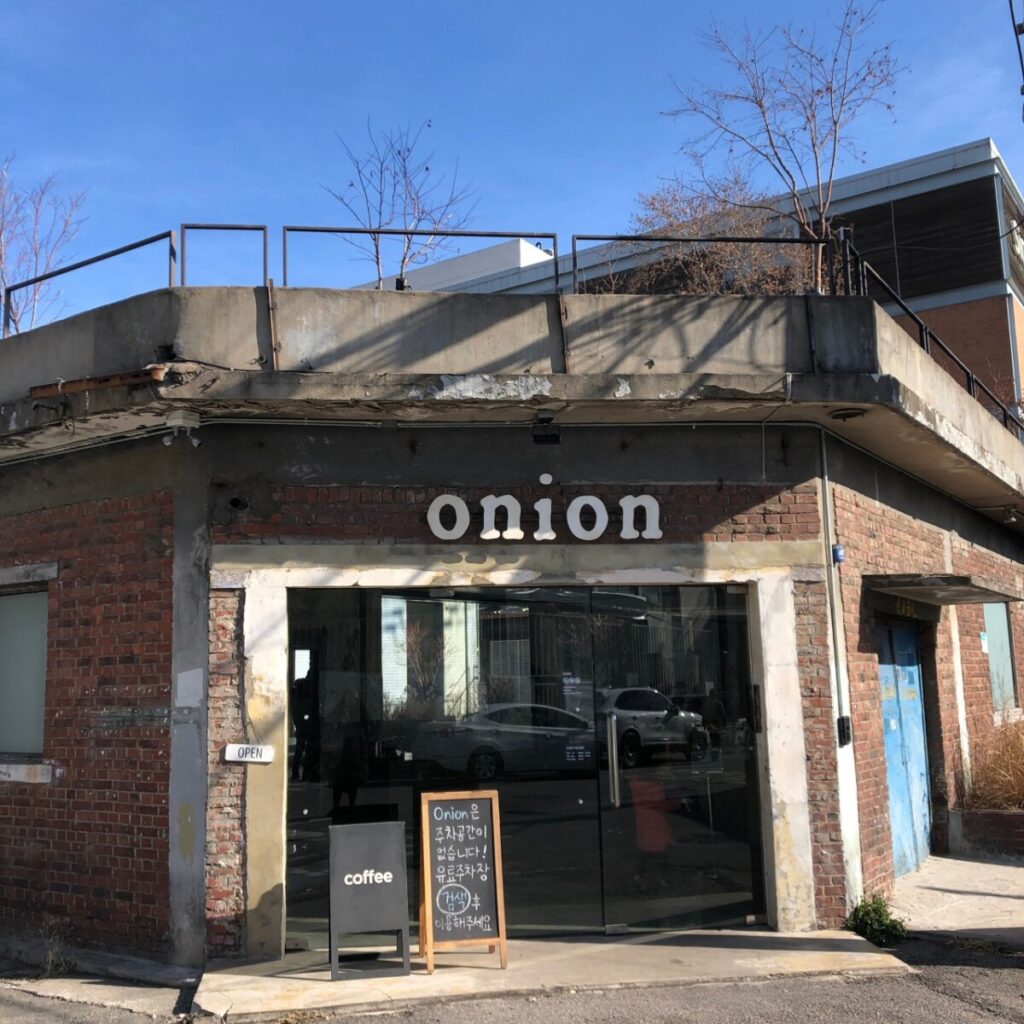
The building dates to the 1970s and has served, over the decades, as a supermarket, a restaurant, a repair shop, and finally a metal factory. When Café Onion opened in 2016, it kept all of it — the rusty iron doors, the rough concrete walls, the structural bones of every previous life the building had lived — and added wide windows, communal tables, and a carefully tended garden. The result is what people now call industrial chic: a space where decay and design coexist without apology.
Time Out Seoul named Café Onion one of the defining cafe landmarks of Seongsu-dong. Even now, years after opening, weekend queues form consistently — a rare longevity in a neighborhood where trends cycle fast.
Walking in for the first time, the scale surprises people. The ceilings are high. The floor space is generous. There’s a rooftop terrace where you can sit with the sound of trains passing nearby — a strangely calming detail that regulars mention again and again.
What should you order? The signature item is the Pandoro — a small domed bread dusted heavily with white powdered sugar, shaped like a miniature snow-covered mountain. It has become the defining photo subject of Seongsu-dong cafe culture. For coffee, Café Onion uses its own proprietary blend called Blend Seongsu — developed specifically for this location, with a bittersweet character balanced by a nutty, smooth finish.
One honest note from visitors: Some reviewers mention that the space, by design, feels genuinely worn — cracked walls, surfaces that show age. If you prefer polished interiors, this might feel rough. If you love the rawness, it will feel exactly right.
Practical Information
📍 Address: 8 Achasan-ro 9-gil, Seongdong-gu, Seoul 🕘 Hours: Mon–Fri 8:00 AM – 10:00 PM / Sat–Sun 9:00 AM – 10:00 PM 🚇 Getting There: Seongsu Station (Line 2), Exit 2 — 5 minutes on foot 💰 Budget: Drinks ₩6,000–9,000 / Pandoro + coffee approx. ₩15,000 ⭐ Google Rating: 4.2 / 5 (3,400+ reviews)
2. Daelim Changgo — Where Coffee Meets Contemporary Art
Daelim Changgo Warehouse Cafe Seoul: A Cup of Geisha Coffee Inside a Living Gallery
If Café Onion is the neighborhood’s founding landmark, Daelim Changgo is its grandest statement.
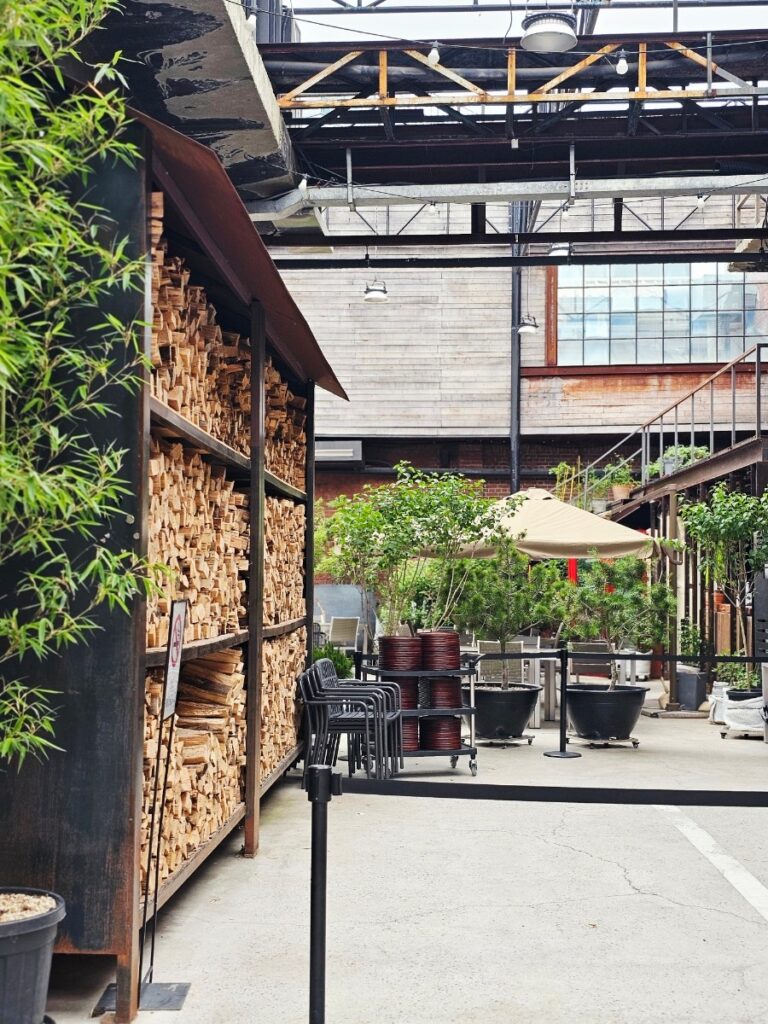
Daelim Changgo occupies a former 1970s warehouse, its faded red brick exterior preserved exactly as it was. Inside, the soaring ceilings and open iron columns create a space where a cafe and an art gallery exist side by side — not as a gimmick, but as a genuine dual function. The ground floor operates as a cafe. The surrounding space hosts rotating exhibitions: installation art, fashion shows, photography. Wisefullife
Visitors consistently describe the experience as cinematic — afternoon light pouring through original warehouse windows, the raw industrial framework overhead, fashion-conscious locals browsing art with coffee in hand. One visitor described it as feeling like “a Ghibli set repurposed for Seoul’s fashion crowd.” After a renovation that added a rooftop terrace, it has solidified its place as what many consider Seongsu-dong’s definitive cultural landmark.
The rotating exhibitions mean that every visit delivers something different. A fashion installation one month, a photography retrospective the next. It’s worth checking Daelim Changgo’s official social media before you go to see what’s currently showing.
What should you order? Daelim Changgo uses Geisha single-origin coffee as its signature offering — one of the most prized varietals in the specialty coffee world, known for its floral, jasmine-like notes and exceptional clarity. Five different blends are available. A single cup is priced at ₩15,000. For food, the Strawberry & Cream Croissant (₩8,500) is the item most frequently photographed and praised — layers of flaky pastry topped with fresh strawberries and delicate whipped cream.
One honest note from visitors: The prices are on the higher end, even by Seoul standards. Some reviewers found the service slow during busy periods. The space itself consistently earns praise even from those who found the coffee underwhelming — and for most visitors, the experience of being inside the building is the point.
Practical Information
📍 Address: 78 Seongsui-ro, Seongdong-gu, Seoul 🕘 Hours: Daily 11:00 AM – 10:00 PM 📞 Phone: +82 2-499-9669 🚇 Getting There: Seoul Forest Station (Line 2/Bundang), Exit 2 — 10 minutes on foot 💰 Budget: Coffee ₩8,000–15,000 / Pastry + coffee approx. ₩25,000 ⭐ Google Rating: 4.2 / 5 (2,800+ reviews)
3. NUDAKE Tea House at HAUS NOWHERE — Where a Cafe Becomes a Different Reality
NUDAKE Seongsu Gentle Monster Seoul: When a Dessert Shop Feels Like a Sci-Fi Film Set
Café Onion impresses with raw industrial history. Daelim Changgo overwhelms with warehouse scale. NUDAKE Tea House does something neither of them can — it makes you feel like you’ve left the planet entirely.
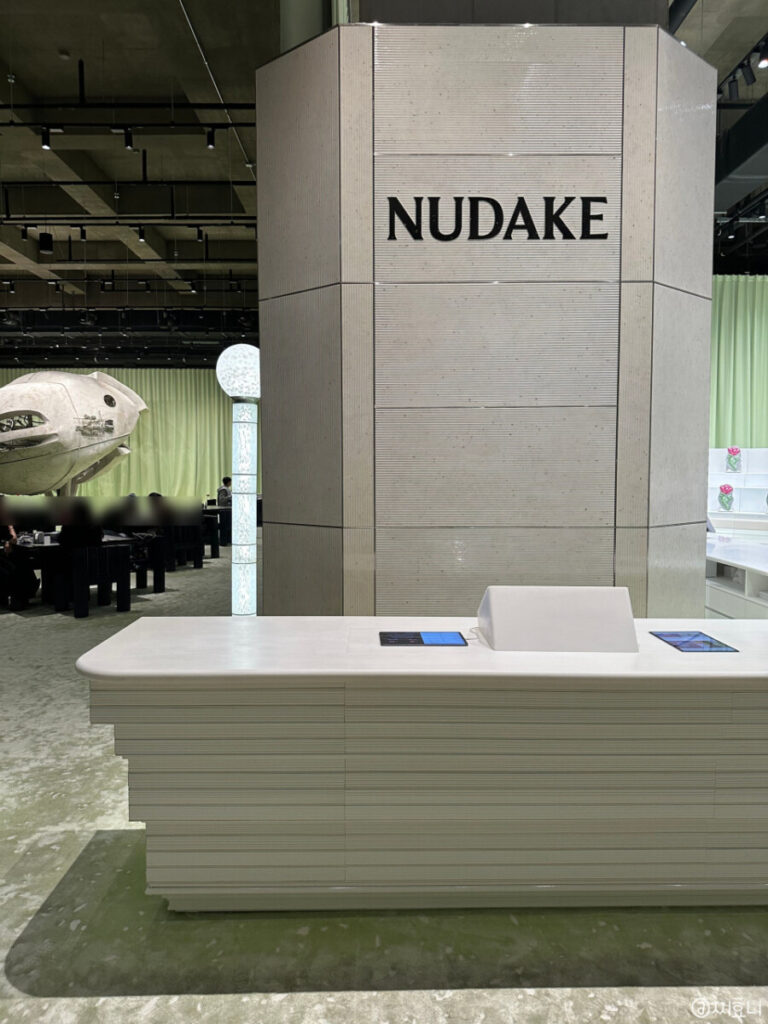
HAUS NOWHERE is Gentle Monster’s 14-storey global headquarters in Seongsu-dong, housing all five of its brands under one brutalist roof: Gentle Monster (eyewear), Tamburins (fragrance), NUDAKE (desserts and tea), ATiiSSU (headwear), and Nuflaat (tableware). The building’s raw concrete finish, curved tinted windows, and protruding upper floors create a structure that looks less like a retail complex and more like a spacecraft that landed in the middle of Seoul’s trendiest neighbourhood.
Every floor tells a different story. Floor 1 features kinetic art installations — including Sunshine, a life-size breathing animatronic dachshund — that change seasonally. Floors 2 and 3 house eyewear and fragrance. Floor 5 is where NUDAKE Tea House sits: a space one reviewer described as “straight out of Stanley Kubrick,” where tea and dessert are presented as design objects in a futuristic, dimly lit environment.
Visitors consistently describe walking out of HAUS NOWHERE feeling genuinely different from how they walked in. One Google reviewer called it “the Mecca of Seoul — without coming here, it’s hard to say you’ve fully experienced the city.” That may sound like hyperbole. It isn’t, by much.
What should you order? NUDAKE Tea House serves tea alongside avant-garde dessert plates that function more like art installations than food. Standout dishes include THE LOBSTER (₩48,000) — an elaborate dessert sculpture — and the more accessible SMALL TALK (₩15,000), which pairs well between two or three people. For drinks, the Peak Green Tea Latte (₩8,000) and Dutch Latte (₩9,000) are the most frequently praised.
One crucial practical note: NUDAKE Tea House cannot be booked online. Walk-in booking works through an in-person kiosk on the 1st floor — enter your mobile number and wait for an SMS when your table is ready. Typical wait times run between 45 and 120 minutes. The recommended approach is to book first on Floor 1, then explore Floors 2 and 3 while you wait, and head to Floor 5 when the notification arrives.
This is not a quick coffee stop. Budget at least two hours for the full HAUS NOWHERE experience. But for anyone visiting Seoul with an interest in design, fashion, or visual culture, it’s one of the most memorable things the city currently offers.
One honest note from visitors: The prices are the highest of the three cafes covered here. Some reviewers found the desserts more impressive to look at than to eat. Others called them genuinely excellent. The consensus is consistent on one point: the space itself justifies the visit regardless of the food.
Practical Information
📍 Address: 433 Ttukseom-ro, Seongdong-gu, Seoul 🕘 Hours: Daily 11:00 AM – 9:00 PM 📞 Phone: +82 1644-5704 🚇 Getting There: Seongsu Station (Line 2), Exit 3 — approx. 10 minutes on foot 💰 Budget: Tea ₩8,000–9,000 / Desserts ₩15,000–48,000 / Allow ₩25,000–35,000 per person ⭐ Google Rating: 4.8 / 5 (300+ reviews) ⚠️ Booking: In-person kiosk on Floor 1 only — no online reservation available
| Café Onion | Daelim Changgo | NUDAKE Tea House | |
|---|---|---|---|
| Vibe | Industrial chic landmark | Warehouse gallery | Futuristic concept space |
| Coffee/Tea level | Specialty house blend | Geisha single origin | Curated tea + art desserts |
| Must-order | Pandoro bread | Strawberry cream croissant | Small Talk or Peak Green Tea Latte |
| Best photo spot | Terrace + rooftop | Soaring ceiling + art walls | Every single floor |
| Budget (per person) | ≈ ₩15,000 | ≈ ₩25,000 | ≈ ₩25,000–35,000 |
| Crowd level | Busy on weekends | Very busy on weekends | Requires wait — book on 1F first |
| Best for | First-time Seongsu visitors | Art + coffee lovers | Design, fashion, and K-culture fans |
How to Plan a Full Seongsu-dong Cafe Day
All three cafes are within walking distance of each other — a comfortable 10 to 15 minute walk between any two.
Recommended order: Café Onion (early morning, 8–10 AM) → lunch at a nearby Seongsu-dong restaurant → Daelim Changgo (early afternoon, 1–3 PM) → HAUS NOWHERE + NUDAKE (late afternoon, 4–5 PM)
Getting to Seongsu-dong: Take Line 2 subway to either Seongsu Station or Seoul Forest Station. Both are walking distance from all three cafes. No taxi needed — the neighborhood is best explored on foot.
Best time to visit: Weekday mornings and early afternoons are the least crowded. Spring (April–May) and autumn (September–October) offer the best combination of weather and atmosphere — especially for Or.er’s outdoor garden.
One thing to know: Seongsu-dong changes fast. Pop-up stores open and close weekly. New cafes appear constantly. The three listed here have demonstrated staying power — but always verify current hours before visiting.
Why Seongsu-dong Cafes Feel Different From Anywhere Else
These aren’t cafes that were designed to look industrial. They are industrial spaces — factories, warehouses, workshops — that were given a second life by people who understood that what was already there was worth keeping.
That’s the thing that separates Seongsu-dong from Seoul’s other cafe districts. Hongdae is youthful and loud. Gangnam is polished and expensive. Seongsu-dong is something harder to manufacture: authentic transformation.
A coffee shop that used to be a metal factory. An art gallery that used to store goods in the dark. A garden hidden behind a door that most people walk past.
If you’re visiting Seoul and you only have time for one afternoon of cafe-hopping, make it here. You’ll understand why the rest of the world has been paying attention. ☕