Here’s the most Korean night you can have in Seoul.
You sit down on a plastic stool under a glowing orange tent. A skewer of fish cake bobs in hot broth in front of you. Someone at the next table — a stranger — slides an extra plate of snacks your way without a word. A bottle of soju appears. Nobody checks the time.
This is pojangmacha. And most tourists walk right past it.
If you’ve watched more than a few K-dramas, you already know what it looks like. What most guides won’t tell you is exactly where to go, what to order, and how to sit down without feeling completely lost. That’s what this post is for. Read it once, and you can be there tonight.

What Is a Pojangmacha — And Why Does It Look So Familiar?
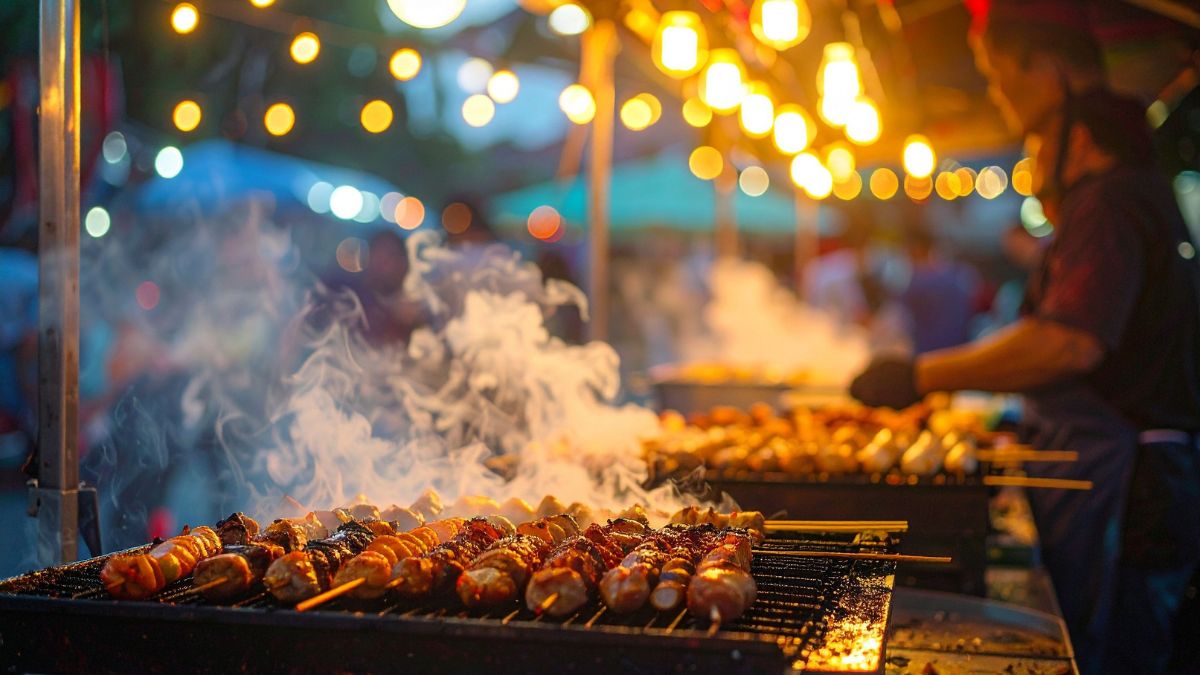
A pojangmacha (포장마차) is a Korean street tent stall — a mobile kitchen covered with a tarp, set up on the sidewalk after dark and gone again before morning. They don’t exist at noon. By 7 PM they’re packed. By 2 to 4 AM, they’ve disappeared.
If you’ve seen K-dramas, you recognize the scene instantly. The lead character, exhausted after a terrible day, sitting alone under a glowing tent with a bottle of soju. Two old friends finally saying the things they couldn’t say sober. That orange tent is a real place, and it exists all over Seoul.
There’s just one thing the dramas get wrong. A real pojangmacha is loud, smoky, tight, and chaotic — you’re shoulder to shoulder with people you’ve never met, and the gas burner is hissing two feet from your elbow. That’s not a flaw. That’s exactly the point.
Where to Go in Seoul — 3 Areas That Actually Deliver
1. Jongno 3-ga — The Real Thing
This is the benchmark. Exit 5 or 6 of Jongno 3-ga Station (Lines 1, 3, and 5) and you’ll find yourself at the start of a 200-meter stretch of orange tents running toward Ikseon-dong.
By 7 PM on any weeknight, every seat is taken. Office workers with loosened ties drink next to university couples sharing tteokbokki, and the occasional foreign traveler trying to look like they’ve done this before. Tables are almost nonexistent as a concept here — you’re close enough to feel the warmth off the person next to you. Somehow that doesn’t feel uncomfortable. It feels right.
Hours: Weekdays 6 PM – 2 AM / Weekends 5 PM – 3 or 4 AM How to get there: Jongno 3-ga Station, Exit 5 or 6, walk toward Ikseon-dong Vibe: Traditional, all ages, heavily local crowd
2. Euljiro — Where the Real Locals Go
Ten minutes on foot from Jongno 3-ga toward Euljiro 3-ga Station brings you to Nogari Alley (노가리 골목) — a narrow lane that spends its days as an industrial district and transforms completely after dark.
The signature here is grilled nogari — small dried pollock charred over a flame — eaten with soju or draft beer. The crowd is quieter and skews toward office workers in their thirties and forties. Fewer tourists, more regulars. If you want a slightly more local experience than Jongno, Euljiro is the right call.
How to get there: Euljiro 3-ga Station, Exit 2 or 3, 5-minute walk Signature dish: Grilled nogari ₩10,000–15,000 / Ramyeon noodles can be added to the shared pot
3. Hongdae — Start Here If It’s Your First Time
For first-timers, Hongdae is the lowest-pressure entry point. More vendors here speak at least basic English, the menu leans toward tteokbokki and fried food, and the prices are gentle — most items run ₩1,000–3,000.
Street musicians often set up nearby, which makes the whole area feel more like a festival than a neighborhood bar. It’s louder and more performative than Jongno. A good strategy: start in Hongdae to get comfortable, then move to Jongno later in the evening to see the deeper version.
What to Order — The 5 Essentials
🍢 Odeng (어묵) — Fish Cake on a Skewer
Fish cake skewers float in a clear, salty broth kept hot over a burner. Each skewer runs ₩1,000–1,500, and the broth itself is free — unlimited refills, no questions asked. Just hold out your cup. On a cold night in Seoul, that first sip of odeng broth is one of those small, specific moments you don’t forget.
🌶️ Tteokbokki + Twigim — The Classic Combo
Chewy rice cakes in a spicy-sweet gochujang sauce, served alongside an assortment of fried things — seaweed rolls, squid fritters, sweet potato. The local move is to dip the fried pieces into the tteokbokki sauce so the crispy exterior soaks up the heat. One plate runs ₩5,000–8,000 and it’s more than enough to share.
🍖 Sundae (순대) — Korean Blood Sausage
Pig intestine stuffed with glass noodles and vegetables, then steamed. It sounds more challenging than it tastes. Dip it in salt or gochujang and the flavor is surprisingly mild and savory. If you spot sundae on the menu at Jongno 3-ga, order it. It pairs perfectly with soju and is one of the most distinctly Korean things you can eat at a pojangmacha.
🍶 Soju — The One That Comes With Everything
A bottle of soju at a pojangmacha costs around ₩3,000–4,000. Alcohol content ranges from about 13% to 25% depending on the brand. If you’re new to it, start with a fruit-flavored version — peach or grapefruit soju is significantly smoother than the original. Somaek (소맥) — soju mixed with beer, roughly three parts soju to seven parts beer — is Korea’s most common way to drink, and pojangmacha is the natural home for it.
🍺 Makgeolli — The Traditional Rice Wine
A fermented rice drink, milky white and slightly fizzy. Shake it before you open it — the sediment needs to mix. It’s sweeter and lower in alcohol than soju, which makes it a good choice if you want something more manageable. The classic pairing is makgeolli with pajeon (savory Korean pancake), and it’s one of those combinations that makes immediate sense the first time you try it.
How to Actually Order — A Practical First-Timer Guide
Most pojangmacha don’t have printed menus. You sit down, the owner comes over, and you say what you want. That’s it.
The phrases that get you started:
- Point at what someone else is eating and say “Same, please” — this works everywhere
- “Tteokbokki and soju, please” — understood at almost every tent
- Hold up fingers for quantity — no Korean needed
Check the price before you sit down. Some tents don’t display prices. Before you commit to a seat, it’s worth asking “How much?” — or in Korean, “Eolmayo?” (얼마예요?). Foreigners are occasionally quoted higher prices than locals. Knowing this in advance removes the awkward surprise at the end.
Bring cash. A significant number of pojangmacha in Jongno 3-ga and Euljiro are cash only. Carry at least ₩20,000–30,000 before you head out. ATMs near Jongno 3-ga Station are easy to find.
Stay as long as you want. There’s no pressure to move on after one bottle. Pojangmacha culture is built around lingering — you order more when you’re ready, and nobody will rush you. One of the best things about this experience is that there’s no bill coming.
Etiquette — Four Things Worth Knowing
① Call out loud to get service Pojangmacha are inherently noisy. If you need the owner, raise your hand and say “Yogiyo!” (저기요!) — a firm, audible call. Quietly waiting with a raised hand often doesn’t work in a crowded tent.
② Going alone is completely fine Sitting solo at a pojangmacha is one of the most traditional ways to use the space. The image of someone sitting alone with a bottle of soju under a glowing tent isn’t sad in Korean culture — it’s just a Tuesday.
③ If a stranger talks to you, talk back Pojangmacha are one of the few spaces in Seoul where people routinely strike up conversations with complete strangers. If someone at the next table offers you a drink or slides over a snack, the right response is to accept. This is what the whole experience is actually about.
④ Ask before photographing people Food photos — go ahead, nobody cares. But if you want to photograph the owner or nearby customers, a quick gesture asking permission goes a long way. Most people are happy to oblige.
The Honest Reality — What to Know Before You Go
Pojangmacha are genuinely special. They’re also genuinely disappearing.
The numbers are shrinking. Urban redevelopment and tightening health regulations have reduced traditional street tent stalls significantly over the past decade. What you see today in Jongno 3-ga is a fraction of what existed twenty years ago. Experiencing it now means experiencing something that may not be there in its current form much longer.
Not everything called “pocha” is the real thing. Many of the atmospheric, Instagram-ready pojangmacha photos you see online are actually indoor pocha-style bars — restaurants designed to recreate the aesthetic of a street tent. Both experiences are valid, but they’re different. This guide is specifically about the real thing: an actual tent on an actual sidewalk.
Weather matters. Heavy rain or temperatures well below freezing can mean some tents don’t open. Autumn (September to November) and spring (March to May) are the best seasons. Winter pojangmacha exist and have their own charm — odeng broth hits differently in January — but expect a smaller number of tents on the coldest nights.
Tonight’s Pojangmacha Checklist
- Bring cash — at least ₩20,000–30,000 (many tents are cash only)
- Head to Jongno 3-ga Station, Exit 5 or 6 — after 7 PM is ideal
- Ask the price before sitting down — “How much?” or “Eolmayo?”
- Start with odeng broth — free, unlimited, and the best opener
- Order tteokbokki + twigim as your first plate — the classic beginner combo
- Try the local drinking style — somaek (soju + beer) or fruit soju if you’re new to it
- If someone talks to you, talk back — that’s the whole point of this place
One More Thing Before You Go
Most visitors to Seoul do Myeongdong, Gyeongbokgung, and the Han River. All of them are worth doing. But pojangmacha isn’t on most itineraries, which is exactly why it tends to be the thing people remember most.
It appears after dark and disappears before sunrise. One hour under that orange tent — a skewer of fish cake, a cold glass of soju, a stranger who became briefly familiar — and Seoul feels like something you actually know rather than something you visited.
Add Jongno 3-ga to your evening. Search “Jongno 3-ga Station Exit 6” on Google Maps, show up after 7 PM, and find an open seat. Everything else follows naturally.
For more local Seoul experiences you won’t find on a standard itinerary, check out the related posts below.