
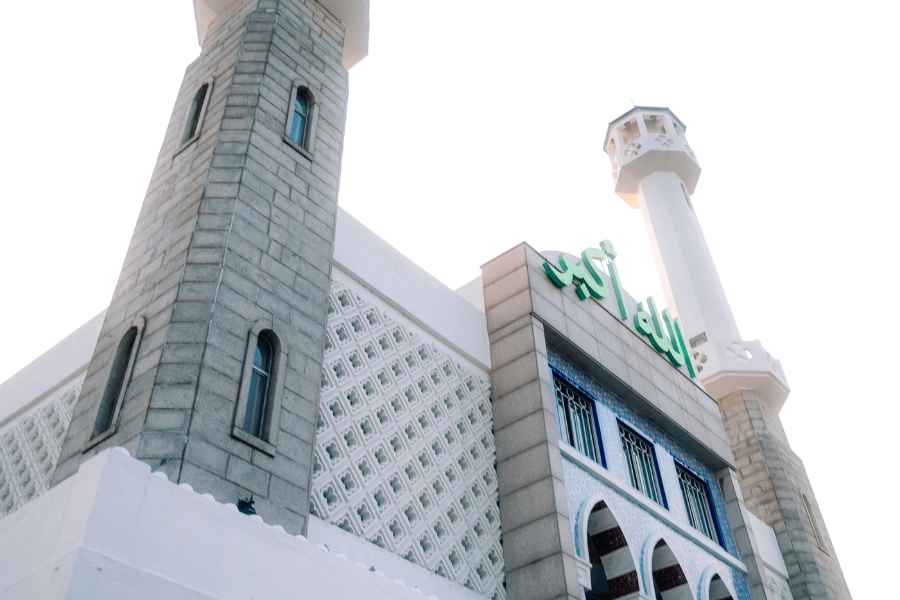
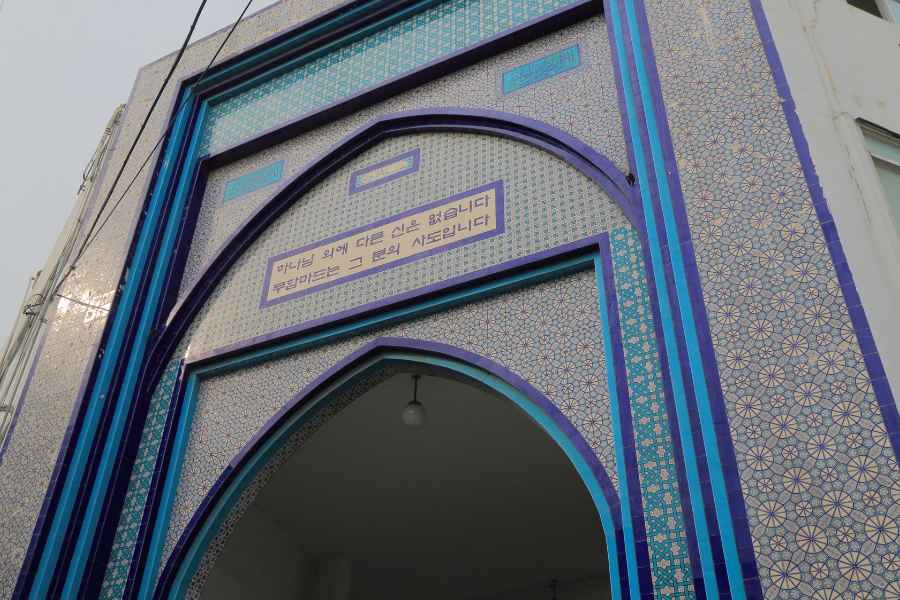
Climb the hill in Itaewon, and you’ll spot it: a cobalt-blue arabesque-patterned gate and a minaret reaching into the sky. This is Korea’s first, and largest, mosque — Seoul Central Mosque. But the real reason this building exists wasn’t purely religious.
Built in the middle of the 1970s oil crisis, it was driven largely by a diplomatic need to strengthen ties with oil-producing Middle Eastern nations. Here’s a detailed look at why and how this mosque came to be, along with a thorough practical guide for both Muslim travelers and curious visitors.
Why Itaewon, and Why That Particular Moment
In the early 1970s, Korea needed to build stronger ties with Middle Eastern nations to secure a stable oil supply for its growing economy. President Park Chung-hee decided to build a mosque as a way of deepening friendship with Islamic nations, and after weighing a landfill site in Seocho-dong against a plot in Itaewon, Itaewon was ultimately chosen.
In May 1969, the Korean government specially provided roughly 5,000 square meters (about 1,500 pyeong) of land, and six Islamic nations, including Saudi Arabia, funded the construction. Groundbreaking took place in October 1974, and the mosque was completed about 1 year and 7 months later, on May 21, 1976. As Korea’s first mosque opening ceremony, it was a genuinely international event — delegations from 17 countries, including Saudi Arabia, Libya, and Kuwait, attended. In the end, this mosque is both a place of genuine faith and a piece of architecture that captures a slice of Korean diplomacy during the oil crisis era.
The Architecture — Why the Minaret Looks Familiar
Mosques are typically characterized by a dome roof called a “qubba” and a pointed tower called a “minaret.” Interestingly, this minaret shares a symbolic meaning with the spires of Gothic Catholic cathedrals — both reach upward toward the heavens where God is believed to reside. Seoul Central Mosque covers 4,871 square meters of land and stands 19.9 meters tall.
Inside, you’ll find the “mihrab,” a stone structure indicating the direction of Mecca, and the “minbar,” the pulpit an imam climbs to lead prayer. Following a recent expansion, prayer halls now occupy both the first and second floors, and the annex building’s basement level houses separate “wudu” rooms — for the ritual washing men and women perform before prayer.
The Street That Transformed an Entire Hillside
After the mosque was built, this whole area became a completely different neighborhood. In fact, part of the hill leading up from Exit 3 of Itaewon Station had once been dense with adult entertainment venues — a legacy of Itaewon’s history as a U.S. military camptown. But once the mosque arrived, halal restaurants, Islamic bookstores, and bakeries gradually took root instead, and there’s a sense of pride among Muslim residents that they “cleaned up” this street.
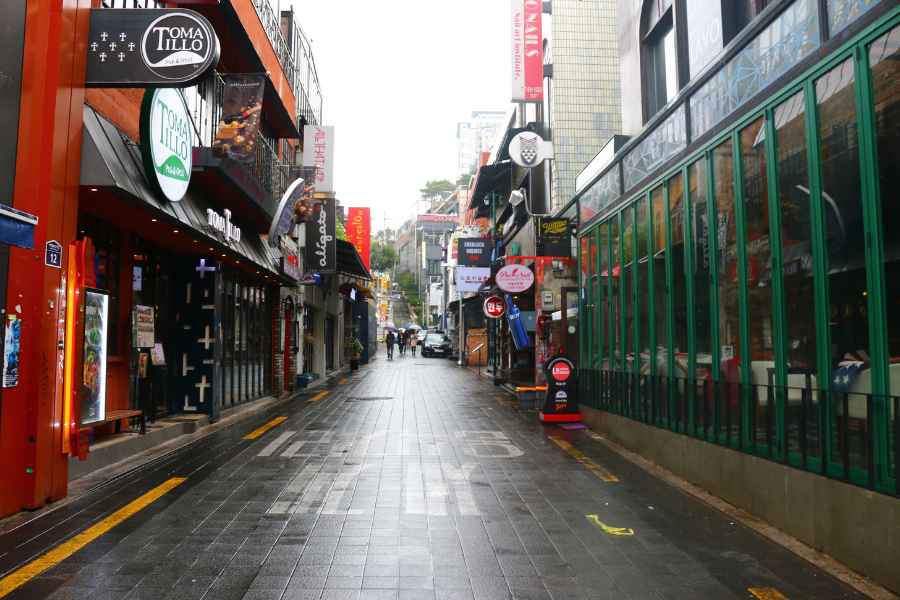
Today, this alley — officially Usadan-ro 10-gil, commonly called “Islamic Street” — is lined with Arabic-script signage that gives the whole block an unmistakably foreign feel, almost like stepping into another country for a moment. That said, nightclubs and other entertainment venues have also grown in the surrounding area over time, and recent redevelopment on the hillside has led some residents to relocate, leaving a number of vacant homes behind. As the practical center of Seoul’s Muslim community, the mosque continues to draw both Korean and international Muslims for regular prayer.
Practical Guide for Muslim Travelers
The Korea Islam Central Association provides clear guidance for visitors.
- Languages of worship: Prayers are conducted in English, Arabic, and Korean
- Facilities: The annex building has separate wudu rooms for men and women in the basement, classrooms on the first floor, and offices on the second floor. The attached Islamic Center (a 3-story building) houses the Prince Sultan Islamic School for Muslim children, a women’s association, and a library
- Nearby halal dining: Halal-certified restaurants and Islamic grocery stores line Islamic Street, making it easy to find halal meals during your trip
Practical Guide for General Visitors (Please Read the Dress Code)
Seoul Central Mosque is open to anyone, but it’s essential to remember this is an active, sacred religious space. The Korea Islam Central Association has laid out clear guidelines:
- No disruptive behavior: This is a sacred space where Muslims worship Allah, so loud talking or inappropriate conduct is not allowed
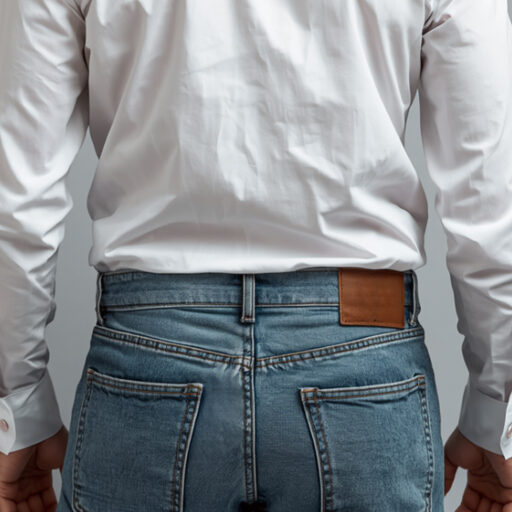
- Dress restrictions: Shorts, ripped jeans, overly short skirts or dresses, and tops that expose the chest are not permitted
- If your clothing doesn’t meet the dress code: A changing room next to the security office has skirts and hijabs available to borrow. Female visitors in particular are strongly advised to bring clothing that covers the shoulders and knees ahead of time
- Visiting during prayer times: Access for onlookers may be limited while prayer is actually taking place, so if you’re visiting to observe, it’s more considerate to avoid active prayer hours
- Photography: Photos outside are generally fine, but it’s proper etiquette to ask permission before photographing inside the prayer hall or worshippers in prayer
After the Mosque: What Else to Do in Itaewon
Seoul Central Mosque sits in Itaewon, arguably the most international neighborhood in Seoul — one that deserves more than a quick stop at the mosque alone. During the Joseon dynasty, this area hosted diplomatic guesthouses for foreign envoys, and after the Korean War, a U.S. military base shaped the neighborhood’s character for over 50 years. Since 2022, many of the large-scale entertainment venues have given way to indie cafes, galleries, and international restaurants, and the area has settled into four distinct sub-neighborhoods — Gyeongnidan-gil, Haebangchon, Usadan-ro, and Hannam-dong — each with its own personality.
Itaewon World Food Street
Running from Exits 1 and 2 of Itaewon Station, Itaewon World Food Street is packed with restaurants serving authentic cuisine from around the world — Turkish, Indian, Greek, Mexican, and more. Pair it with the halal restaurants near the mosque, and you can put together a full “culinary world tour” in a single day.
Gyeongnidan-gil — Indie Boutiques and Street Art
A short walk from the mosque, Gyeongnidan-gil is lined with distinctive indie boutiques, cozy brunch cafes, and street art. Right next door is the National Hangeul Museum, where interactive screen exhibits and mini craft workshops make for an easy add-on.
Haebangchon (HBC) — A Quiet Hillside Village Built by Artists
Up the steep hill above Gyeongnidan-gil, Haebangchon carries a noticeably calmer vibe than the rest of Itaewon. It was settled right after Korea’s 1945 liberation by returning overseas Koreans and refugees, and the alleys around Sinheung Market, running since the 1960s, are now filled with cafes, independent bakeries, and galleries set inside renovated old houses. The area is especially known for its rooftop cafes and bars, many of which take advantage of the hillside setting to offer views of Namsan Tower and the Seoul skyline.
Antique Furniture Street
Head down the alley between Exits 3 and 4 of Itaewon Station, and you’ll find Antique Furniture Street, lined with shops selling old Western-style furniture and decor — a good stop for travelers hunting for unique souvenirs or interior pieces.
Noksapyeong and Hangangjin Stations — All Walkable
Beyond Itaewon Station, most of the streets above are also walkable from Noksapyeong and Hangangjin stations. From Exit 2 of Noksapyeong Station, walking toward Namsan past the old U.S. base site leads you to Haebangchon, with Gyeongnidan-gil just across the way.
In other words, after a peaceful, unusual visit to Seoul Central Mosque, you can plan a completely different kind of day — one that moves through global cuisine, artist-filled alleys, and a view of Namsan.
Practical Information
- Official name: Seoul Central Masjid (서울중앙성원)
- Location: 39 Usadan-ro 10-gil, Yongsan-gu, Seoul (732-21 Hannam-dong) — administratively part of Hannam-dong rather than Itaewon-dong, though Itaewon Station is the closest stop
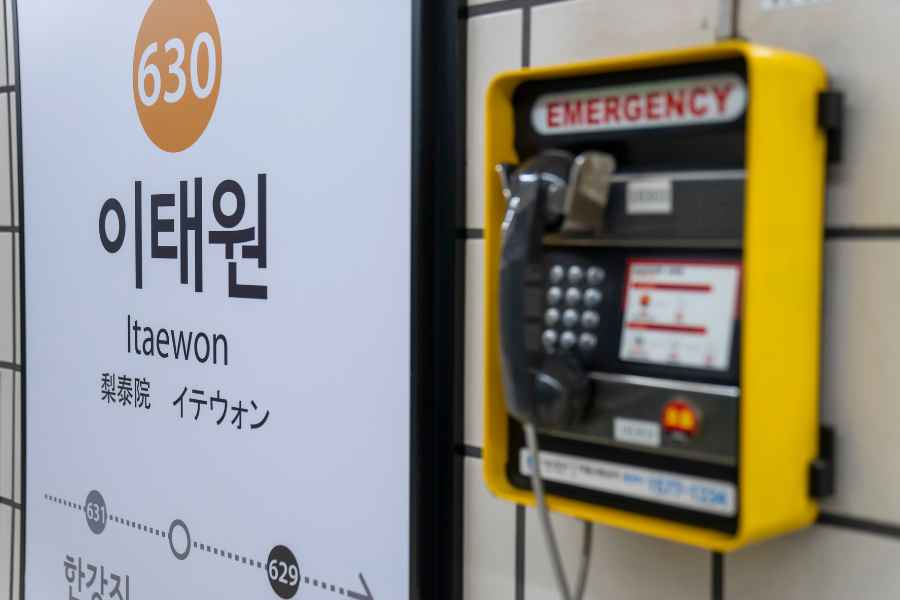
- Getting there: About a 10-minute walk uphill from Exit 3 of Itaewon Station (Subway Line 6)
- Governing body: The headquarters of the Korea Islam Central Association, which oversees Islamic facilities across Korea, is based here
- Nearby to pair with your visit: Islamic Street (Usadan-ro 10-gil) is lined with halal restaurants and shops selling imported goods, worth exploring together
- Good to know: Korea’s Muslim population was estimated at around 135,000 as of 2011, including roughly 35,000 Korean nationals — and the number has continued to grow since
Ready to Climb This Hill Yourself?
Seoul Central Mosque is both a genuine space of faith and a building shaped by Korea’s survival diplomacy during the oil crisis era. Walking down Islamic Street afterward, you can feel firsthand how a single religious building reshaped an entire neighborhood’s character. Just pack the right clothing ahead of time, and you’ll come away with a peaceful, distinctly different experience you won’t easily find elsewhere in Seoul. If something stood out to you after visiting, share it in the comments.