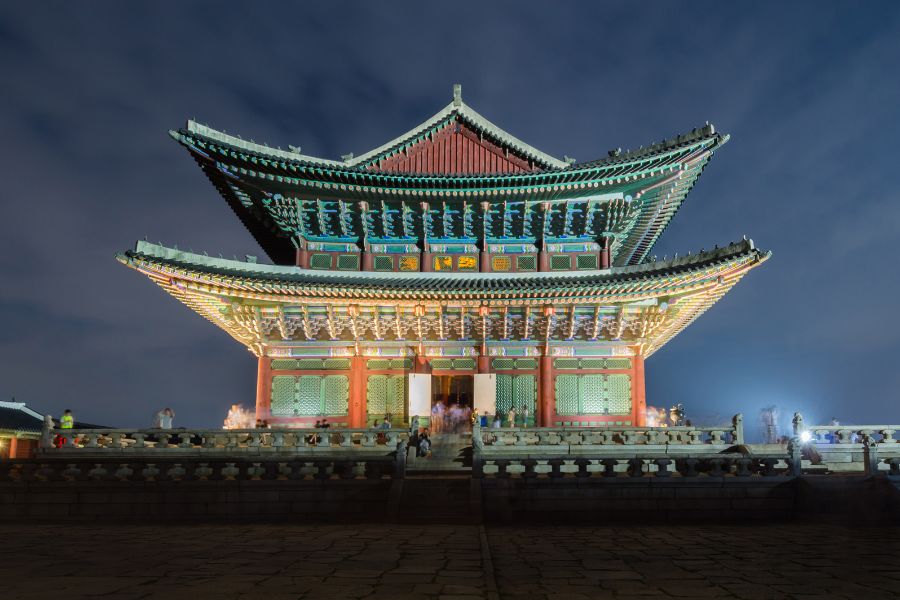
Deoksugung is the smallest of Seoul’s five grand palaces — and also the strangest. A traditional wooden hall stands right next to a French-style stone building, and just a few steps from where the king once held court sits the very room where the nation’s diplomatic sovereignty was signed away. This isn’t simply Joseon’s last palace — it’s the palace a collapsing Korean Empire built while struggling to survive amid the pressure of Western and Japanese powers. Today, we’re walking through 14 spaces that make up Deoksugung, from Daehanmun to Seokjojeon, in order.
First, Let’s Understand Why Deoksugung Is Different
Deoksugung was originally called Gyeongungung. It got its start when King Seonjo took temporary refuge here after every palace in Hanyang burned down during the Japanese invasion of Korea. For a long time afterward, it served only as a secondary palace — until 1897, when King Gojong chose it as his residence after returning from the Russian legation (following the Agwan Pacheon incident), placing it at the center of history.
That same year, Gojong proclaimed the founding of the Korean Empire from this very site — announcing to the world that Korea was no longer a tributary state of Qing China, but an independent empire with its own emperor. That makes Gyeongungung (Deoksugung) both the main palace of the Korean Empire and the stage for the nation’s last struggle to survive amid the interference of Western powers.
In 1904, a massive fire destroyed most of the palace. After Gojong abdicated the throne to his son Sunjong in 1907, the palace’s name changed to what we know today: Deoksugung. “Deoksu” (德壽) carries the wish that the now-retired Gojong live a long, healthy life. Gojong remained here until his death.
From the Main Gate to the Throne Hall
Daehanmun — Not Originally the Main Gate
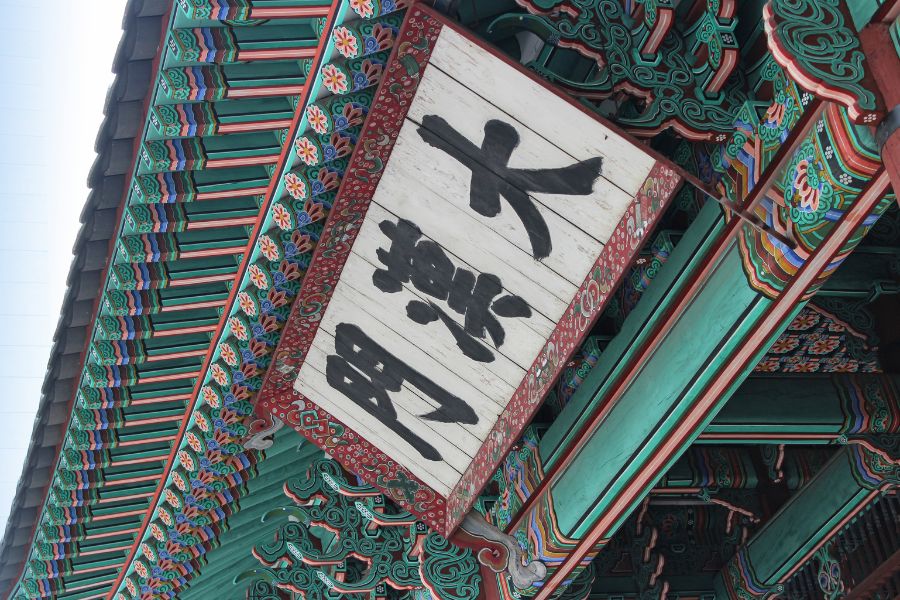
Today it’s Deoksugung’s main gate and its most recognizable symbol, but Gyeongungung’s original main gate was actually Inhwamun, located to the west. In 1906, as part of road realignment work, the eastern gate took over as the main entrance and received its current name, Daehanmun. “Daehan” (大漢) carries the meaning “Hanyang will flourish and grow great.” Even today, the Royal Guard-Changing Ceremony — running continuously since 1996 — is reenacted here every day at 11 AM and 2 PM (except Mondays).
Geumcheongyo — The Stone Bridge Dividing Palace From Ordinary World
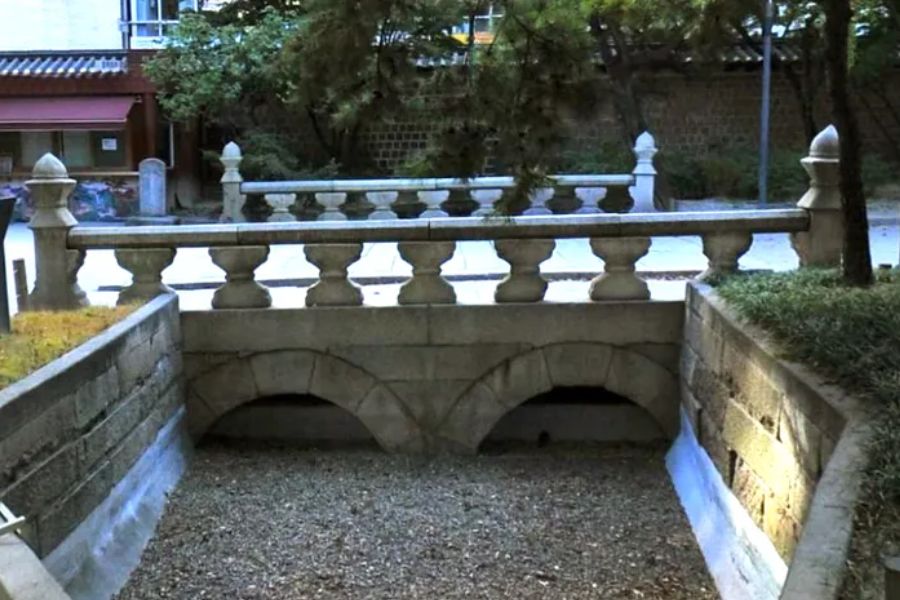
Just past Daehanmun, this stone bridge crosses the ceremonial stream (geumcheon), marking the same symbolic boundary found at other palaces — cross it, and you’ve entered the king’s domain. It was damaged during Japanese colonial rule and restored to its current form through a 2016–2017 restoration project.
Junghwamun and Junghwajeon — The Two-Story Throne Hall That Burned Down in Just Two Years
Gyeongungung’s main hall, Junghwajeon, and its gate, Junghwamun, aren’t reached in a straight line after crossing Geumcheongyo — you have to turn right. Unlike Gyeongbokgung, which was laid out in strict symmetry according to court ritual, Deoksugung was built by expanding land that wasn’t originally a palace site.
Junghwamun is the only main-hall gate among Korea’s five grand palaces built entirely in the 20th century — and it was built from the very start as the main gate of the Korean Empire’s imperial palace, not during the Joseon dynasty proper. Junghwajeon was originally modeled after Changdeokgung’s Injeongjeon and built at two stories, but it burned down in the massive 1904 fire, just two years after completion. The single-story Junghwajeon standing today was rebuilt in 1906.
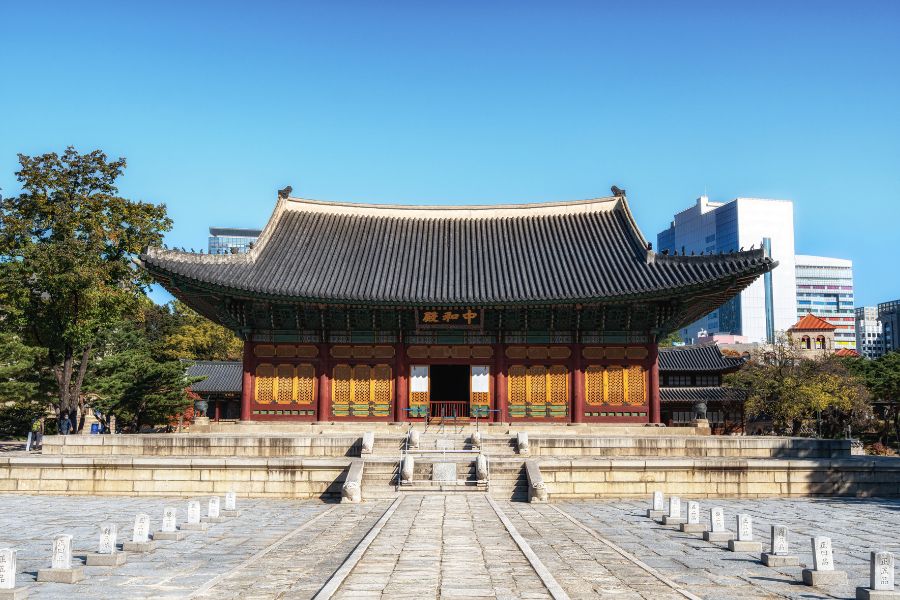
Two Buildings That Carry the Weight of Late Joseon History
Jeukjodang — Where Three Kings Were Crowned
West of Junghwajeon sits Jeukjodang, a symbolic space where King Seonjo took up residence after the Japanese invasion, and where several royal successions took place through the late Joseon period. Gwanghaegun, Injo, and later Gojong were all crowned here. Important state discussions during the Korean Empire era also took place in this building.
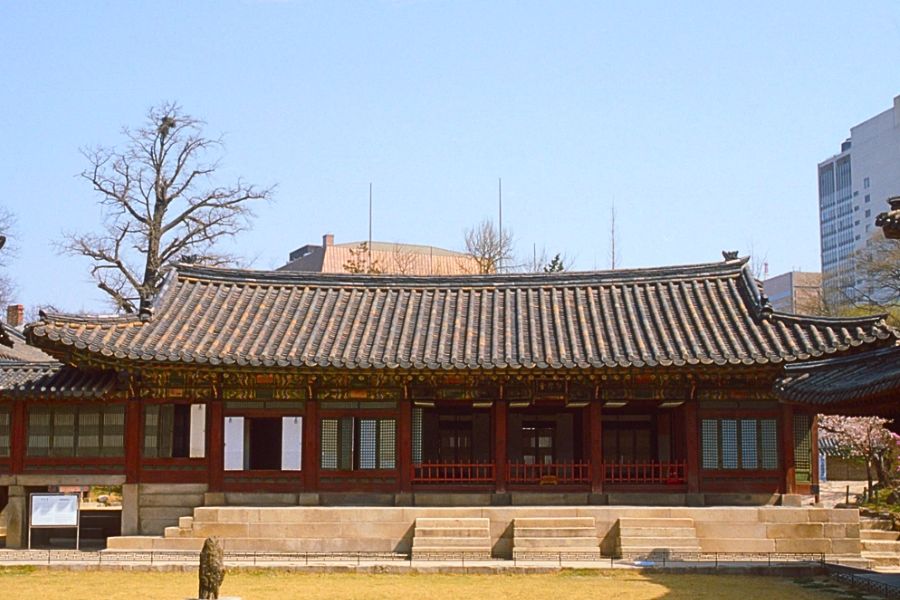
Seogeodang — Deoksugung’s Only Two-Story Building
Right next to Jeukjodang stands a modest two-story building with no traditional dancheong coloring. It’s said to be where King Seonjo actually resided after the Japanese invasion, and it’s notable as the only multi-story building anywhere in Deoksugung. It was also among the buildings destroyed in the 1904 fire.
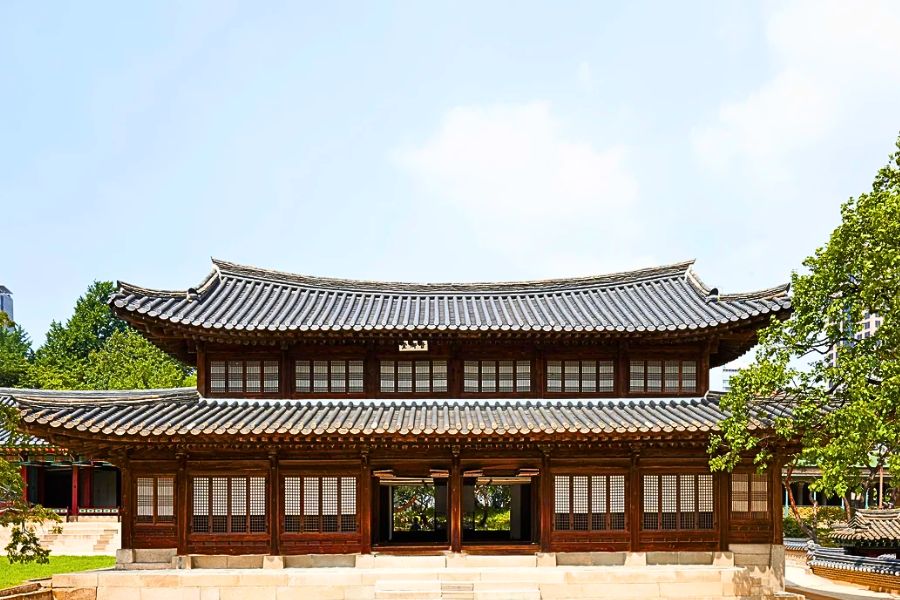
Junmyeongdang — The King’s Study
Situated right beside Jeukjodang, Junmyeongdang served as the king’s study — a space for reading and discussing scholarship with officials.
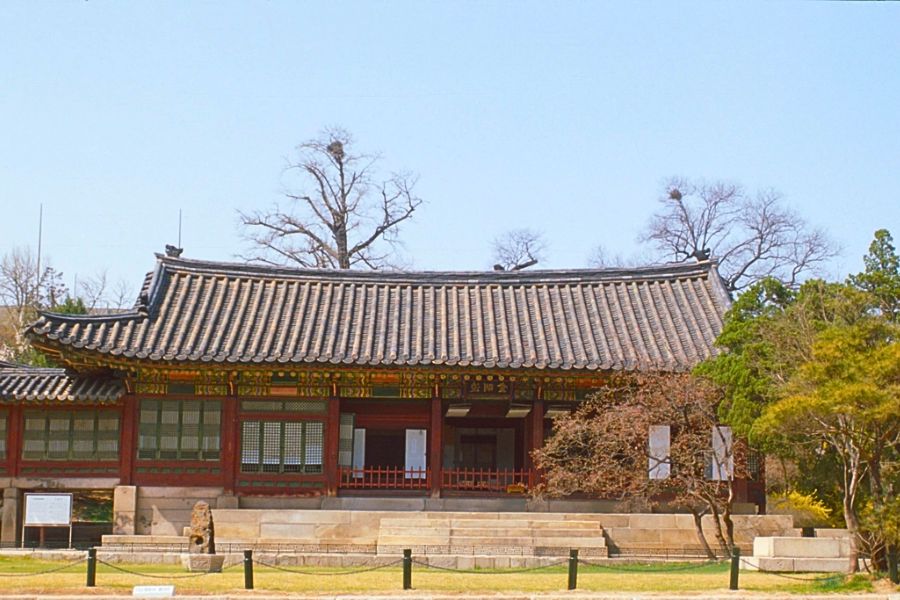
Gojong’s Final Living Quarters
Hamnyeongjeon — Gojong’s Bedchamber, and Where the Great Fire Began
The massive fire that destroyed most of the palace in 1904 started, of all places, during ondol heating repairs at Hamnyeongjeon. A palace that had been carefully built — even using materials torn down from Gyeongbokgung — burned almost entirely to the ground just two years after completion. Hamnyeongjeon was Gojong’s bedchamber, converted from a building called Manhwadang that had originally stood at Gyeongbokgung. This fire consumed most of the palace, including Hamnyeongjeon itself along with Junghwajeon, Junghwamun, Seogeodang, and Jeukjodang.
Gojong later passed away in this very building. Before the palace was fully restored following the fire, Gojong had to use the imperial library, Suokheon (later renamed Jungmyeongjeon), as his temporary bedchamber and office.
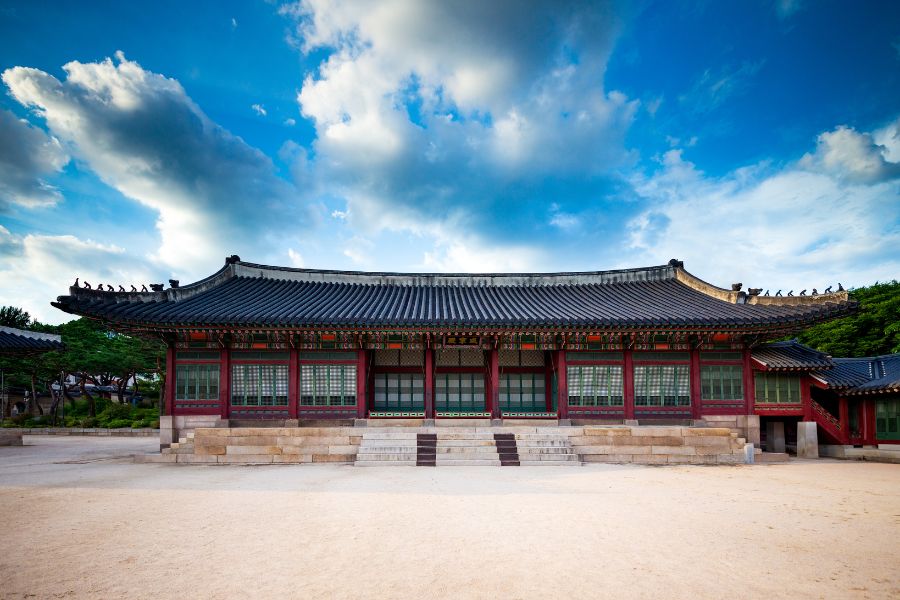
Deokhongjeon — Hamnyeongjeon’s Working Hall
Located right beside Hamnyeongjeon, this was the working hall where the king routinely met with officials and handled state affairs.
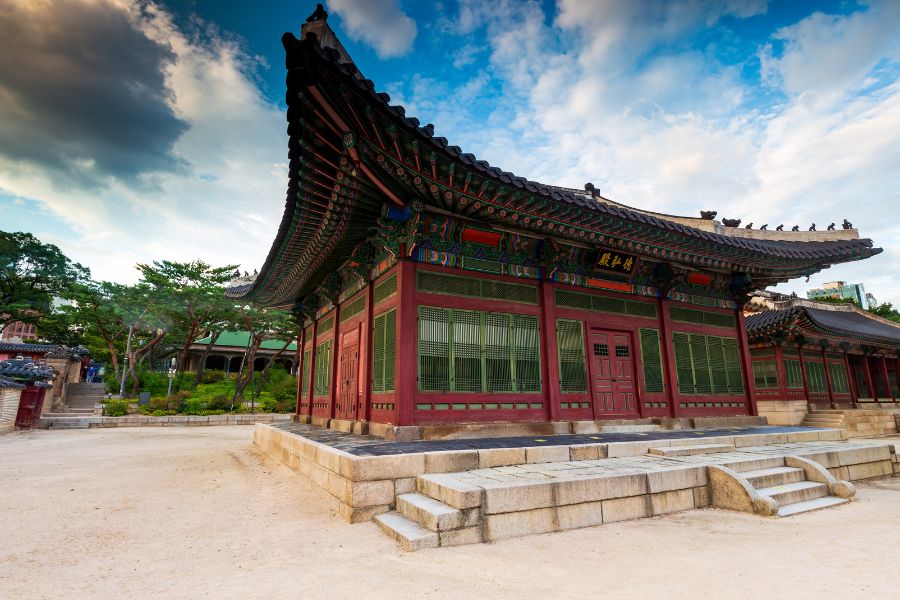
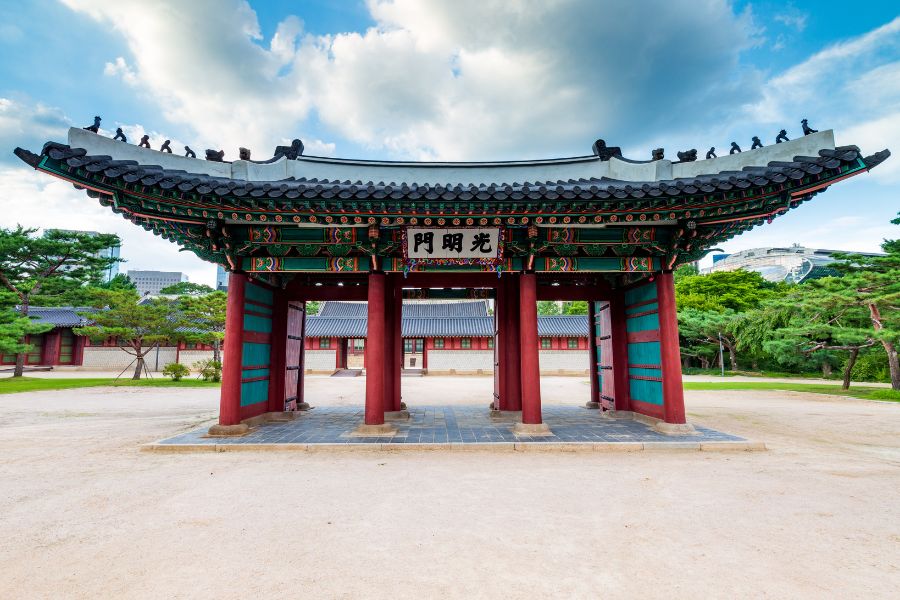
Gwangmyeongmun — The Gate That Wandered for Over 80 Years Before Coming Home
This is the south gate of Hamnyeongjeon. It was rebuilt after the 1904 fire, but in the 1930s it was relocated to south of Seokjojeon’s west wing, where it was demoted to housing displays of cultural artifacts like the Borugak water clock and the Heungcheonsa bronze bell — reduced from serving as an actual gate to functioning as a display case. In 2018, more than 80 years later, it was finally moved back to its rightful spot south of Hamnyeongjeon, with lost details like its roof figures restored in the process.
Where East Meets West — The Face of the Korean Empire
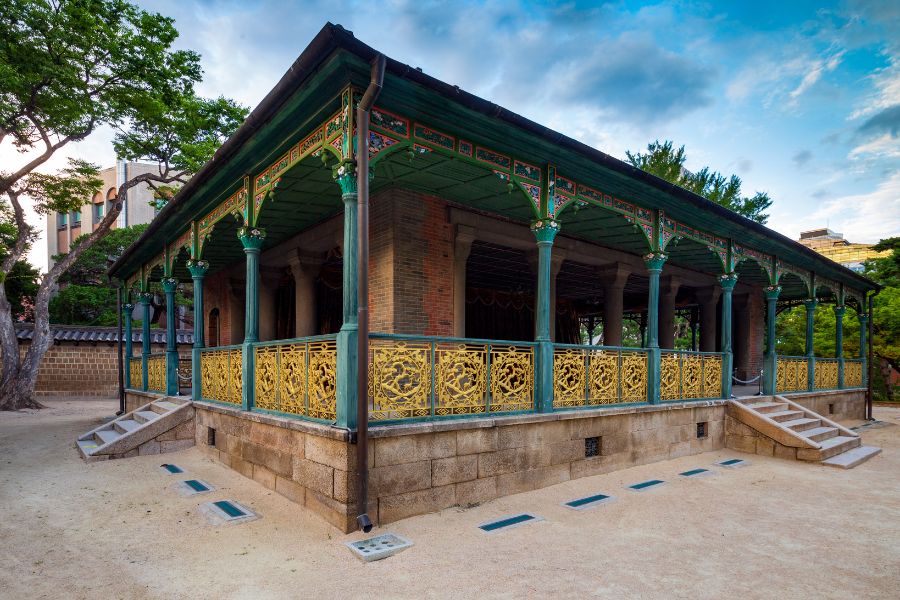
Jeonggwanheon — Where Coffee Was Sipped to the Sound of Western Music
Jeonggwanheon, whose name means “a place to quietly look out upon the world,” is believed to have been built around 1900, blending traditional Korean elements like a hip-and-gable roof with Western-style columns and railings. It served as a hall for enshrining portraits of past Joseon kings, but it’s also known as the place where Gojong enjoyed coffee and listened to foreign music to relax. From here, you can take in both the pine grove out front and views of the palace grounds.
Dondeokjeon — The Western-Style Guesthouse That Returned After a Century
Dondeokjeon was built as a dedicated Western-style banquet hall for the 40th-anniversary celebration of Gojong’s reign in 1902. A French-style two-story building, it served as the stage for the Korean Empire’s diplomacy, hosting foreign dignitaries. But after Gojong’s death in 1919 left the palace empty, it fell into neglect, and was demolished by Japanese authorities at some point in the 1920s — so thoroughly erased that even the exact date of its demolition was never recorded.
Fortunately, photographs and architectural drawings needed for restoration survived in reasonably good condition. The Korea Heritage Service began excavation and restoration work in 2018, and after several COVID-related delays, the building reopened in September 2023 — almost exactly 100 years after it disappeared. It now serves as a permanent exhibition space on Korean Empire diplomatic history, along with rotating special exhibitions.
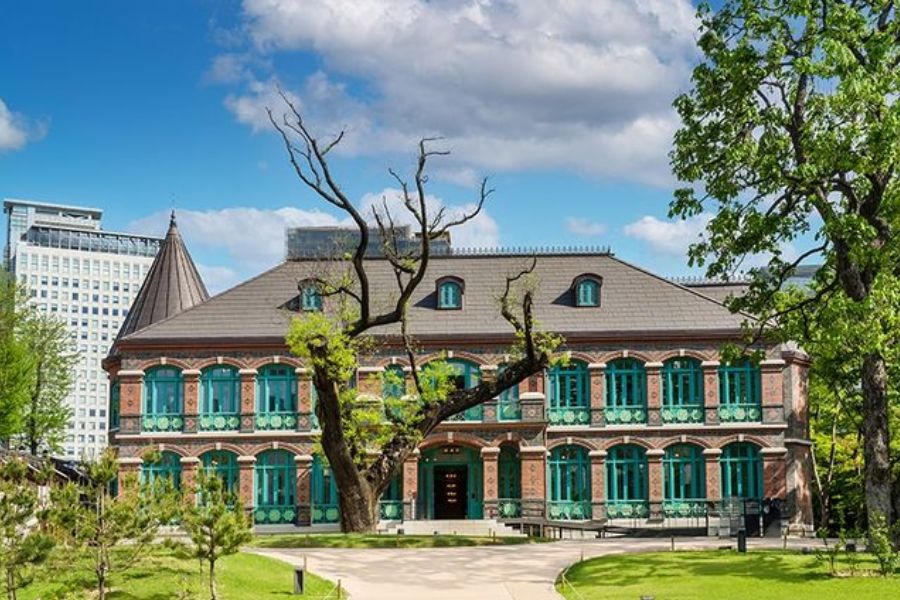
Jungmyeongjeon — The Room Where the Nation’s Diplomacy Was Stolen
Originally named Suokheon, this building was built as the imperial library. After the 1904 fire, Gojong used it as a temporary residence, and it took on a new role as an office and reception hall. In 1905, the Eulsa Treaty was forced through in this very building, stripping the Korean Empire of its diplomatic sovereignty entirely. It’s the tragic site where the “Five Eulsa Traitors” signed away the nation’s fate.
Here’s the interesting part: Jungmyeongjeon now sits outside Deoksugung’s actual palace grounds. As the surrounding Jeongdong neighborhood developed during Japanese colonial rule, the palace boundaries shrank, leaving Jungmyeongjeon stranded outside them. It was later used for private purposes, including as a foreign club, which altered much of its interior and exterior — before undergoing restoration through 2009 and reopening as an exhibition hall in 2010.
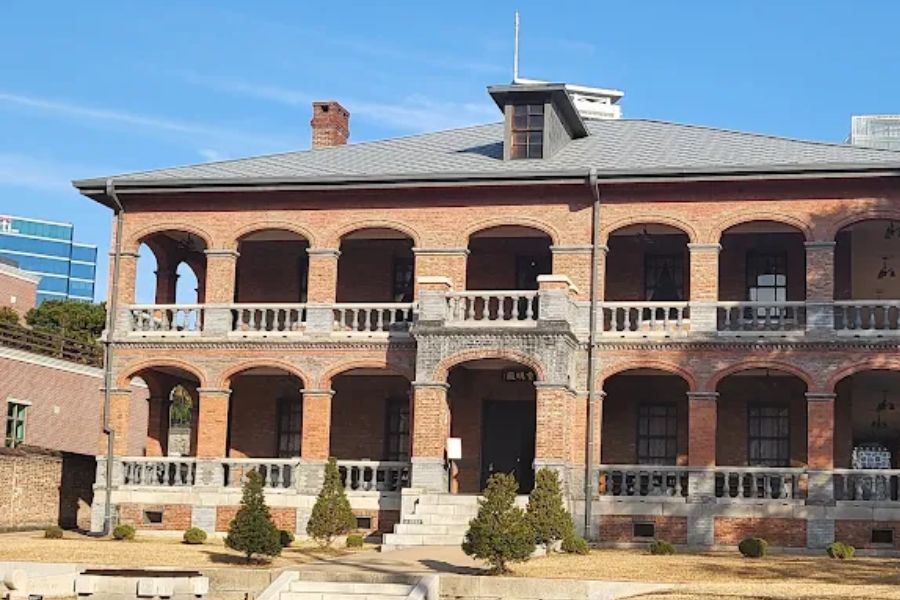
Seokjojeon — The Western-Style Throne Hall the Korean Empire Dreamed Of
This building was originally planned as Gyeongungung’s new Western-style main hall. But unlike traditional wooden construction, the foundation work alone took over a year, and as the need for a proper throne hall became urgent, Gojong ordered Junghwajeon built first instead. Seokjojeon wasn’t actually completed until after 1910 — after Korea had already lost its sovereignty. It’s a building that embodies the Korean Empire’s last ambition to become a modern nation, except that by the time it was finished, the nation meant to inhabit that ambition no longer existed.
After liberation, it served various roles including a royal artifacts exhibition hall, before undergoing restoration starting in 2009 and reopening in 2014 as the “Korean Empire History Museum.” Interior visits require advance online reservation, so it’s worth checking ahead.
Practical Information
- Visiting hours: Daily 9 AM–9 PM (last entry 8 PM) — open into the evening year-round, with no separate special night-opening period
- Closed: Every Monday
- Admission: Adults (ages 25–64), ₩1,000; groups of 10+, ₩800. Free for anyone wearing hanbok
- Getting there: Directly in front of City Hall Station (Lines 1 and 2)
- Parking: No dedicated lot; use nearby public parking
- Seokjojeon Korean Empire History Museum: Walk-up entry isn’t allowed — advance online reservation is required (slots fill quickly, so book early once your dates are set)
- Royal Guard-Changing Ceremony: Daily at 11 AM and 2 PM (cancelled on Mondays, during extreme heat/cold, or in rain), in front of Daehanmun
- Weather-dependent programs: In spring and fall, limited-run evening programs like “Seokjojeon by Night” sometimes run on a separate reservation basis — worth checking official channels if your visit overlaps
Pre-Visit Checklist
- If you want to see inside Seokjojeon, make sure to complete your online reservation in advance
- Wearing hanbok gets you free admission
- Time your visit around the Guard-Changing Ceremony (11 AM / 2 PM) in front of Daehanmun
- Jungmyeongjeon sits outside the main palace grounds, so check its location separately and budget extra travel time
- The palace stays open late, so it’s worth experiencing both the daytime and evening atmosphere
Ready to Feel the Weight of This Palace?
Deoksugung is a palace better remembered for its irony than its grandeur. This is where the Korean Empire was proclaimed, and where its diplomatic sovereignty was stripped away. This is where a Western-style throne hall was planned, only to be completed after the nation was already gone. Once you know that Junghwajeon’s dignity, Jungmyeongjeon’s tragedy, and Seokjojeon’s frustrated ambition all coexist within the same walls, Deoksugung stops being Seoul’s smallest palace and starts feeling like its heaviest one. If a particular space stood out to you, share it in the comments.