A City That’s Basically One Giant Museum — But Daytime Only Shows You Half of It
Gyeongju is often called a museum without walls. Walk down an ordinary street and the grassy mound beside you might be a 1,500-year-old royal tomb. The empty lot near your café could be the site of a Silla-era palace.
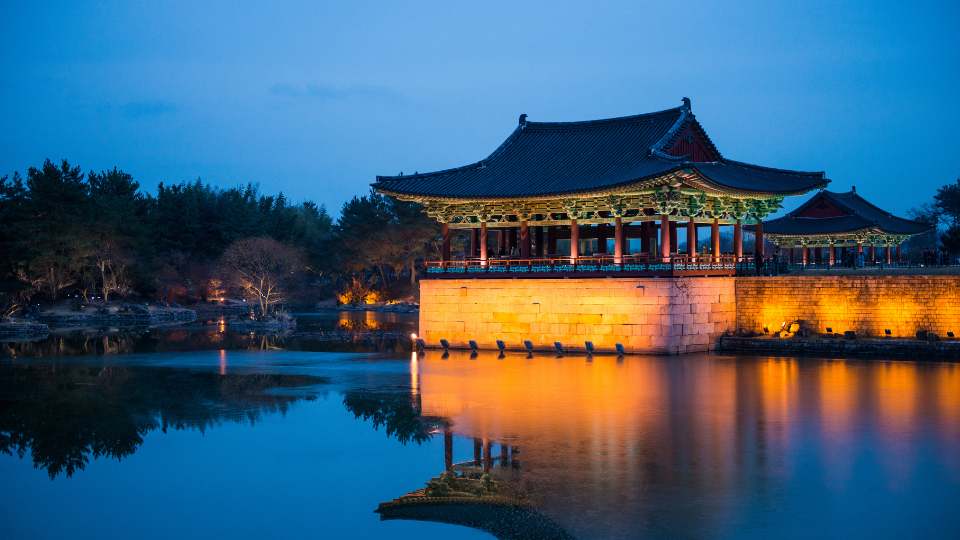
Most travelers do Gyeongju as a rushed day trip – Bulguksa, Seokguram, done. But one of Gyeongju’s best experiences happens after dark. Wolji Pond, once a Silla royal garden, becomes a completely different place once its pavilions light up against the night water.
This guide lays out a specific two-day itinerary from Seoul — train times, entry fees, and the order things should happen in.
Why Gyeongju Earned the “Museum Without Walls” Title
Gyeongju was the capital of Silla during the Three Kingdoms period and the Unified Silla Kingdom for over 1,000 years, from 57 BCE to 935 CE. After the unification of the Three Kingdoms in 668 AD, the city became the economic center of the peninsula, drawing merchants from China, Japan, and Arab regions and functioning as a hub for travelers by both land and sea.
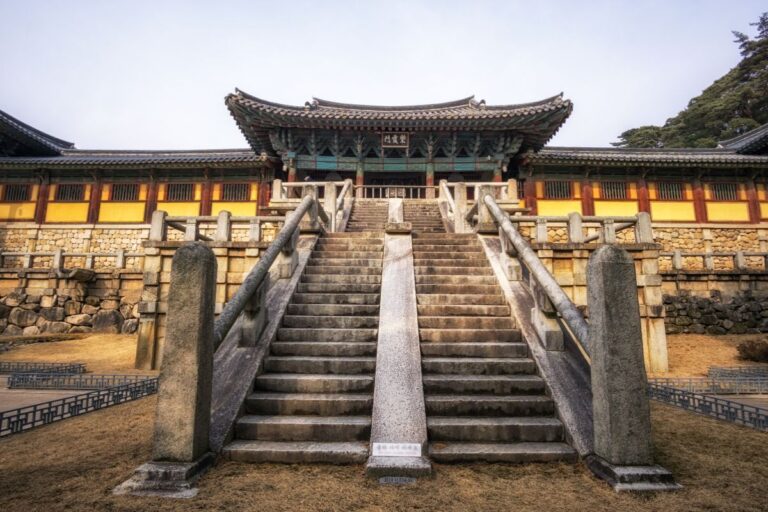
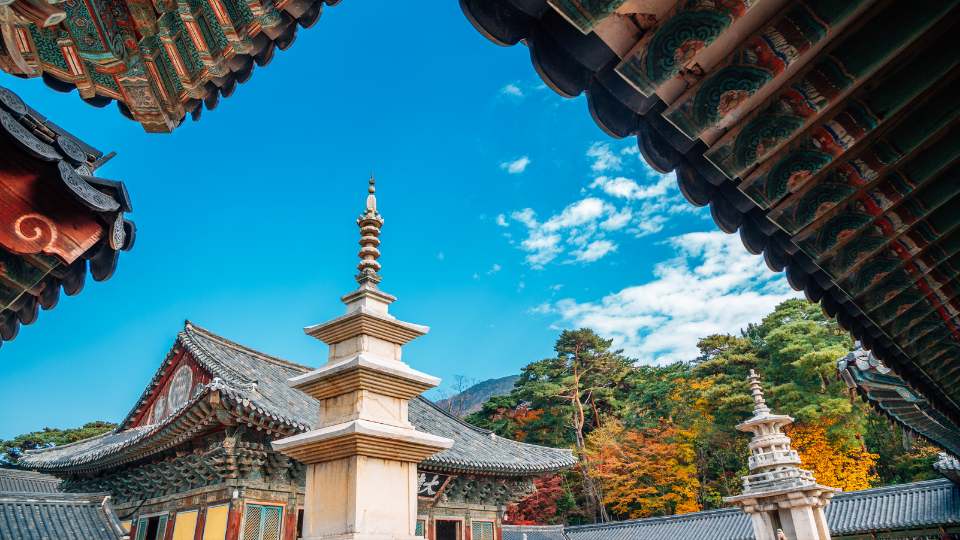
Bulguksa and Seokguram Grotto were among the first UNESCO-designated heritage sites in Korea, both added in 1995. Bulguksa is considered a masterpiece of the golden age of Silla Buddhist art and encompasses seven national treasures of South Korea.
Gyeongju holds more UNESCO World Heritage sites than any other Korean city — including the Gyeongju Historic Areas and Yangdong Folk Village, a Joseon-era settlement.
In 2025, Gyeongju hosted the APEC summit, putting the city’s historical legacy and modern appeal back on the international stage.
Getting from Seoul to Gyeongju
The KTX from Seoul to Singyeongju Station takes about 2 hours and costs around 45,000 won. Standard class runs approximately ₩49,000, with first class around ₩69,000.
Singyeongju Station sits some distance from the city center. A taxi from Singyeongju to the city center costs roughly 12,000 won. Local bus routes including 50-2, 51, 60, 60-1, 61, 61-1, 50, 70, 203, 700, and 332 connect Singyeongju to central Gyeongju.
Book through the Korail app or Klook. Weekend trains fill up quickly, so reserving ahead is recommended.
Day 1 — The City Center Historic Sites and a Night to Remember
9:00 AM — Depart Seoul Station by KTX.
11:00 AM — Arrive Singyeongju, transfer to the city center by bus.
11:30 AM–1:00 PM — Visit Daereungwon (Tumuli Park), home to around 23 large grass-covered Silla royal burial mounds. Entry costs 3,000 won. Cheonmachong Tomb can be entered, and its interior reveals the exact burial arrangements discovered when it was excavated in 1973.
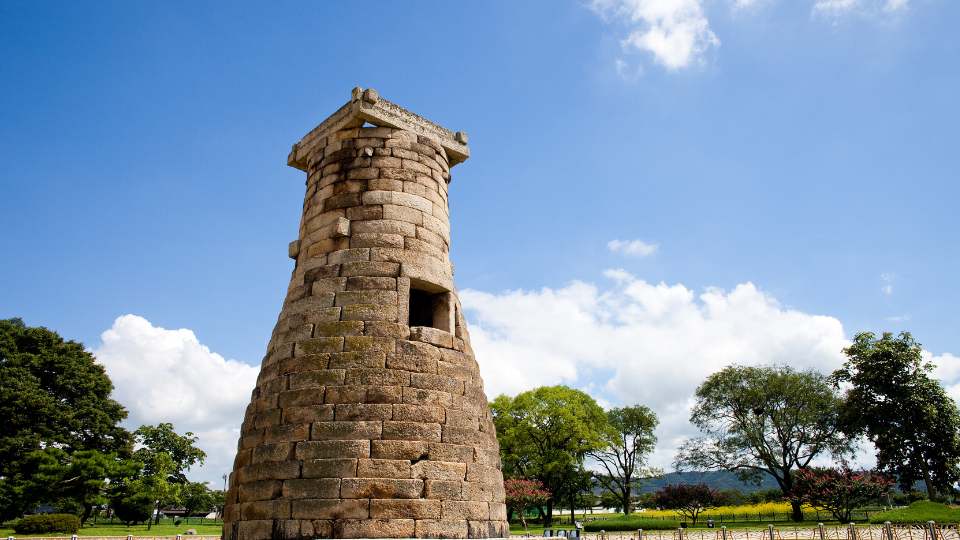
1:00–1:30 PM — Cheomseongdae Observatory. This is the oldest astronomical observatory in East Asia, and entry is free.
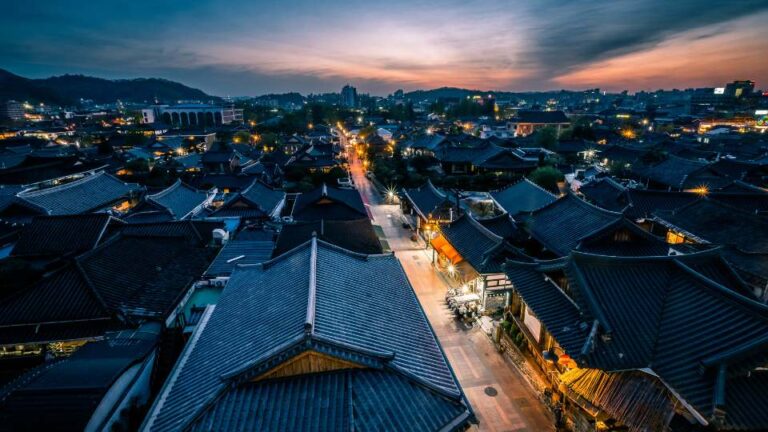
1:30–2:30 PM — Lunch on Hwangnidan-gil. This trendy street blends modern cafes, restaurants, and photo studios with the city’s traditional hanok atmosphere. The buildings here date from the 1960s and have been preserved, giving the street a distinctive vintage feel.
2:30–4:00 PM — Walk through Gyochon Hanok Village and over Woljeonggyo Bridge.
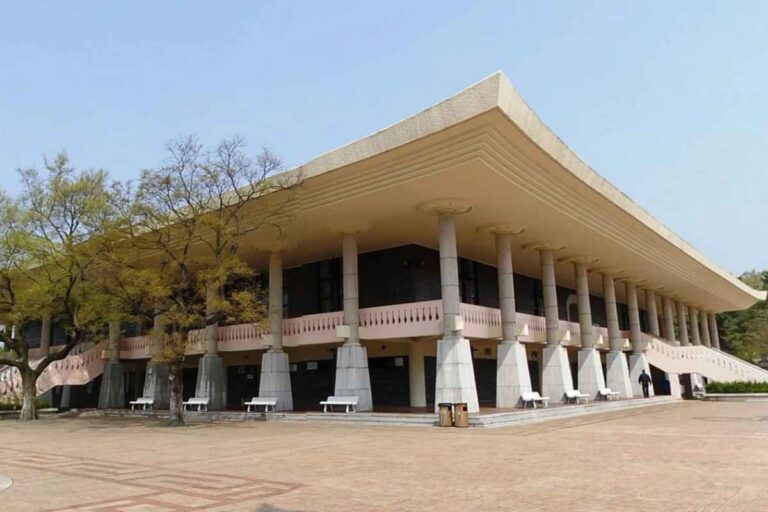
4:00–6:00 PM — Gyeongju National Museum (free entry). The collection includes Silla gold crowns and the Emille Bell, spanning over 1,000 years of cultural artifacts.
6:30–9:00 PM — Wolji Pond at night. The pond is open until 10 PM, and the pavilions reflected in the still water, lit from dusk, create one of Korea’s finest evening experiences. Combining this with Bulguksa and Seokguram in a single day would be rushed — an overnight stay is what allows both the evening pond visit and the morning temple visit to be done properly.
After 9:00 PM — Dinner on Hwangnidan-gil, then to your accommodation.
Day 2 — Bulguksa, Seokguram, and the Trip Back
8:00–9:00 AM — Taxi or bus (routes 10 or 11) to Bulguksa Temple.
9:00–10:30 AM — Tour Bulguksa. Entry costs 6,000 won. The Dabotap and Seokgatap pagodas here are iconic enough to appear on the Korean 10-won coin. Arriving right at the 9 AM opening lets you avoid the heaviest tour bus crowds, which typically arrive between 11 AM and 2 PM.
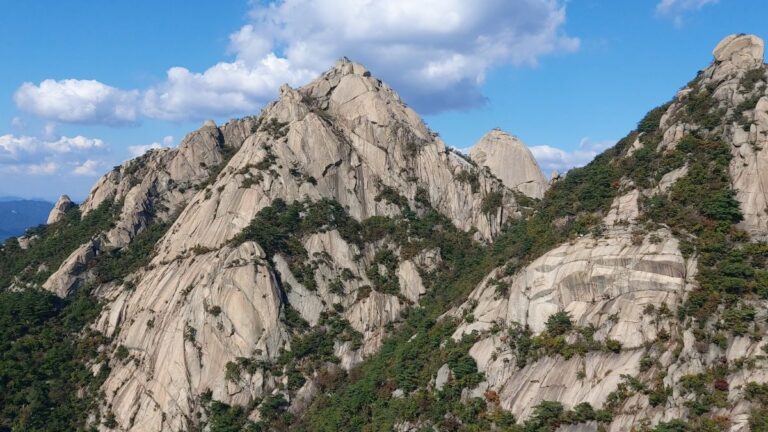
10:30–11:30 AM — Seokguram Grotto. It’s about a 30-minute uphill trip from Bulguksa, with entry at 6,000 won — though this is often included as a shuttle within the Bulguksa ticket. Seokguram is the world’s only grotto sanctuary carved from granite, and standing in front of the Buddha sculpture is worth the climb even with limited time.
11:30 AM–12:30 PM — Lunch at the temple’s vegetarian restaurant.
12:30–2:00 PM — Return to the city center.
2:00–5:00 PM — Depending on remaining time, either visit Yangdong Folk Village (UNESCO World Heritage, located outside the city center) or spend more time on Hwangnidan-gil.
5:00–6:00 PM — Transfer to Singyeongju Station, KTX back to Seoul.
Getting Around Gyeongju
Central Gyeongju is compact and walkable, with the main sights — Tumuli Park, Cheomseongdae, and Wolji Pond — within easy reach of each other. Bulguksa and Seokguram, however, are separate from the historic center and require transport — build this into your planning rather than assuming you can walk there.
Taxis are the fastest and most convenient way to get between attractions, especially if you’re short on time — most major sites are within a 10–20 minute drive of each other and taxis are affordable and easy to find at tourist spots.
Local buses cover major attractions but schedules can be irregular and stops are mostly in Korean — better for budget travelers with time to spare.
Bike rentals are available near the express bus terminal and in Gyochon Village. The city is flat enough to cycle comfortably between sights, particularly around the Daereungwon and Wolji Pond areas.
Budget Breakdown
| Item | Cost |
|---|---|
| KTX Seoul → Singyeongju (one-way) | ₩45,000–₩50,000 |
| Local bus (Singyeongju → city center) | ₩1,700 |
| Daereungwon entry | ₩3,000 |
| Cheomseongdae, National Museum | Free |
| Bulguksa entry (Seokguram included) | ₩6,000 |
| Wolji Pond night entry | ₩3,000 |
| Bike rental (1 day) | ~₩10,000 |
| 1 night accommodation (near Hwangnidan-gil) | ₩60,000–₩120,000 |
How Many Days Do You Actually Need?
The main sites fit into a full day if you move efficiently — Bulguksa and Seokguram in the morning, the museum and tombs in the afternoon, Wolji Pond at sunset — though you’ll feel slightly rushed.
One day is enough to cover the historic center — the tombs, the observatory, and Wolji Pond. Two days lets you add Bulguksa Temple, Seokguram Grotto, and a hike on Namsan Mountain. Three days is ideal for an unhurried pace.
Two days, structured the way this guide lays out, covers every major site without rushing — and crucially, lets you experience both Wolji Pond at night and Bulguksa in the quiet of early morning.
Gyeongju Connects Naturally to Busan
From Singyeongju, the KTX to Busan takes about 30 minutes and costs around 16,000 won. For travelers building a Seoul–Gyeongju–Busan route, Gyeongju works as a natural midpoint — arrive from Seoul, spend two days covering the historic sites and Wolji Pond at night, then continue south.
A Thousand Years Deserves More Than a Day
Gyeongju shows a completely different face by day and by night. The quiet grandeur of the royal tombs, the precision of Bulguksa’s stonework, and the glow of Wolji Pond after dark — fitting all three into a single day means missing at least one of them properly.
Plan for two days, and end the first day at Wolji Pond. That view alone makes the extra night in Gyeongju worth it.
KTX tickets sell out faster on weekends. Once your dates are set, book through the Korail app or Klook in advance.