Ninety Minutes from Seoul, and Most Visitors Never Go
Take a KTX from Seoul and ninety minutes later you are somewhere that feels nothing like it. Tiled rooftops instead of glass towers. Narrow stone alleys instead of eight-lane roads. A city where the rice for your lunch was grown in the fields surrounding it, and where the bowl of bibimbap in front of you was invented centuries ago in the same neighborhood you are sitting in.
Jeonju is the most-missed city by first-time visitors to Korea. It is also the city they most regret skipping when they come back. This guide covers everything you need to plan the day trip properly — how to get there, what to eat, where to go, how much it costs, and how to fit it all into a single day without rushing.
Why Jeonju Is Worth the Trip — Facts First
Jeonju had a population of 638,421 as of February 2026 — a mid-sized Korean city by any measure. But its cultural weight is out of proportion to its size.
If Seoul is Korea’s brain and Busan is its lungs, Jeonju is its stomach. This city in the southwest has been feeding Korea its most iconic dish for centuries and earned UNESCO’s City of Gastronomy designation to prove it.
Jeonju was designated a UNESCO Creative City of Gastronomy in 2012, recognizing its deep and long-standing culinary heritage.
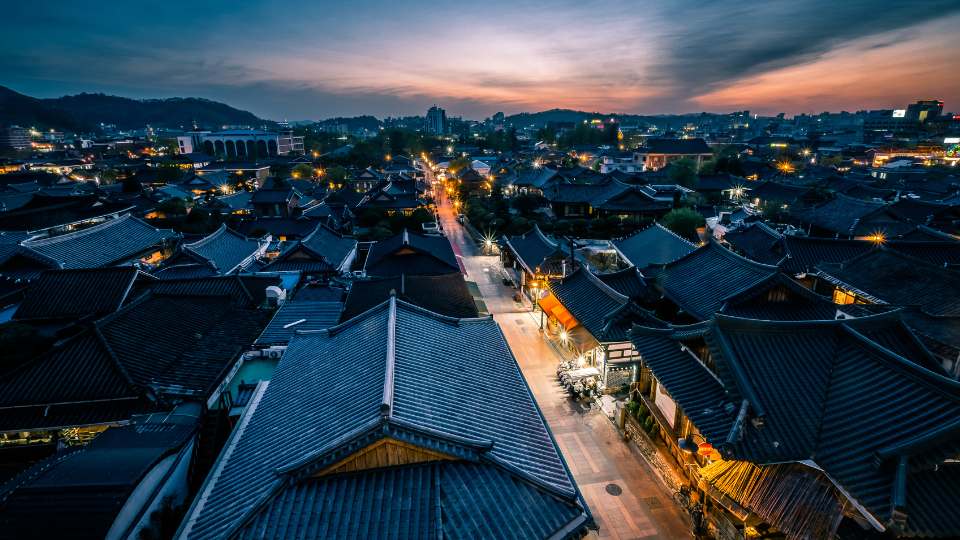
Jeonju Hanok Village has been declared a Cittaslow slow city — a designation that requires a city to preserve its unique features and resist the homogenizing effects of globalization. The village has been producing exquisite fans, handmade papers, and homemade soju and other handicrafts for centuries. Bibimbap, one of Korea’s most recognized dishes, originated here.
While the rest of Korea built upward and forward, Jeonju kept its 700-house hanok village intact, refined its cuisine to a level recognized by UNESCO, and continued to make paper and brew rice wine the same way it has for centuries.
If Seoul’s energy is espresso, Jeonju’s is a slow-brewed green tea. People walk slower, eat longer, and sit in cafes for hours without checking the time. It is the Korea that existed before the KTX and the 24-hour convenience stores took over everything.
Getting from Seoul to Jeonju — Your Options Compared
Jeonju has no airport. It does not need one.
The KTX from Seoul Yongsan Station to Jeonju takes about 1 hour 30 minutes to 1 hour 40 minutes. Tickets cost around ₩33,800 one-way for standard class. Trains run roughly every 30 to 60 minutes throughout the day.
The SRT from Suseo Station in southeastern Seoul reaches Jeonju Station in about 1 hour 40 minutes. Tickets cost roughly ₩23,000 to ₩28,000 one-way. Suseo is on Seoul Metro Line 3 and the Bundang Line — more convenient if you are staying in Gangnam or the eastern side of the city.
Express buses from Seoul’s Gangnam Express Bus Terminal to Jeonju take about 2 hours 30 minutes to 3 hours depending on traffic and cost ₩14,000 to ₩18,000 one-way.
| Transport | Departure Point | Journey Time | One-Way Fare | Notes |
|---|---|---|---|---|
| KTX | Seoul / Yongsan Station | ~1 hr 30–40 min | ~₩33,800 (~$25) | Most convenient, frequent service |
| SRT | Suseo Station | ~1 hr 40 min | ~₩23,000–28,000 (~$17–21) | Better for Gangnam-area stays |
| Express Bus | Gangnam Bus Terminal | ~2 hr 30 min–3 hr | ₩14,000–18,000 (~$10–13) | Cheapest, subject to traffic |
Book at letskorail.com or through the Korail Talk app. Weekend trains to Jeonju sell out fast — book at least one to two weeks in advance. For travelers planning to visit multiple cities, the KORAIL Pass offers unlimited train rides across the network and can be a cost-effective option. Tickets are also bookable through Klook in English with international payment support.
From Jeonju Station, it is about a 10-minute taxi ride to Hanok Village, costing ₩5,000 to ₩7,000. Jeonju does not have a subway system, but Hanok Village, Gyeonggijeon Shrine, and Nambu Market are all within walking distance of each other — roughly 10 to 15 minutes between them.
Jeonju Day Trip — Timed and Practical
Depart Seoul at 9:00–9:30 AM. This gives you roughly seven to eight hours on the ground before catching a return train around 6:00–6:30 PM.
11:00 AM — Arrive Jeonju Station, taxi to Hanok Village (10 min)
11:30 AM–12:30 PM — Bibimbap lunch
Go straight to a sit-down bibimbap restaurant before the midday queue builds. Popular spots near the village entrance fill up fast on weekends. Arriving before noon avoids a 20-minute wait.
12:30–3:30 PM — Hanok Village exploration
Gyeonggijeon Shrine first (₩3,000 entry). Hanbok rental if you want it. Walk the back alleys away from the main street. Stop for street food as you go.
3:30–4:30 PM — Nambu Market
Browse the traditional market and try street food. On Friday and Saturday evenings, the night market opens — if your schedule allows, this is worth staying for.
4:30–5:30 PM — Makgeolli stop and PNB Bakery
One kettle of makgeolli near the village before heading back. PNB Bakery for choco pies to take on the train.
6:00 PM — Taxi to Jeonju Station, evening KTX back to Seoul
Bibimbap in Jeonju — Why It Is Different Here
Jeonju-style bibimbap is fundamentally different from what you get in Seoul. Eating bibimbap in Jeonju versus Seoul is like eating pizza in Naples versus a food court.
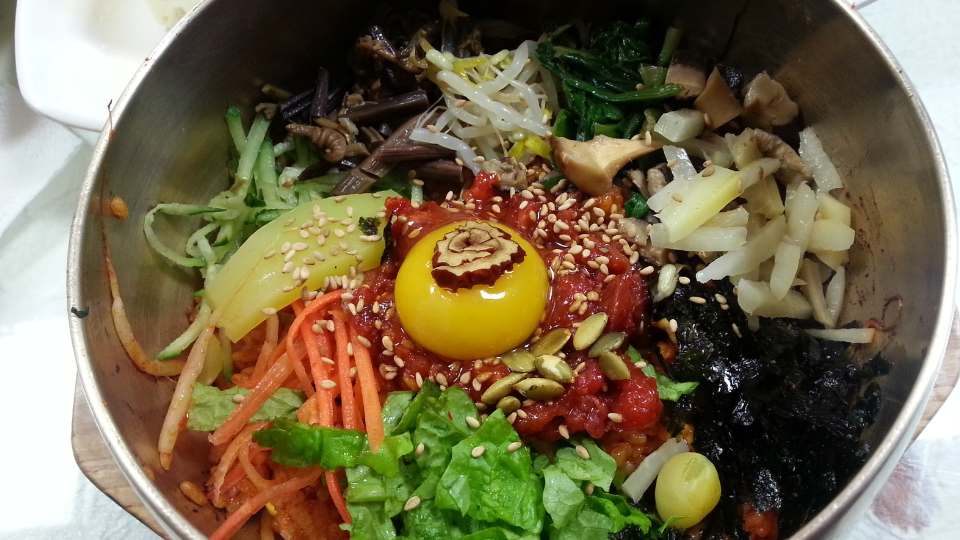
Jeonju bibimbap arrives in a large bronze bowl, not a hot stone pot. The rice is cooked in rich yuksu beef bone broth rather than plain water, and the dish uses locally grown bean sprouts whose texture and flavor differ noticeably from what is grown elsewhere. A raw egg yolk sits on top and is mixed in before eating. The banchan spread — the array of small side dishes accompanying the meal — typically runs to ten or more items.
The difference is not marginal. It is the reason the city earned a UNESCO designation.
Price at a proper sit-down restaurant: ₩10,000–₩15,000 (~$8–11). On weekends, popular restaurants near the village entrance queue before noon. Aim to be seated by 11:30 AM.
Makgeolli in Jeonju — The Unlimited Side Dish Culture
Order one kettle of makgeolli at a village makgeolli house and plates of pajeon, tofu, kimchi, and more keep coming throughout your visit. A kettle costs ₩4,000–₩5,000 — roughly $3. This is a uniquely Jeonju experience.
Samcheon-dong Makgeolli Alley is an entire street of traditional makgeolli houses, lively from 5 PM and extraordinary by 8 PM. It is a 10-minute taxi ride from Hanok Village. For day-trippers leaving on the early evening train, arriving at the alley around 5:00 PM catches the beginning of the evening atmosphere before heading to the station.
The logic here is worth understanding. Makgeolli houses in Jeonju do not charge for side dishes — they keep bringing food as long as you keep drinking. It is a social eating format built for long evenings with friends, and it is one of the most distinctly Korean dining experiences available anywhere in the country.
What to See in Hanok Village
Gyeonggijeon Shrine
Gyeonggijeon Shrine is the most historically important site in the village. It houses the royal portrait of King Taejo, founder of the Joseon Dynasty, and is peaceful and grounding — a welcome break from the busier streets. Entry costs ₩3,000. The bamboo forest path leading to the shrine is one of the most photographed spots in Jeonju.
Visitors wearing hanbok enter free of charge.
Hanbok Rental
Hanbok rental is available throughout the village for one to two hours at around ₩10,000–₩15,000 per person. Wearing a rented hanbok while walking the alleys of Jeonju feels different from doing the same near Gyeongbokgung in Seoul — the village surroundings are more intimate and less crowded, and the setting is more historically consistent.
Hanji Workshops
Jeonju is officially recognized as the origin city of hanji — traditional Korean handmade paper. Hanji workshops, fan-making studios, calligraphy classes, and traditional music performances happen daily inside the village. Most can be tried for under $10.
Street Food Worth Stopping For
Walking through the village’s lanes, you will find Jubjuk ice cream — black bamboo charcoal soft-serve in a striking dark cone, sold from stalls near the Gyeonggijeon entrance and immediately photogenic. Hangwa are traditional Korean sweets made from rice flour, honey, and sesame seeds, found at specialist shops near the main entrance road.
Hotteok in Jeonju is stuffed with seeds, nuts, and brown sugar for ₩2,000–₩3,000. Grilled skewers run ₩3,000–₩5,000 along the main walking street. Makgeolli-flavored soft serve — rice wine ice cream — is available only here, for ₩3,000–₩4,000.
PNB Bakery
PNB Bakery, established in 1951, makes Jeonju’s famous handmade choco pie — nothing like the mass-produced version. Rich, moist, and only available here. Buy enough for the train. This is one of those purchases that gets mentioned in every Jeonju trip report for a reason.
Nambu Market
Nambu Market is the largest traditional market in Jeollabuk Province and has been operating for over 200 years. Located near the 18th-century Pungnam Gate and a short walk from Hanok Village, it offers fresh produce, handcrafted items, and a wide range of traditional Korean street food. The Friday and Saturday night market is one of the best in Korea outside Seoul.
Practical Information
Hanok Village entry: Free. Open every day, all hours.
Crowds: The main commercial streets get crowded on weekends. Arrive before 10 AM or after 4 PM to see the village without the peak crowds. The back alleys away from the main streets are quieter and often more interesting — old walls, small temples, and residents going about their day.
Getting around: No subway in Jeonju. The main sights are all walkable from each other. Taxis are cheap and easy to find for the station transfer.
Budget for the day (excluding train):
| Item | Cost |
|---|---|
| Taxi from station to Hanok Village | ₩5,000–₩7,000 |
| Bibimbap lunch | ₩10,000–₩15,000 |
| Gyeonggijeon entry | ₩3,000 |
| Hanbok rental (optional) | ₩10,000–₩15,000 |
| Street food | ₩10,000–₩20,000 |
| Makgeolli (1 kettle per person) | ₩4,000–₩5,000 |
| PNB choco pies | ₩3,000–₩5,000 |
| Taxi back to station | ₩5,000–₩7,000 |
| Total (excluding train) | ~₩50,000–₩75,000 (~$38–57) |
Best season: Spring (April–May) for cherry blossoms and mild weather. Autumn (October–November) for foliage. Summer is hot and humid but quieter. Jeonju gets hotter in summer and slightly milder in winter than Seoul, given its location further south and inland.
A Day Trip That Almost Always Becomes an Overnight
A day trip gives you about 6 to 8 hours on the ground — enough for Hanok Village, street food, bibimbap lunch, and a walk through the village before the last train back. Staying one night is better if you want to see the village in the evening and morning without rushing.
Most people who do the day trip come back saying the same thing. One night in a hanok guesthouse — sleeping on ondol heated floors in a building from the early 1900s, walking the alleys before the day-trip crowds arrive — turns a good visit into an exceptional one.
For now, start with the day trip.
Book your train ticket at letskorail.com or through the Korail Talk app. Weekend trains sell out fast — book at least one to two weeks ahead. Klook also offers KTX tickets with English-language booking, and bundles are available that include Jeonju hanbok rental experiences alongside the train ticket — a practical combination that takes care of two bookings at once.
Jeonju is ninety minutes away. The only question is which Saturday you are going.
- https://tour.jeonju.go.kr/eng/index.jeonju
- Best Jjampong in Cheongju? This Local Favorite Was Featured by a Famous Korean YouTuber