
By now, most people have heard that Gwangjang Market has an overcharging problem. What’s less known is that the system around it actually changed in 2026. Jongno District introduced a stall “real-name” system, and there’s now a QR code tourists can use to report issues directly. Instead of rehashing the old scandal, here’s what’s actually different right now — and what still hasn’t changed.
What Happened Most Recently
In April 2026, a Myanmar-born YouTuber who’s lived in Korea for 13 years visited Gwangjang Market with a Russian friend, and the video went viral.
After ordering dumplings and japchae, they asked for water and were charged 2,000 won for a single 500ml bottle — well above convenience store prices. When asked why, the vendor first said “because there are a lot of foreigners here,” then backtracked to “Koreans pay the same price.” The clip sparked significant online backlash.

Then in late August, a broadcaster sent reporters posing as Japanese tourists to investigate undercover. At one tteokbokki stall, the menu listed water at 1,000 won, but reporters were actually charged 1,500 won.
When they pointed out that the lettuce, garlic, and peppers looked reused, the vendor’s response was that “I asked AI and it said it was fine.” Jongno District confirmed afterward that reusing side dishes already served to a customer is a clear violation of Korea’s Food Sanitation Act.
In other words, three years after the original dumpling scandal in 2023, the same pattern — mislabeled prices, reused ingredients, “it’s because you’re a foreigner” excuses — is still repeating.
This didn’t happen quietly in between, either. After the 2023 dumpling incident, vendors held a public apology rally wearing sashes, but by March 2024 another YouTuber exposed a similar overcharging trick.
By November 2025, the ongoing controversy had escalated into a 3 billion won lawsuit between shop owners inside the market itself. Whatever self-correction had been promised clearly hadn’t resolved the underlying tension among vendors.
So What Actually Changed? The Stall Real-Name System
In response to the repeated controversies, Jongno District rolled out a “stall real-name system” starting June 1, 2026. Here’s what it does:
- Every stall at Gwangjang Market must now display the operator’s real name
- Violations like overcharging or reusing food ingredients now result in penalty points
- Accumulate 120+ penalty points in a year, or 4+ violations, and the stall permanently loses its road-use permit
- Previously, oversight relied entirely on the merchants’ association policing itself. Now, the district office can issue administrative penalties directly
This matters because a large share of Gwangjang Market’s stalls weren’t formally licensed food businesses under the Food Sanitation Act, meaning the district office had no direct authority to sanction them. The real-name system closes that structural gap for the first time.
Seoul City is also running joint inspections with Jongno District to check compliance with price-display rules and food hygiene, and has deployed a team of 20 “mystery shoppers,” including foreign residents, to continuously monitor for overcharging, forced sales, and unsanitary practices.
How Tourists Can Actually Report a Problem
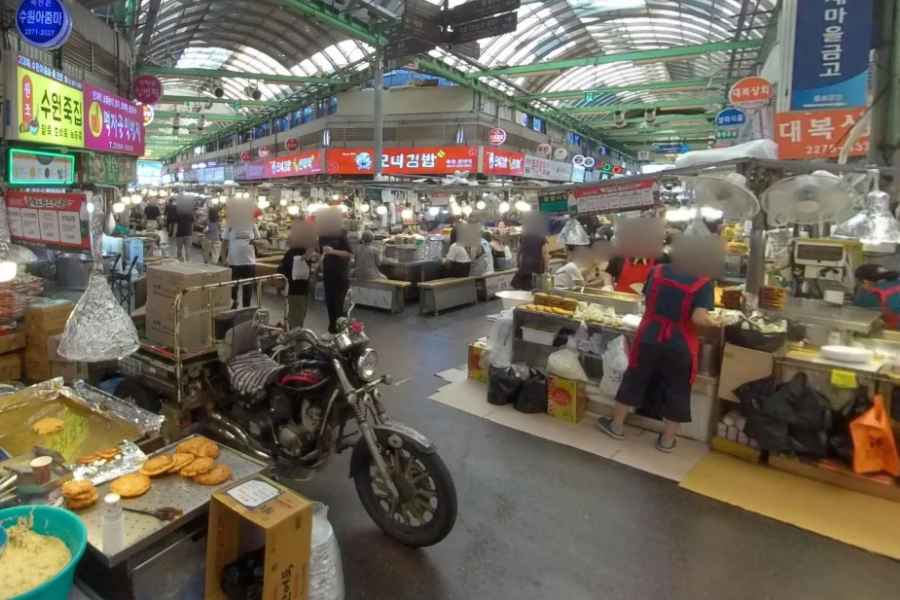
Jongno District has been rolling out QR code signage throughout the market specifically so foreign tourists can report issues easily. If something goes wrong, here’s what to do:
- Note the operator’s real name posted at the stall and take a photo of it. Thanks to the real-name system, identifying exactly which stall was responsible is now much easier.
- If the price charged doesn’t match what’s posted, keep your receipt, payment record, or a photo of the menu.
- If a QR code is posted, scan it to report directly. If not, you can report through Jongno District’s civil complaint channel or Seoul’s Dasan Call Center (120).
- If you noticed something that looked like reused ingredients, that’s reportable too — food hygiene violations are handled separately from pricing issues.
The Basics Still Matter
The new system doesn’t mean every stall has suddenly become transparent. The fundamentals from before are still worth following.
- Check whether prices are posted on the menu before ordering, and if not, ask “how much is this?” before you order
- Even things that seem like they’d obviously be free — water, side dishes — may come with a separate charge, so ask first
- Ask whether card payment is accepted before you order, and remember that refusing card payment is itself illegal in Korea and reportable under credit finance law
- Being asked to share a table with strangers when it’s busy is common — it’s fine to decline politely, but know going in that tight seating is just how the market works
Especially after what the August investigation revealed, whether ingredients like vegetables or side dishes have been reused is much harder to spot with the naked eye than a pricing issue. Rather than trying to judge that yourself, taking a photo if something looks off and using the reporting channels is the more realistic move.
So, Is It Still Worth Visiting?
Opinions on this are genuinely split. Reports note that the stalls at the center of the controversy are still packed with curious visitors, while nearby vendors who had nothing to do with the scandal are struggling as customers avoid the area entirely. In other words, this looks less like a market-wide problem and more like a handful of repeat offenders dragging down the reputation of the whole place.

My own take: Gwangjang Market is still worth visiting for the energy of a traditional Korean market and genuinely local street food. But right now, treating a few basic habits — checking prices, checking names, reporting when something’s off — as routine is simply the sensible way to visit.
Frequently Asked Questions
Q: If the real-name system started in June, why was there another scandal in August? The system started in June, but no system can monitor every single stall in real time. Since it works on accumulated penalty points, catching repeat violations takes time rather than resulting in immediate removal.
Q: Does reporting actually lead to anything? Before the real-name system, oversight was limited to the merchants’ association policing itself. Now the district office can issue direct administrative penalties (points, revoking road-use permits), which makes enforcement meaningfully stronger than before.
Q: Is the whole market like this? No. The problems have centered on a handful of stalls in the food alley, and reports suggest the majority of vendors are actually suffering collateral damage from the controversy. It’s more accurate to judge specific stalls than to write off the whole market.
Q: What’s the lawsuit between vendors about? As the market’s reputation took a hit from repeated overcharging controversies, shop owners unrelated to the scandal filed suit against those responsible, claiming financial damages. It doesn’t directly affect tourists, but it shows how seriously the issue is being taken even within the market itself.
Quick Checklist
- Did you check prices on the menu before ordering?
- Did you ask about charges for things that seem like they’d be free (water, side dishes)?
- Did you check whether the stall has its operator’s name posted?
- If something goes wrong, are you ready to photograph it and report via QR code or call 120?