
Saving money in Korea isn’t about grand strategies — it’s about avoiding a handful of small, easy-to-make mistakes. A wrong tap on a card machine, an ATM that quietly rejects your foreign card, or a taxi you didn’t need to take can each cost you more than a night’s stay.
Below are the 10 money mistakes in Korea that first-time visitors run into again and again. Knowing them ahead of time means fewer surprises the moment you land.
1. Don’t Say Yes When the Card Machine Asks for Your Home Currency
When paying with a foreign-issued card, some terminals ask: “Would you like to pay in KRW or in your home currency?” Choosing your home currency triggers Dynamic Currency Conversion (DCC) — a conversion done on the spot at a much worse exchange rate than your card issuer would give you, plus an extra fee on top.
Always choose to pay in KRW. The screen usually shows both amounts side by side; just tap the Korean won option. This one habit alone can save you 3–8% on every card payment you make during your trip.
2. Not Every ATM Accepts Foreign Cards
Korea is famously card-friendly, but that doesn’t mean every ATM will work with your foreign card. Many regular bank ATMs are set up for domestic cards only and will simply reject international ones.
Machines that reliably accept foreign cards include Woori Bank, KEB Hana Bank, and Post Bank ATMs, along with Global ATMs installed at select convenience stores (certain 7-Eleven and emart24 branches). In tourist-heavy areas like the airport, Myeongdong, and Hongdae, look for the “Global ATM” label before inserting your card.
3. Traditional Markets and Some Taxis Are Still Cash-Only
Most large chains and convenience stores in Seoul accept cards without any issue. But individual stalls in traditional markets like Gwangjang Market or Namdaemun Market, along with some independent taxis outside Seoul, still take cash only.
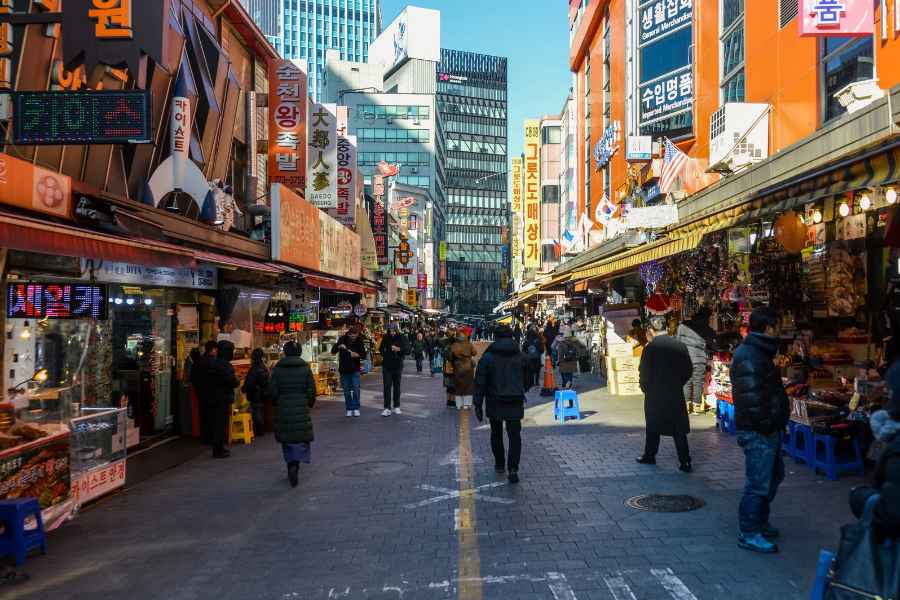
Standing in front of the street food you’ve been dreaming about with nothing but a card in your wallet is a frustrating way to start a trip. Keep around ₩30,000–50,000 in small bills on hand at all times.
4. The Tax Refund Threshold Is Lower Than You Think
Many travelers assume they haven’t shopped enough to bother with a tax refund and skip it entirely — but the minimum purchase to qualify is only ₩15,000 per receipt. A single skincare item or souvenir is often enough.
According to Korea Tourism Organization (VisitKorea) guidelines, immediate in-store refunds are available for purchases under ₩1,000,000, with a total immediate-refund cap of ₩5,000,000 per trip. Look for the “Tax Free” sign at checkout and show your passport — many stores will process the refund on the spot. If you only collect the paperwork and skip the in-store option, you’ll end up queueing at the airport instead, so try the immediate refund first whenever it’s offered.
Related tool: Not sure how much you’d actually get back? Plug your purchase amount into our Customs Duty & Tax-Free Refund Calculator to see an estimate instantly.
5. A Taxi from the Airport Can Cost 6 Times More Than the Train
After a long flight, jumping straight into a taxi feels tempting — until you see the price difference. The AREX Express Train covers Incheon Airport to Seoul Station in about 43 minutes for roughly ₩10,000–11,000, while a taxi to central Seoul runs ₩60,000–90,000, and late-night rides can push past ₩100,000 with surcharges.
Unless you’re traveling with heavy luggage or arriving very late at night, AREX or the limousine bus is the far more reasonable choice. If your accommodation is near Seoul Station, Hongdae, or Gongdeok, the All-Stop AREX train can even take you there directly without a transfer.
Related tool: If a taxi really is your best option, use our Seoul Taxi Fare Calculator to get an estimate before you get in — a good way to sanity-check the meter.
6. Most Visitors Never Get Their T-money Balance Refunded
The T-money card used for subways and buses has a non-refundable purchase cost (₩2,500–4,000), but any balance you’ve loaded onto it can be refunded. A surprising number of travelers don’t realize this and just take the card home as a souvenir with money still on it.
The process is simple: if your remaining balance is ₩20,000 or less, hand the card to staff at any convenience store (GS25, CU, 7-Eleven) and ask for a refund — you’ll get the balance back in cash minus a ₩500 fee. For balances above ₩20,000, you’ll need to visit a subway station service center or T-money Town near Seoul Station. Check your balance the night before you fly out so you can bring it under ₩20,000 for the easiest refund.
7. Airport Currency Exchange Counters Are Almost Always the Worst Rate
It’s tempting to exchange a large amount of cash the moment you land, but airport exchange counters almost always offer worse rates than exchange booths in the city. Private exchange shops in Myeongdong, or pre-booking through your home bank’s app, can save you tens of thousands of won on the same amount.
A better strategy: exchange only what you need for your first day (transport and a meal or two) at the airport, then handle the rest once you’re in the city — either at a Myeongdong exchange booth or through a bank app reservation picked up at the airport, which often carries lower fees than a walk-up counter.
8. It’s Easy to Misread a Zero on Korean Won
Korean won bills use large denominations, and it’s surprisingly common for visitors to mix up a ₩10,000 note with a ₩1,000 note — especially in the first few confusing days. That one extra zero can mean paying ten times what you meant to, or shortchanging yourself without realizing it.
A simple habit fixes this: identify bills by their color and portrait rather than counting zeros under pressure — ₩1,000 is blue-toned, ₩5,000 is reddish, ₩10,000 is green, and ₩50,000 is yellow-toned. Taking two extra seconds to check a bill before handing it over prevents most of these mistakes.
9. Delivery Apps Usually Require a Korean Phone Number
Ordering food to your accommodation sounds convenient, but major delivery apps like Baemin (Baedal Minjok) and Coupang Eats generally require a Korean phone number and local payment method to complete signup. Many visitors download the app, get stuck at registration, and give up.
Your easiest alternatives are asking your accommodation’s front desk to place an order for you, using one of the few delivery services designed for foreign visitors, or simply getting takeout from a nearby restaurant — often cheaper and simpler than trying to work around app restrictions, and it avoids the inflated prices near major tourist spots too.
10. Buying an eSIM or SIM at the Airport Is the Most Expensive Option
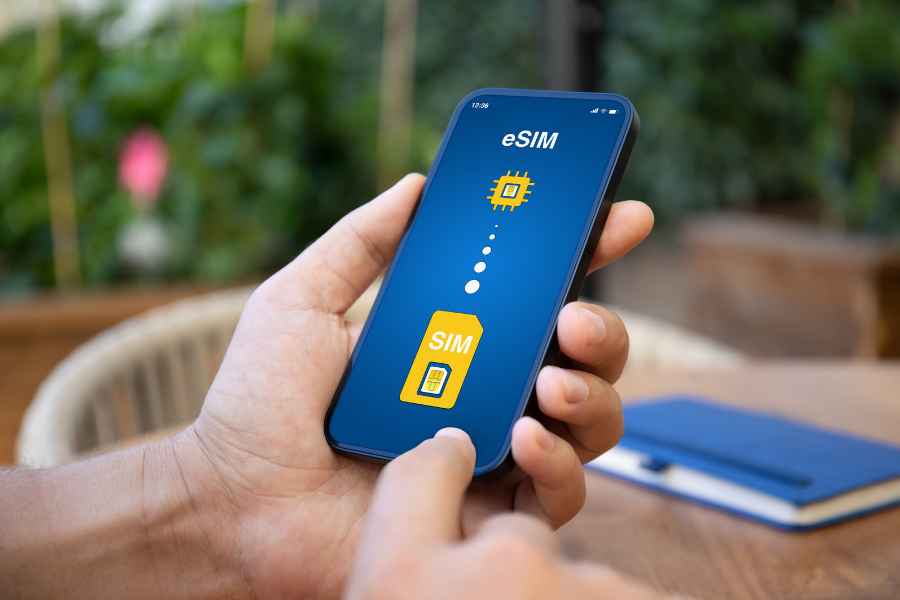
The telecom booths right past arrivals are convenient, but that convenience comes at a price — the exact same eSIM or SIM plan is almost always cheaper when booked online in advance rather than purchased at the airport counter.
Buying your eSIM before departure and activating it via QR code means you have data the moment you land, at a lower cost. If you need a physical SIM, look for pre-booked pickup options at a designated airport counter — you’ll usually get the same product for less than walking up and buying on the spot.
Checklist: 5 Minutes Before You Fly That Could Save You Money
- Always choose to pay in KRW, never your home currency
- Know which Global ATMs accept foreign cards before you need cash
- Carry ₩30,000–50,000 in small bills for cash-only spots
- Check if your purchase qualifies for a tax refund (₩15,000 minimum)
- Take AREX or the limousine bus from the airport instead of a taxi
- Spend down your T-money balance to under ₩20,000 before you refund it
- Exchange only what you need at the airport; do the rest in the city
- Double-check bill colors so you don’t misread a zero
- Look up takeout options instead of fighting with delivery apps
- Book your eSIM online in advance, not at the airport counter
Keep these 10 in mind and you’ll avoid most of the money leaks that catch first-time visitors off guard. And if you haven’t tried the tax refund or taxi fare calculators linked above, it’s worth running your own numbers before your next purchase or ride — seeing the actual figures makes it much clearer why these small habits matter.