
Most travelers come to Korea and only ever eat kimchi before heading home. But few realize that the act of making kimchi — known as Kimjang — was inscribed on UNESCO’s Representative List of the Intangible Cultural Heritage of Humanity back in 2013. Sitting on the same prestigious list as French gastronomy, Kimjang isn’t just “a Korean cooking activity” — it’s a living community tradition that around 90% of Koreans still take part in today. In this guide, we’ll walk through where foreigners can join a real kimchi making class in Seoul, which experiences come closest to authentic Kimjang, and — most importantly — when to go and when to book.
Why Kimjang Became a UNESCO Intangible Cultural Heritage — It’s Not Just “Cooking”
In December 2013, at the 8th session of UNESCO’s Intergovernmental Committee for the Safeguarding of the Intangible Cultural Heritage held in Baku, Azerbaijan, “Kimjang, Making and Sharing Kimchi in the Republic of Korea” was officially inscribed on the Representative List of the Intangible Cultural Heritage of Humanity.
According to a 2012 survey by Korea’s Cultural Heritage Administration (now the Korea Heritage Service), roughly 90% of Koreans either make kimchi themselves or take part in Kimjang. This kind of culture — voluntarily passed down from one generation to the next — was the core reason behind the inscription.
Kimjang follows a year-round cycle. In spring, families prepare fermented seafood like shrimp and anchovies. In summer, they gather sea salt for the brine. In late summer, red chili peppers are dried and ground into powder. And in late autumn, once the average temperature drops below 4°C, the real “Kimjang season” begins — when families and neighbors come together to make large batches of kimchi all at once, enough to share and last through winter. That spirit of sharing and community is the core value behind the UNESCO inscription.
In other words, joining a Kimjang experience isn’t simply “making one Korean dish” — it’s a hands-on way to experience the community philosophy that UNESCO formally recognized.
Where Can Foreigners Actually Join a Kimchi Making Class in Seoul?
A kimchi making class in Seoul comes in more varieties than you might expect. Some are tied to museum exhibits with real academic depth, while others are more tourist-oriented packages. Which one you choose depends on what you’re looking for.
Museum Kimchikan — UNESCO Exhibition Hall + Hands-On Experience (Insadong)
Located in Insadong, Museum Kimchikan is an officially recognized kimchi museum endorsed by Korea’s heritage authorities. On the 6th floor, you’ll find a dedicated “Room for UNESCO Intangible Cultural Heritage” alongside “Kimjang Maru,” a hands-on experience space where you can make your own kimchi. Audio guides are available in English, Chinese, and Japanese, along with recipe cards for the experience, and you can take your finished kimchi home with you.
This goes well beyond a typical traditional Korean kimchi making class — you first learn why Kimjang earned UNESCO recognition through the exhibits, then put that into practice yourself, giving the experience real academic depth. The museum is open Tuesday through Sunday, 10:00–18:00, closed on Mondays and public holidays, and the hands-on program requires advance reservation.
Myeongdong-Style Classes — Hanbok, Kimchi, and Tteokbokki All in One
Near Myeongdong Station, you’ll find compact experience classes where you wear a hanbok (traditional Korean clothing) and make both kimchi and tteokbokki in a short session. Instructors typically speak English, Chinese, and Japanese, and the whole experience — from making kimchi to packaging it — usually takes about an hour. Many of these classes also include a hanbok photo zone, making them a great fit for travelers with tight schedules.
Local Market Tour + Home-Style Cooking Class
Some experiences combine a walk through one of Seoul’s local markets — such as Mangwon Market — with hands-on cooking of a full Korean meal that includes kimchi, using ingredients you just picked up. These typically run about 3.5 hours and are conducted in English. The appeal here isn’t just making kimchi — it’s experiencing the full journey “from market to table.”
The Most Authentic “Sharing” Experience — The Seoul Kimchi Culture Festival
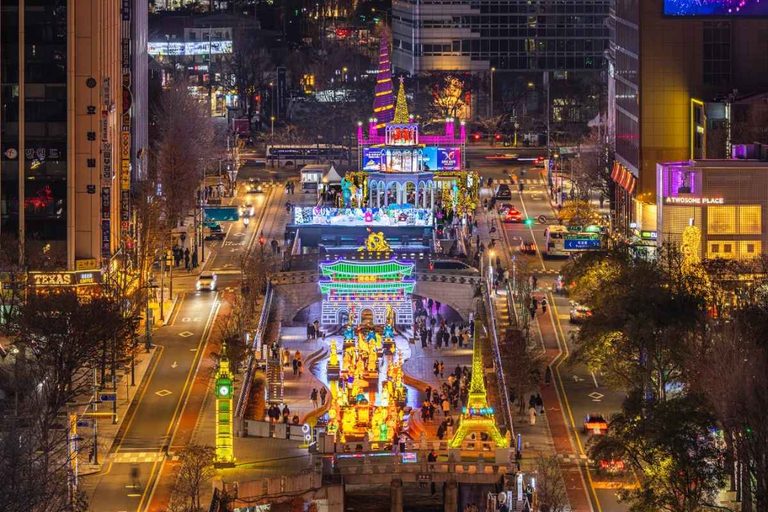
All of the experiences above are great, but if you want to experience the sharing aspect that lies at the heart of UNESCO’s Kimjang recognition, look into the Seoul Kimchi Culture Festival, hosted by the Seoul Metropolitan Government.
This festival runs a dedicated “kimchi making for foreigners” program, and the kimchi participants make is later donated to roughly 20,000 households in need. In other words, the kimchi you make with your own hands actually ends up on someone’s winter table. That’s something none of the purely tourist-oriented classes can offer — it’s the same “community making and sharing” tradition that earned Kimjang its UNESCO status, experienced firsthand.
Comparing the Experiences
| Experience Type | Location | Duration | Language | Cost Level | Connection to UNESCO “Sharing” |
|---|---|---|---|---|---|
| Museum Kimchikan | Insadong | ~1 hour | EN/CN/JP | Low–Mid (admission + program fee) | High (linked to academic exhibits) |
| Myeongdong Hanbok + Kimchi Class | Myeongdong | ~1 hour | EN/CN/JP | Mid | Low (tourist-focused) |
| Market Tour + Cooking Class | Mangwon, etc. | ~3.5 hours | English | Mid–High | Medium |
| Seoul Kimchi Culture Festival | Citywide (Seoul) | One-day event | KR/EN mixed | Free | Very High (real donation component) |
When Should You Go, and When Should You Book?
Year-round experiences (Museum Kimchikan, Myeongdong classes, market cooking classes)
These standing programs run all year. That said, Museum Kimchikan requires reservations at least 3 days in advance, and during peak foliage season (October–November) and summer vacation (July–August), booking 1–2 weeks ahead is recommended. Myeongdong and market-tour classes can often be booked just 1–3 days out, but during the busy November–December period, it’s safer to book at least a week in advance.
If you want to feel real Kimjang-season atmosphere — November to early December
If you want to experience Kimjang as close to its original spirit as possible, late autumn — when the average temperature drops below 4°C, roughly November through early December — is the ideal time. This is the same period when Korean households and communities are actually doing their own Kimjang, so you’ll also encounter street markets selling cabbage and chili powder, along with various Kimjang-related events around the city.
If you want to join the Seoul Kimchi Culture Festival
The festival is typically held around November each year, with the exact dates announced around September–October on the Seoul Metropolitan Government’s official site (seoul.go.kr) or Visit Seoul (visitseoul.net). Free programs like “kimchi making for foreigners” tend to fill up extremely fast once announced, so it’s best to apply online as soon as the official schedule is posted — ideally within a day or two.
If your travel dates can be flexible enough to land in November, it’s the best window to experience not just the hands-on activity, but the seasonal atmosphere and sharing culture of real Kimjang. Set a calendar reminder for September–October, and apply the moment Seoul’s official announcement goes live.