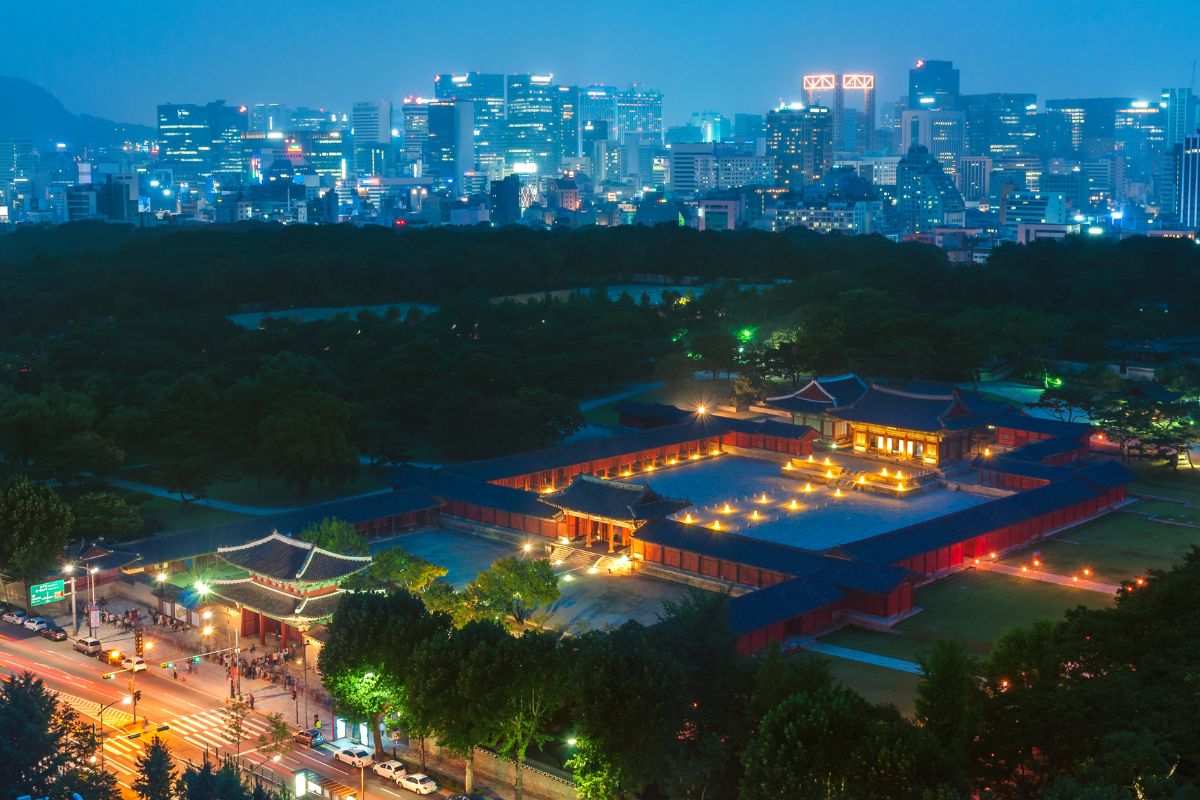
Here’s the bottom line: Changgyeonggung wasn’t always a palace — for a time, it was literally a zoo and botanical garden. Compared to the other four palaces, it looks like the quietest, most modest one. But beneath that quiet surface lies the most painful history of any of Seoul’s five grand palaces. Once you know that history, this stops being just “the peaceful palace” and becomes something with far more weight.
Location and Basic Info
Changgyeonggung sits at 185 Changgyeonggung-ro, Jongno-gu, Seoul, sharing a single wall with Changdeokgung right next door. Because of how they’re positioned, these two palaces have long been referred to together as “Donggwol” (the Eastern Palaces). Seoul National University Hospital sits directly across from it, making the location easy to find.
History: A Palace Built for Queens, and Its Darkest Chapter
Why It Was Built: “The Queen’s Palace, the Palace of Filial Piety”
Changgyeonggung was built in 1483, the 14th year of King Seongjong’s reign. Unlike the other palaces, it wasn’t built as a new royal seat — it was built specifically to house the dowager queens, the senior women of the royal family. That’s why Changgyeonggung has long carried the symbolic title of “the Queen’s Palace” or “the Palace of Filial Piety.”
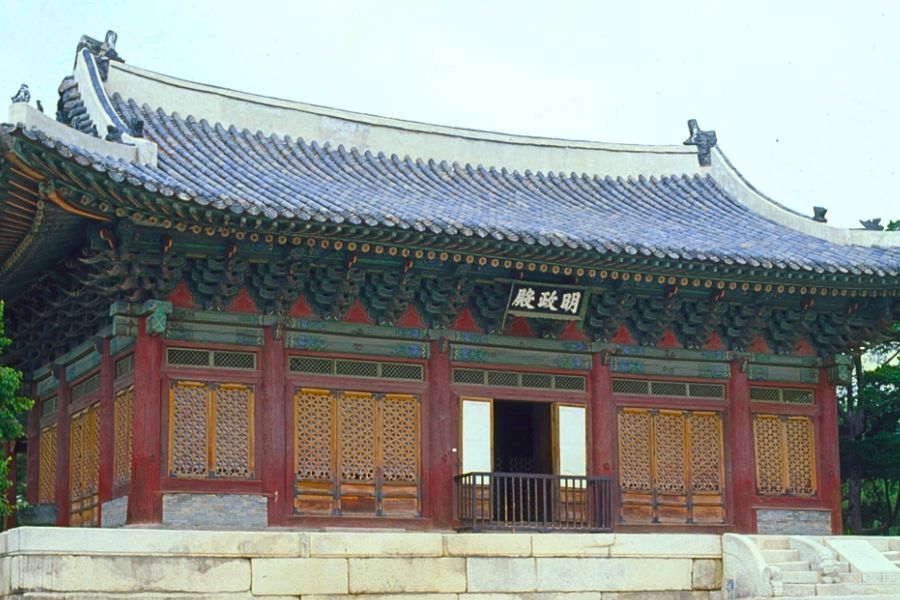
This purpose shows up in its architecture, too. At the other palaces, you pass through three gates to reach the main throne hall from the front gate. At Changgyeonggung, you only pass through two — Honghwamun and Myeongjeongmun — before arriving directly at Myeongjeongjeon, the throne hall. It’s generally read as a design that prioritized practicality and modesty over formal ceremony.
Japanese Colonial Rule: From Palace to Zoo
Changgyeonggung’s most painful chapter came in the early 20th century. After Japan effectively confined Emperor Sunjong, the Korean Empire’s last emperor, to Changdeokgung, it built a zoo and botanical garden inside Changgyeonggung — officially “to console the emperor.” This happened in 1909. But the prevailing interpretation is that the real purpose wasn’t comfort at all — it was a deliberate, symbolic move to strip the palace of its status as a royal seat.
Even the palace’s name was downgraded, replaced with the lesser term “won” (garden), becoming “Changgyeongwon.” From that point on, Changgyeonggung went from a space reserved for royalty to Korea’s first public park, open to anyone willing to pay admission. Turning a private royal space into a public amusement venue was, for its time, a genuinely shocking act.
The 1980s: Restoring It to a Palace
This painful history began to be corrected with a major restoration project that ran from 1983 over the following two years. The animals were relocated to what is now Seoul Grand Park in Gwacheon. The concrete animal enclosures and snack stands were all demolished. The cherry trees were transplanted to Yeouido’s Yunjungno and Seoul Grand Park, and pine and zelkova trees — the species that actually belonged in a royal palace — were planted in their place. The name was also restored from the Japanese-imposed “Changgyeongwon” back to the original “Changgyeonggung.”
Interestingly, while most of the buildings the Japanese colonial government constructed were torn down, the Grand Greenhouse was the one exception — preserved intact. It’s a mark of a painful history, but it was also judged to hold real value as a piece of modern architectural heritage.
What Foreign Visitors Should Make Sure to See
1. Honghwamun Gate — Site of an 18th-Century “Public Opinion Poll”
Changgyeonggung’s main gate isn’t just an entrance. In 1750, King Yeongjo, the 21st king of Joseon, personally went out to Honghwamun to meet with both aristocrats and commoners and ask for their opinions. He did this before implementing a reform called the Gyunyeokbeop — a law designed to reduce the tax burden on farmers. As a result, the military cloth tax farmers paid, which had been two bolts per year, was cut to one bolt, with the shortfall in state revenue made up through salt taxes and other sources.

A king personally coming out to the palace gate to ask ordinary people for their opinions was, even by the standards of the entire Joseon Dynasty, remarkably unusual. In modern terms, it’s roughly equivalent to a head of state conducting a direct public opinion survey before announcing a policy. Don’t just walk past Honghwamun — take a moment to picture what actually happened there.
2. Myeongjeongjeon Hall — The Oldest Throne Hall Among Seoul’s Five Palaces
Myeongjeongjeon was built in 1616, making it the oldest surviving throne hall among all of Seoul’s royal palaces. The throne halls at the other palaces were rebuilt multiple times after fires and wars, but Myeongjeongjeon has retained much of its original form, earning it National Treasure status. The building itself carries a distinctly older, more weathered feel than what you’ll see at the other palaces.
3. The Grand Greenhouse — Where Modern Architecture Meets a Painful History
This is Korea’s first Western-style greenhouse, built from a combination of steel framework, glass, and wood. It was designed in 1907 by the head of the Japanese imperial garden office and built by a French construction company, completed in 1909. On the surface, it looks like a beautiful European-style garden greenhouse — but knowing, as explained above, that it was built to help demote the status of the Joseon royal palace changes how the building feels entirely. It’s recognized enough for its architectural value to be registered as cultural heritage, making it a place where painful history and architectural beauty sit side by side.

4. The Palace’s Unexpected Stone Pagodas — A Detail Most Visitors Miss
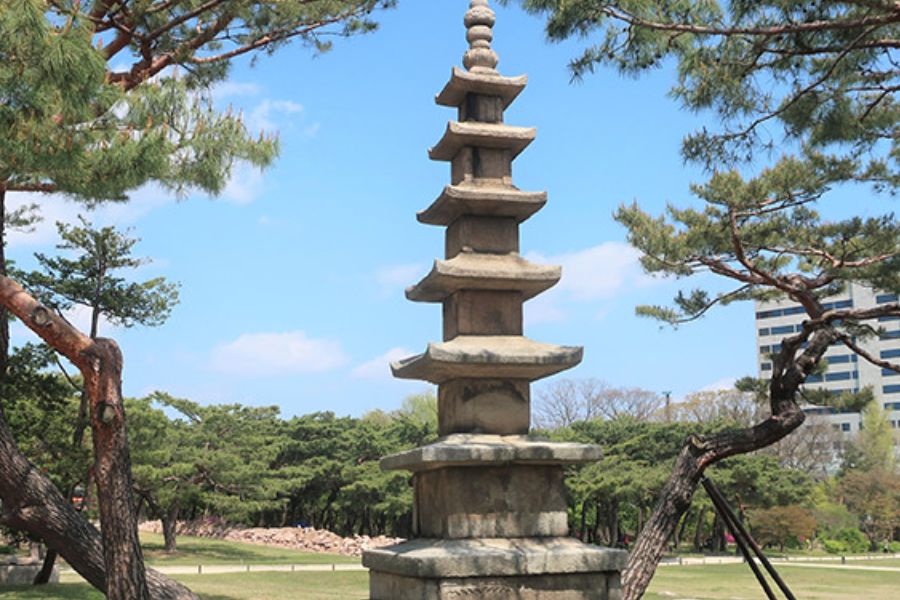
Behind Myeongjeongjeon Hall, and along the path toward Chundangji Pond, stand a five-story stone pagoda in the Goryeo style and an octagonal seven-story pagoda. It might seem strange that a Buddhist-style stone pagoda would exist inside a palace built by the staunchly Confucian Joseon Dynasty — and there’s a story behind that oddity. These pagodas weren’t originally part of Changgyeonggung at all. They were relocated here during the Japanese colonial period, when the Yi Royal Family Museum was being built on the grounds — the octagonal seven-story pagoda, in fact, was brought all the way from Manchuria. Details like these, scattered throughout the palace, quietly tell the story of Changgyeonggung’s complicated modern history.
5. Chundangji Pond — A Quiet Walk Around the Water
Sitting just in front of the Grand Greenhouse, Chundangji Pond is a pleasant place to walk year-round. Compared to the more popular photo spots at other palaces, it draws far fewer crowds — a real plus if you want to take your time getting the shot you want.
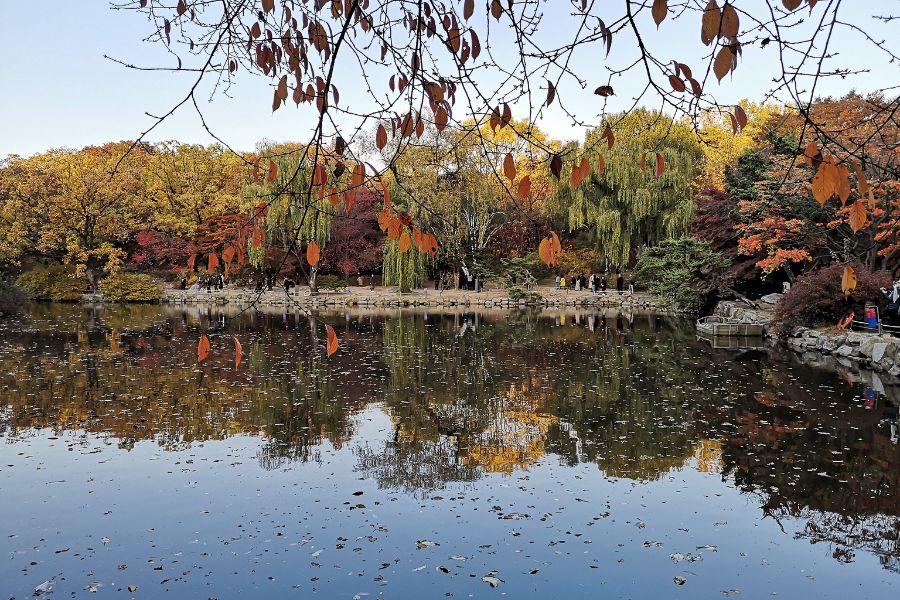
Munjeongjeon — The Working Hall, and the Site of Sado Seja’s Death
Munjeongjeon served as Changgyeonggung’s working hall, where the king discussed state affairs with officials. Unlike working halls at other palaces, it sits almost directly attached to the south of the main hall (Myeongjeongjeon) — an unusual layout that traces back to Changgyeonggung originally being built on a smaller scale to house queen dowagers.
But Munjeongjeon is remembered for something far darker than routine government business. In 1762, this is where Crown Prince Sado was locked inside a rice chest on his father King Yeongjo’s orders and died of starvation eight days later — an event known as the Imo Incident. At the time, the building was actually called Hwiryeongjeon. After Yeongjo stripped his son of his royal title, he had him climb into the chest in the middle of the courtyard. Sado’s young son (the future King Jeongjo) pushed past palace guards to beg his grandfather to spare his father’s life, but was refused. Only after the prince died did Yeongjo, filled with remorse, posthumously restore his title and grant him the name “Sado,” meaning “one who is mourned.”
The building was demolished during Japanese colonial rule and wasn’t rebuilt until 1986.

Tongmyeongjeon — The Queen’s Bedchamber, and the Stage for a Royal Curse
Designated a Korean Treasure, Tongmyeongjeon served as the queen’s bedchamber and the top-ranking hall of the inner court, where the queen oversaw the palace’s female staff and hierarchy. It’s an elegant building complete with a wide stone platform, a pond, and a natural spring.
What actually made it famous, though, was one of the biggest scandals of the late Joseon court. Lady Jang (Jang Hui-bin), the daughter of an interpreter who rose to become King Sukjong’s concubine, secretly buried cursed objects — dead birds, dead rats — beneath the steps of Tongmyeongjeon in an attempt to curse Queen Inhyeon and reclaim the queen’s title for herself. When the plot was discovered, Lady Jang was forced to drink poison, and in a strange twist of fate, Queen Inhyeon also died that same year, 1701. In the aftermath, Sukjong established a law barring concubines from ever being elevated to the position of queen. This is the real-world setting behind the famous scene endlessly reenacted in Korean historical dramas about Jang Hui-bin.

Gyeongchunjeon — Where Jeongjo Was Born, and Where Lady Hyegyeong Wrote Her Memoir
Gyeongchunjeon served as a queen dowager’s bedchamber, and also as a birthing room for royal queens. Both King Jeongjo and King Heonjong were born here. Jeongjo later commemorated his own birth by personally writing and hanging a plaque inside reading “Tansaengjeon” (“Hall of Birth”). (The Gyeongchunjeon plaque currently displayed, incidentally, was written by King Sunjong.)
Here’s another quietly moving detail: Lady Hyegyeong, Sado’s wife and Jeongjo’s mother, wrote her memoir here — the very account of witnessing her husband’s tragic death in the Imo Incident. That she wrote it in a building not far from where that death actually took place (Munjeongjeon) adds another layer to Changgyeonggung’s sorrowful history.
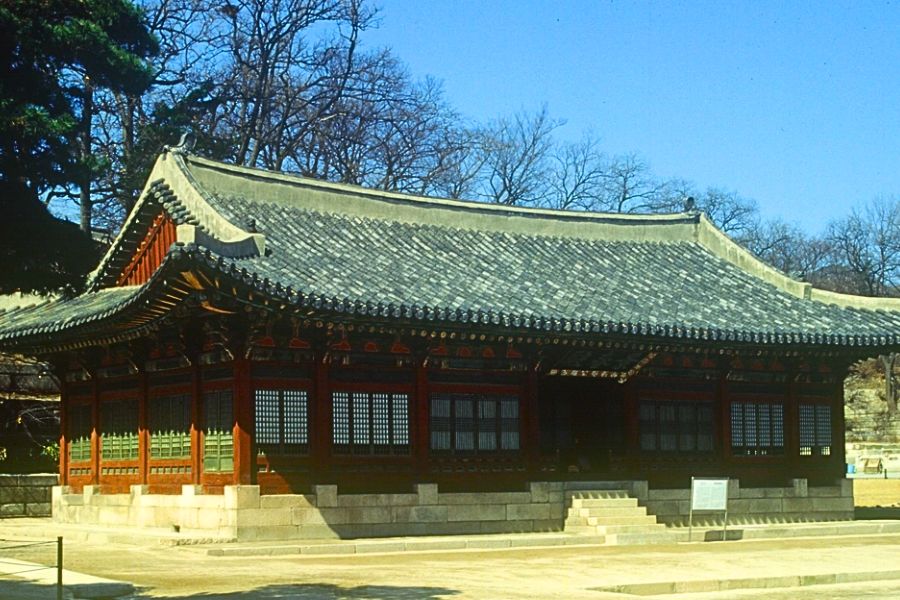
Hwangyeongjeon — The King and Queen’s Bedchamber, Marked by Two Deaths
Hwangyeongjeon served as the bedchamber for the king and queen. King Jungjong passed away here. Interestingly, the Joseon Dynasty’s official records mention several times that Jungjong entrusted his medical care to the court physician Jang Geum, rewarding her for her service — making Hwangyeongjeon the actual real-world location where the physician made famous by the K-drama “Dae Jang Geum” treated a Joseon king. Later, Crown Prince Sohyeon, King Injo’s eldest son, also died in this building.
The current building dates to 1834, rebuilt after a major fire destroyed it in 1830.

Yanghwadang — A Queen Dowager’s Bedchamber, and Where Injo First Stayed After Surrender
Situated right beside Tongmyeongjeon, Yanghwadang served as a queen dowager’s bedchamber. Records suggest that after King Injo surrendered to the Qing forces at Namhansanseong during the Second Manchu invasion, this was the first building he stayed in upon returning to Hanyang — connecting this space to one of the most humiliating moments in Joseon history.

Yeongchunheon — Where Jeongjo Read, and Where He Died
This was a space King Jeongjo held particularly dear. Jeongjo established a publishing office called Gaminso at the former site of Changgyeonggung’s Hongmungwan (Office of Special Advisors), and he mostly resided at nearby Yeongchunheon, using it as both his personal study and office. When an official suggested the building was too modest for a king’s residence and requested renovations, Jeongjo declined.
In 1800, at age 49, Jeongjo passed away in this very building. Given that Jeongjo was known for his vigor — including skill in archery and martial pursuits — his sudden death just 15 days after falling ill long fueled suspicions of poisoning. Decades later, when secret letters exchanged between Jeongjo and his political rival Sim Hwan-ji were made public, the prevailing view shifted to “a gradual decline in health rather than a sudden death.” After Jeongjo’s death, Queen Dowager Jeongsun (Yeongjo’s second wife) initially wanted to use Yeongchunheon as the mortuary hall, but chose Hwangyeongjeon instead, citing insufficient space.
The current building was rebuilt in 1833 after burning down in an 1830 fire. It also happened to survive Japanese colonial rule intact — because it was repurposed as office space when Changgyeonggung was converted into a zoo (Changgyeongwon).

Jipbokheon — Where Both Sado and Sunjo Were Born
Connected to Yeongchunheon like a western wing, Jipbokheon served as a concubine’s residence. Both Crown Prince Sado and King Sunjo were born here. Considering how deeply Jeongjo worked to restore his father Sado’s honor and reputation, there’s real weight in the fact that Jeongjo chose to make his own residence (Yeongchunheon) right next door to the building where his father was born.
Originally a separate structure from Yeongchunheon, it was rebuilt in 1834 after the 1830 fire and became architecturally connected to it as it stands today. Fitting its role as a concubine’s residence, it has a distinctive square (“ㅁ”-shaped) layout unlike either a typical noble household or a typical palace building.

Seasonal Night Openings — Changgyeonggung’s Quiet Night Views
Changgyeonggung also runs seasonal night openings, letting visitors explore the Honghwamun, Myeongjeongjeon, Tongmyeongjeon, Chundangji, and Grand Greenhouse areas after dark. It’s relatively less well-known than the night openings at Gyeongbokgung or Changdeokgung, which makes it a solid choice if you’d rather enjoy the night views without waiting in line.
Pre-Visit Checklist
- Changgyeonggung is closed every Monday — confirm your visit date
- Pause at Honghwamun and picture King Yeongjo’s public opinion poll taking place right there
- Knowing the Grand Greenhouse’s painful history will change how the building feels — worth keeping in mind before you visit
- Look for the two stone pagodas behind Myeongjeongjeon and along the path to Chundangji — easy to miss
- If visiting during a night-opening period, check the daytime-to-nighttime section transition schedule in advance
- Consider pairing it with neighboring Changdeokgung for a full “Donggwol” day trip
- If you want to avoid crowds, prioritize Changgyeonggung over Gyeongbokgung or Changdeokgung
Once you know it was once a zoo — and that a king once stood at its gate asking commoners for their opinions — Changgyeonggung looks like a completely different place, doesn’t it? Next up, we’ll cover Gyeonghuigung, the free-admission palace. If you had a memorable spot at Changgyeonggung, let us know in the comments.