A while back, we came across an interesting post circulating online. It was a list, popular among Japanese travelers who visit Korea often, of five signs for spotting a genuinely good restaurant. No foreign-language menu. A short menu with just a handful of dishes. Prices hovering around 10,000 won. Ordering by speaking to staff instead of using a kiosk. And, somewhat famously, a middle-aged local man drinking alone in broad daylight.
At first read, it felt like a joke. But reading it again, it described, almost exactly, the kind of place we’ve covered in the last several posts. A gisa sikdang. Today we’ll go through these five signs one by one and explain why they turn out to be such an accurate way to judge a restaurant.

1. Real Korean Restaurant. No Foreign-Language Menu
Restaurants built for tourists naturally come with English, Chinese, and Japanese menus. A Korean-only menu means the opposite: the place was never designed with foreign customers in mind. In other words, it’s a signal that this is a spot for actual locals. Think back to places like Gamnamujib Gisa Sikdang or Songrim Sikdang, where the menu taped to the wall is entirely in Hangul.
That’s exactly why a translation app earns its place in your pocket.
2. Only a Few Items on the Menu
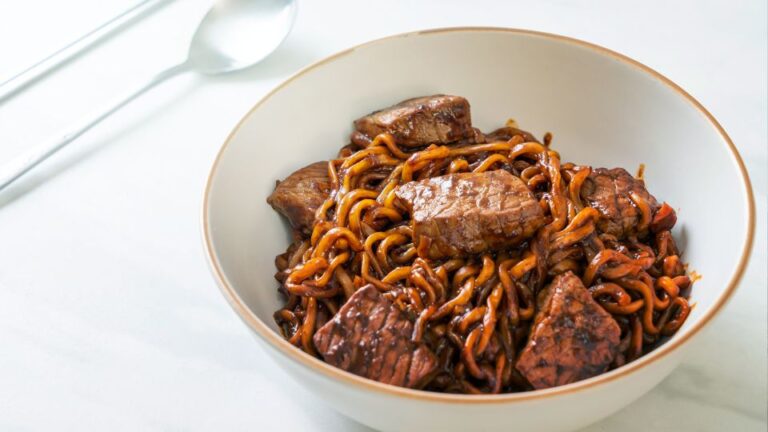
A thick menu usually means everything is made decently. A short one means the kitchen is putting all its focus into just a few dishes. That’s why Songrim Sikdang has lasted nearly 30 years on one dish, jeyuk bulgogi set, and why Wonjo Gisanim Bunsik can stay open late into the night on jjamyeon-bap alone. Having fewer options isn’t a weakness, it’s confidence.
3. Around 10,000 Won Per Dish
A low price doesn’t mean lower quality. If anything, restaurants that survive on rent in expensive neighborhoods through turnover and regulars tend to keep prices from creeping up unnecessarily. Compared to the polished restaurants in tourist-heavy areas, this price range is proof that this is a meal locals eat every single day.
4. Ordering by Speaking, No Kiosk
A lot of Korean restaurants now take orders through a kiosk these days. It’s efficient, but it also means human conversation disappears from the process. A restaurant where you order by talking directly to staff is usually one that’s been serving the same kind of customer in the same spot for years. With a menu this short, there’s simply no real need for a machine.
5. A Local Man Drinking Alone in the Middle of the Day
This is the funniest sign, but also the most accurate. Tourist restaurants don’t really have neighborhood regulars drinking solo at noon. A genuine local spot, on the other hand, almost always has someone who shows up at the same time, in the same seat, for a drink alone. It’s proof the place has held its ground in that neighborhood long enough to become part of someone’s everyday routine.
To be clear, this is just an observation point, there’s no need to start day-drinking yourself on your trip.
Put All Five Together, and You Get a Gisa Sikdang
Walk through these five signs one at a time, and the conclusion is pretty clear. The type of restaurant in Korea most likely to check every box is the gisa sikdang. Korean-only menu, one or two dishes, prices around 10,000 won, ordering by speaking to staff, and a regular holding down their usual seat.
Gamnamujib Gisa Sikdang, Songrim Sikdang, Seopyeong Gisa Sikdang, the places we covered in earlier posts, all fit these five criteria almost perfectly.
| Criteria | Tourist Restaurant | Gisa Sikdang |
|---|---|---|
| Menu language | Multilingual menu | Korean only |
| Number of dishes | 10 or more | 1–4 |
| Price range | 20,000 won and up | Around 10,000 won |
| Ordering method | Kiosk | Speaking to staff |
| Regulars | Rare | Locals holding their seat since midday |
Try It Yourself on Your Next Trip
Memorize these five signs and you can apply them in pretty much any neighborhood in Korea. Walking down an alley and spot a small restaurant with no foreign-language menu? Open the door. Short menu, low prices, and maybe someone drinking alone at a nearby table? A good meal is almost certainly waiting. Take the gamble once, and chances are you won’t regret it.
On your next trip to Korea, look past the flashy signage and watch for these five signals instead.