
Visiting Korea and staying only in Seoul is like going to Italy and never leaving Rome. The city is magnificent. It’s also only part of the story.
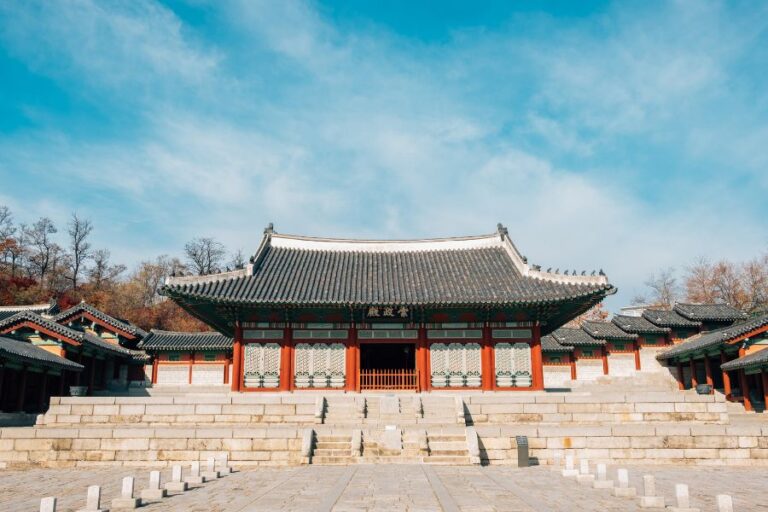
Two hours south by high-speed train, Gyeongju is a city where the tombs of ancient kings sit in the middle of residential neighborhoods, where Buddhist temples from the 8th century still hold daily services, and where the night reflection of a palace on a pond is one of the most quietly beautiful things in East Asia.
Two hours west, Jeonju is a city of 700 traditional Korean houses — still inhabited, not a museum — and is officially recognized by UNESCO as a Creative City of Gastronomy.
Two and a half hours to the north, the East Sea coastline at Gangneung runs alongside one of Korea’s most unusual coffee cultures.
The numbers confirm what travelers are already figuring out on their own. According to South Korea’s Ministry of Culture, Sports and Tourism, 34.5% of foreign visitors to Korea spent time outside Seoul in 2026 — a 3.2 percentage point increase from the previous year. Foreign visitors to Gyeongju alone numbered 569,000 between January and May 2026, up 18.3% year-on-year, with total visitor spending rising 34.1%. (Source: Asia Business Daily, June 23, 2026)
Seoul is worth your time. So are the seven cities in this guide.
Why Regional Korea Is Having a Moment
Three things happened at roughly the same time and are now reinforcing each other.
K-content showed people where Korea actually is. The hanok alleyways in K-dramas are Jeonju. The historical backdrop in period films is Gyeongju. The coastal scenery in BTS content is Gangneung. Once people see these places on screen and feel the pull to experience them in person, the next step is a train ticket.
KTX made distance irrelevant. Korea’s high-speed rail network is dense and fast. Gyeongju, Jeonju, and Gangneung are all within two hours of Seoul Station. The country isn’t large, and the train network covers it efficiently. A city two hours away is not a long trip — it’s an afternoon’s journey.
Repeat visitors are ready to go deeper. The number of travelers making second and third trips to Korea has grown significantly. These visitors have already done Gyeongbokgung and Myeongdong. They’re ready for the version of Korea that requires slightly more effort to find — and rewards it considerably.
7 Cities at a Glance
| City | Core Theme | Seoul → Travel Time | Recommended Stay |
|---|---|---|---|
| Gyeongju | UNESCO heritage, Silla Dynasty ruins | KTX ~2 hours | 2 days / 1–2 nights |
| Jeonju | Hanok village, bibimbap, hanbok | KTX ~1h 40min | 1–2 days / 1 night |
| Andong | UNESCO Hahoe Village, Confucian culture | Train/bus ~2–2.5 hours | 1–2 days / 1 night |
| Gangneung | East Sea coast, coffee street, BTS | KTX ~2 hours | 1–2 days / 1 night |
| Pohang | Korea’s easternmost sunrise, seafood | KTX ~2h 15min | Day trip or 1 night |
| Tongyeong | Korea’s Naples, cable car, islands | Bus ~3.5–4 hours | 1–2 days / 1 night |
| Gunsan | Colonial-era architecture, retro city | Train/bus ~2 hours | Day trip or 1 night |
The 7 Cities — What Each One Actually Offers
🏛️ 1. Gyeongju — “The Museum Without Walls”
Gyeongju was the capital of the Silla Kingdom for nearly a thousand years, from 57 BC to 935 AD. What makes it remarkable isn’t just the age — it’s the density. Royal burial mounds sit in the middle of the city like quiet green hills. UNESCO-listed Buddhist temples occupy mountain passes a short drive from the center. A ruined palace reflects in a lotus pond at night in a way that stops people mid-step.
Don’t miss:
- Bulguksa Temple & Seokguram Grotto — Both UNESCO World Heritage Sites. Bulguksa is the finest surviving example of Silla Buddhist architecture; Seokguram is a granite grotto housing a Buddha carved in the 8th century, set into the hillside above the temple with a view toward the sea.
- Daereungwon Tumuli Park — Twenty-three royal burial mounds from the Silla period, spread across a park in the city center. Walking between them at dusk, when the grass turns golden and the mounds cast long shadows, is one of the more unusual experiences in Korean travel.
- Donggung Palace and Wolji Pond — The ruins of a Silla pleasure garden, now lit at night so the restored pavilions reflect across the pond. Come in the evening.
- Hwangnidan-gil — A street of renovated hanok buildings now housing cafés, bakeries, and small shops. The best place to base yourself and walk between meals.
What to know: Following Gyeongju’s hosting of the 2025 APEC Summit, the Korean government has officially designated the city as the country’s next major inbound tourism hub after the Seoul metropolitan area. English-language signage and guided tours have improved considerably. Foreign visitor spending in the city rose 34.1% year-on-year in the first five months of 2026.
From Seoul: Seoul Station → KTX → Singyeongju Station (~2 hours) → local bus or taxi to the city center
🏡 2. Jeonju — “Korea’s Food Capital Inside a Living Hanok Village”
Jeonju earns two descriptions that most cities can’t claim at once: it contains Korea’s largest surviving traditional hanok village — over 700 tile-roofed houses, still lived in — and it holds a UNESCO Creative City of Gastronomy designation. The reason to come here is the combination of both in one place.
Don’t miss:
- Jeonju Hanok Village — Rent a hanbok (traditional Korean clothing) and walk the lanes between the old houses. The village looks most atmospheric in early morning before crowds arrive, or in the evening when lanterns come on. Street food stalls sell traditional rice cakes, pancakes, and makgeolli (fermented rice wine) throughout the day.
- Bibimbap — Jeonju is recognized across Korea as the home of bibimbap. The local version — rice, vegetables, egg, and gochujang paste in a stone bowl — uses local ingredients prepared in a way that genuinely differs from what you’d eat in Seoul. Order it at a traditional restaurant, not a chain.
- Gyeonggijeon Shrine — A quiet complex housing the portrait of King Taejo, founder of the Joseon Dynasty. Entry is ₩3,000. Often overlooked but worth an hour.
- Nambu Market Night Market — Opens in the evening inside a traditional covered market building. Street food, local vendors, and a more local crowd than the hanok village daytime scene.
What to know: The hanok village is a living residential neighborhood, not a theme park. People live in these houses. Keep noise levels appropriate, especially in the residential lanes away from the main tourist street. Weekdays are considerably less crowded than weekends.
From Seoul: Yongsan Station → KTX → Jeonju Station (~1 hour 40 minutes)
🎭 3. Andong — “Korea’s Most Traditional City”
Andong is where Joseon-era Confucian culture is best preserved in Korea. Queen Elizabeth II visited in 1999. King Charles III came in 2015. Both chose to see Hahoe Village, the UNESCO-listed clan village where members of the Ryu family have lived for 600 years in a settlement that hasn’t changed its fundamental character.
Don’t miss:
- Hahoe Village (하회마을) — A UNESCO World Heritage Site. The village sits inside a curve of the Nakdong River, surrounded by forested hills. Traditional thatched-roof houses and wooden gates line the unpaved lanes. It operates as a real community — people live here, farm here, and run traditional guesthouses. Take the shuttle bus from Andong city center.
- Hahoe Mask Dance Performance — A traditional masked performance held regularly at the village amphitheater. Comedy, satire, and drama delivered through stylized masks and movement. No Korean required to follow the story — the masks are expressive enough to communicate across languages.
- Bongjeongsa Temple — Contains Korea’s oldest surviving wooden building, dating to the Goryeo Dynasty. The walk through the forested valley approach to the temple is as worthwhile as the temple itself.
- Andong Jjimdak Alley — The originating alley for andong jjimdak, the soy-braised chicken dish now found across Korea. Order one whole chicken in the sauce — approximately ₩30,000 for two people — and eat it at the source.
What to know: English-language tourism resources in Andong are thinner than in Gyeongju or Jeonju. Download Naver Map before going and check shuttle bus schedules for Hahoe Village, which has specific operating times. This is the most authentically “off the tourist circuit” city on this list.
From Seoul: Cheongnyangni Station → train (~2 hours 20 minutes) or Dong Seoul Terminal → bus (~2.5 hours)
☕ 4. Gangneung — “East Sea Coast, Coffee Street, and Where BTS Comes From”
Gangneung sits on South Korea’s East Sea coast and holds a distinction few cities can claim: it is both the nearest ocean destination from Seoul by high-speed rail and one of Korea’s most distinctive coffee cities, with a stretch of café culture along the coast that has attracted coffee industry attention internationally.
The 2018 PyeongChang Winter Olympics brought the city into international view and the infrastructure improvements remain.
Don’t miss:
- Anmok Coffee Street — A stretch of independent coffee shops along the Anmok Beach shoreline. Korean coffee culture developed its own distinct character over the past two decades, and Gangneung is often cited as where it started. Arriving in the morning, ordering from a roaster you’ve never heard of, and drinking it overlooking the East Sea is a specific and worthwhile experience.
- Jeongdongjin — One of the most poetically situated train stations in the world — directly on the shoreline, close enough that the sea is visible from the platform. A designated sunrise spot.
- Ojukheon House — Birthplace of Yulgok Yi I, the Joseon-era philosopher whose portrait appears on the South Korean 50,000 won note. Small, quiet, and genuinely historic.
- Gyeongpo Beach — Wide sand beach suitable for swimming in summer. Less crowded than the major beaches near Busan.
For BTS fans: RM is from Ilsan, but Gangneung has become associated with BTS content and several members have filmed here. Search “Gangneung BTS tour” for current fan-documented locations before visiting.
From Seoul: Cheongnyangni Station → KTX → Gangneung Station (~2 hours)
🌅 5. Pohang — “Korea’s First Sunrise and Its Best Kept Seafood Secret”
Pohang is the easternmost coastal city on the Korean mainland — which means the sun rises here before it rises anywhere else on the peninsula. On New Year’s Day, tens of thousands of people gather at Homigot Cape specifically for this.
For the rest of the year, the city remains one of the most underestimated destinations in Korea: a working port city with a genuine fish market, a distinctive coastal neighborhood, and a proximity to Gyeongju that makes combination trips highly efficient.

Don’t miss:
- Homigot Cape (호미곶) — The easternmost point of the Korean mainland, shaped like the tail of a tiger on the peninsula’s silhouette. A large bronze hand sculpture rises from the sea at the cape’s edge. Come for sunrise if you’re an early riser.
- Guryongpo Japanese Village Street — A neighborhood of early 20th-century Japanese fishing village architecture, remarkably intact, now home to cafés and small guesthouses. Used as a drama filming location, it has a time-capsule quality that’s hard to find elsewhere.
- Jukdo Market — Pohang’s main fish market, where king crab, octopus, and fresh sashimi can be purchased directly from vendors and eaten at simple tables inside the market. Prices are lower than tourist-facing seafood restaurants in Seoul or Busan.
- Gwamegi — Dried half-frozen herring, a winter Pohang specialty with an intense flavor. Worth trying if you’re here between November and February.
What to know: Pohang and Gyeongju are 30–40 minutes apart by bus. The most efficient approach is to combine them — stay in one, day-trip to the other.
From Seoul: Seoul Station → KTX → Pohang Station (~2 hours 15 minutes)
⛵ 6. Tongyeong — “The Naples of Korea”
Koreans have been calling Tongyeong “the Naples of Korea” for decades, and the comparison holds. It’s a port city built on steep terrain above a harbor, surrounded by islands, with a strong creative legacy and seafood that draws people specifically for the food alone.
Don’t miss:
- Tongyeong Cable Car — Runs to the summit of Mireuksan, with the Hallyeohaesang National Marine Park spreading below in every direction — dozens of islands rising from calm blue water. On a clear day, the view justifies the trip by itself.
- Gangguaan Cultural Plaza — The harbor-side area where evening street food stalls sell Tongyeong oysters, the local honeybread (kkul-ppang), and seafood fish cake. The harbor atmosphere after dark is the city’s most characterful setting.
- Dongpirang Mural Village — A hillside neighborhood of painted murals, saved from demolition by an art project that turned the walls into a community gallery. Steep, atmospheric, and photogenic.
- Hansan Island — A 30-minute ferry from the harbor to the site of Admiral Yi Sun-sin’s most decisive naval victory in 1592, a battle that turned the tide of the Japanese invasion. The island remains quiet and largely undeveloped.
What to know: There’s no train to Tongyeong — buses are the only public transport option from Seoul. The trip takes 3.5–4 hours. A more efficient approach is to base in Busan and day-trip: Tongyeong is about 1.5 hours from Busan by bus.
From Seoul: Nambu Terminal → express bus → Tongyeong Bus Terminal (~3.5–4 hours) From Busan: Busan Seobu Bus Terminal → bus → Tongyeong (~1.5 hours, more practical)
🏚️ 7. Gunsan — “A City That Stopped in 1945”
Gunsan is unlike every other city in this guide. Its draw isn’t natural scenery, ancient history, or food culture — it’s architecture. During the Japanese colonial period (1910–1945), Gunsan was a major grain export port, and the buildings from that era — Japanese-style merchant houses, Korean residences, bank buildings, warehouses — survived largely intact. Walking through the historic district feels genuinely different from anything else in Korea.
Don’t miss:
- Gunsan Modern History Street (근대역사거리) — The core of the colonial-era district, where 1930s Japanese merchant buildings stand alongside traditional Korean structures and confiscated colonial properties. The textures and proportions are distinct from anything built in Korea before or after this period.
- Gunsan Modern History Museum — Covers the colonial history of the city in detail, with English-language materials. Provides context that makes the street walk more meaningful.
- Iseongdang Bakery — Established in 1945 and considered one of Korea’s oldest continuously operating bakeries. The red bean bun (danpatppang) and sweet red bean paste pastry (anppang) have been made to the same recipe for decades.
- Chae Man-sik Literary Museum — Chae Man-sik was a major Korean author who wrote about the colonial experience from within Gunsan. Even without knowing the work, the museum offers one of the more thoughtful perspectives on this period available in English.
What to know: Gunsan has low search interest compared to the other cities on this list — which is part of its appeal. Very few independent foreign travelers go here yet, which means no tourist pricing, no performance for the camera, and a chance to see a Korean city operating entirely for itself.
From Seoul: Yongsan Station → KTX → Iksan Station → bus transfer (~2 hours total) or Gangnam Express Bus Terminal → direct bus (~2.5 hours)
Which City Is Right for You?
| If you’re looking for this | Go here |
|---|---|
| History and UNESCO sites | Gyeongju and/or Andong |
| Food culture and traditional daily life | Jeonju |
| K-pop or K-drama connections | Jeonju (hanok setting) or Gangneung (BTS) |
| Ocean and coastline | Gangneung (East Sea) or Tongyeong (South Sea) |
| Sunrise photography or something specific | Pohang (Homigot) or Gangneung (Jeongdongjin) |
| Somewhere nobody told you about | Gunsan |
| Day trip possible from Seoul | Jeonju (shortest) or Gangneung |
Where to start: If this is your first time going regional, Jeonju is the easiest entry point — closest, most English-friendly, and rewards even a single day. For history, go to Gyeongju first; nothing else in Korea matches the density of what’s there.
Suggested Itineraries — Seoul + Regional Cities
Itinerary A — History Focus (6 days / 5 nights) Seoul 2 nights → Gyeongju 2 nights → Andong 1 night → return to Seoul
Itinerary B — Culture and Food Focus (5 days / 4 nights) Seoul 2 nights → Jeonju 1 night → Andong 1 night → return to Seoul
Itinerary C — Coast and Nature Focus (4 days / 3 nights) Seoul 1 night → Gangneung 1 night → Pohang 1 night → return to Seoul
Itinerary D — Southern Loop (7 days / 6 nights) Seoul 2 nights → Jeonju 1 night → Tongyeong 1 night → Busan 2 nights → return to Seoul
Tips That Apply to Every City on This List
① Book KTX in advance — especially in peak season Korean KTX is reserved seating. During spring, autumn, and public holidays, seats on popular routes sell out days in advance. Book through Korail’s official website (letskorail.com) or the Rail+ app (railplus.co.kr) — both support English and international credit cards. Same-day walk-up purchases often work on weekdays, but don’t rely on it.
② Naver Map is the right tool — not Google Maps Google Maps provides unreliable public transit routing in South Korea due to mapping data restrictions. Naver Map (English interface available) shows accurate bus routes, inter-city transit connections, walking routes, and real-time arrival times. KakaoMap is the alternative. Download one before leaving your accommodation in Seoul.
③ Save 1330 — it works everywhere in Korea The Korea Tourism Hotline (1330) operates 24 hours in English, Chinese, and Japanese. It covers restaurant recommendations, directions, transport questions, and emergency assistance. It’s not a Seoul-only service — call it from Gunsan or Andong and get the same level of help.
④ Book accommodation near the old town Taxi availability through Kakao T is lower in smaller cities than in Seoul. Choosing accommodation within walking distance of the main sights — the old town center, the train station, or the historic district — reduces your dependence on transport and improves the overall experience.
⑤ Weekdays are significantly better than weekends Jeonju Hanok Village, Gyeongju’s Hwangnidan-gil, and Andong’s Hahoe Village all draw large domestic Korean tourist crowds on weekends and public holidays. Tuesday through Thursday visits are the most comfortable. The same sites feel genuinely different when you’re not navigating crowds.
Before You Go — Complete Checklist
- Book KTX tickets at letskorail.com or the Rail+ app (English, international cards accepted)
- Install Naver Map or KakaoMap before leaving Seoul
- Save 1330 in your phone — Korea Tourism Hotline, English 24 hours
- Install Kakao T — taxi app, works in regional cities
- Charge or top up your T-money card — works on city buses and local transit
- Book accommodation near the historic center of whichever city you’re visiting
- Plan for weekday visits where possible — weekends are crowded at all major sites
- Carry some cash — ₩30,000–50,000 recommended (markets, small restaurants, some local buses)
One Last Thing
Korea is not Seoul. Seoul is a magnificent entry point into a country that has considerable depth beyond it. The tombs of Silla kings, the lanes of a living hanok village, a harbor city that smells of the sea and oysters in winter, a colonial-era streetscape that survived the 20th century nearly intact — these things exist within two to four hours of where you’re probably staying right now.
Two hours by KTX. That’s the distance between Seoul and a completely different version of Korea. Whether you’re planning a second trip or looking for one day to pull from your current itinerary, any of these seven cities will reward the effort.
For deeper guides to individual cities — starting with Gyeongju — check the posts linked below.