Every Sunday afternoon, a quiet alley in Hyehwa-dong, Jongno-gu, Seoul suddenly transforms into a slice of Manila. Hyehwa Filipino Market started naturally out of a church mass in the 1990s, and today it’s a little piece of the Philippines in Seoul where you can experience exotic Filipino food and a tight-knit community all at once. This post covers the real origin story behind the market, plus the features and practical tips foreign travelers should know before visiting.
What Is Hyehwa Filipino Market?
Hyehwa Filipino Market is a Sunday-only street market that runs along a roughly 100 to 270-meter stretch from the gates of Dongsung Middle and High School to Hyehwa Catholic Church, about a 5-minute walk from Exit 1 of Hyehwa Station. Vendors sell everything from Filipino snacks, ramen, and sauces to tropical fruit, fish, meat, and traditional Filipino dishes, many of which you can eat right on the spot.
The market is well known enough to be nicknamed “Little Manila” and for Filipino residents in Korea, it’s far more than a shopping spot — it’s an essential community gathering place.

How It Started – The History Behind Hyehwa Filipino Market
An Unlikely Start at Jayang-dong Cathedral
The roots of Hyehwa Filipino Market trace back not to a market, but to a church mass. In 1995, a Filipino priest began holding mass in Tagalog, the national language of the Philippines, at Jayang-dong Cathedral in Seoul, and Filipino residents living in Korea gradually began gathering there. Considering that roughly 83% of Filipinos are Catholic, a mass held in their own language meant far more to them than a simple religious service.
The Move to Hyehwa-dong and the Market’s Growth
The following year, in 1996, the priest leading the Tagalog mass moved to Hyehwa-dong Cathedral, and the Filipino community moved with him. People who gathered before and after mass began sharing food and goods from home, and that exchange became the starting point of what is now Hyehwa Filipino Market.
In its earliest days, the market was just a handful of stalls run by Korean husbands with Filipino wives. But it steadily grew, and by the late 1990s it had become the established Sunday market that still occupies the same spot today. Later, the “Hyehwa-dong Filipino Catholic Community” was formed, and in 2017 it was renamed the “Seoul Filipino Catholic Community,” a group that continues its work to this day.

What You’ll Find at the Market
Exotic Filipino Food and Snacks
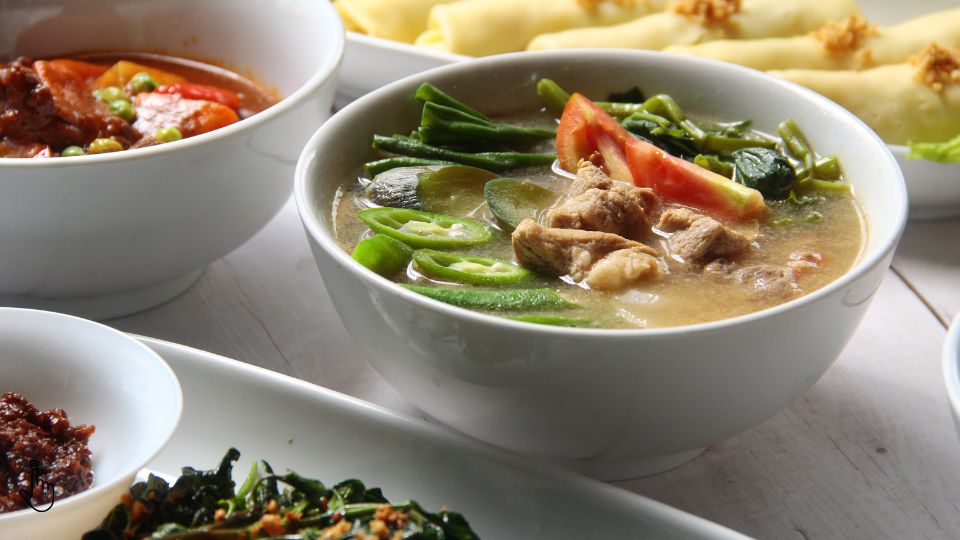
You can try Filipino staples right on the spot, including pork skewers, adobo (a classic Filipino stewed dish), lumpia (spring rolls), and pancit (stir-fried noodles). Prices typically range from 1,000 to 6,000 won (about $0.75 to $4.50 USD), making it easy and affordable to sample a wide variety of dishes.
Some items, like balut (a fertilized duck egg delicacy), are an acquired taste, but there’s plenty for everyone, including crowd-pleasers like banana fritters and grilled meat skewers.
Filipino Ingredients and Everyday Goods
Here you can find things that are hard to track down at Korean supermarkets, like durian, Filipino bananas, fish sauce, and sinigang soup mix. The market also offers clothing, cosmetics, international calling cards, and informal currency exchange services, functioning as a genuine lifeline for the local Filipino community, not just a tourist attraction.
Practical Advantages and Tips for Foreign Travelers
Hours and How to Get There
The market runs roughly from 10 a.m. to 5 p.m. every Sunday, though some sources note it starting around noon. The busiest window is between 1 and 3 p.m., right after Sunday mass lets out at the cathedral.
From Hyehwa Station (Line 4), take Exit 1 and walk straight for about 5 minutes. It’s also close to Daehangno, so it pairs well with catching a show or taking a stroll up to Naksan Park.
Bring Cash, and What to Expect
Card payments aren’t accepted here, so make sure to bring cash. Seating is tight given the street-stall setup, and sharing a table with strangers is common — which, for many travelers, ends up being a highlight rather than an inconvenience, sparking unexpected conversations.
Most vendors speak English, so even travelers who don’t speak Korean can visit comfortably without worrying about a language barrier.
Nearby Spots Worth Pairing With Your Visit
Before or after the market, consider catching a small theater show in Daehangno, or taking the roughly 15-minute walk up to Naksan Park to follow the old Seoul city wall and take in the skyline. A single Sunday afternoon is enough to combine this cultural immersion with a solid dose of Seoul sightseeing.
Final
Hyehwa Filipino Market isn’t just an exotic photo-op — it’s a living community space that Filipino immigrants have kept alive for nearly 30 years, built out of homesickness and a shared love of familiar food. This Sunday, why not plan a mini trip to a small corner of the Philippines, no passport required? Drop a comment if you’ve visited or have questions — next up, I’ll cover more of Seoul’s hidden multicultural neighborhoods.