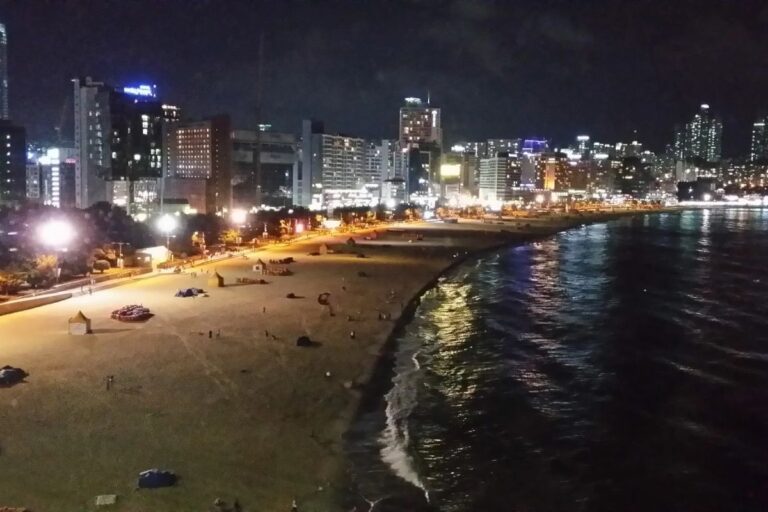

The biggest mistake first-time visitors to Busan make is assuming they’ll see the ocean the moment they step off the plane at Gimhae Airport. Busan is bigger and hillier than most people expect, so distances that look short on a map often take much longer in real life.
On top of that, the “flights are cheaper than KTX” math falls apart once you add the time it takes to get from the airport to your hotel. This guide covers everything first-time visitors need to know before booking — how to actually get there, how to get around once you arrive, and when to go.

Busan Isn’t a “Smaller Seoul by the Sea”
Treating Busan like a scaled-down version of Seoul is a fast way to feel confused on day one. Seoul spreads out across relatively flat terrain, but Busan is squeezed into a narrow strip of land between mountains and the sea, which means places that look close together on a map often require going over a hill to get there. Haeundae to Nampo-dong looks like a short hop on the map, but it can easily take over 40 minutes in reality.
The local accent is different too. Busan and the wider Gyeongsang region have their own distinctive dialect and intonation — and that’s not a downside, it’s actually one of the fun parts of visiting. Hearing the warm, punchy local accent at a market or restaurant is part of what makes a Busan trip feel different from a Seoul one.
In short, Busan isn’t a “beach version” of Seoul — it’s a city with a completely different geography and rhythm. Understanding this upfront makes it much easier to plan a relaxed itinerary.
Getting From Seoul to Busan: Comparing Your Options
Picking the wrong transportation option can burn through your time and energy before your trip even really starts. Here’s how the three main options actually compare.
KTX/SRT — The Most Predictable Choice
High-speed rail from Seoul Station or Suseo Station to Busan Station takes about 2 hours 30 minutes to 3 hours. It’s highly reliable, and Busan Station sits right in the city center, making onward travel easy. Starting in September 2026, fares on some routes were reduced, so the price gap with flights has narrowed too.
Flying — Cheaper on Paper, But There’s a Catch
A Gimpo-to-Gimhae flight often looks cheaper than KTX on paper, but there’s a catch. The flight itself is just over an hour, but Gimhae Airport sits a real distance from major areas like Haeundae, adding another 40 minutes to an hour by airport bus or taxi. Once you factor in check-in and security time, the total door-to-door time often ends up about the same as the train — or longer. Rather than comparing ticket prices alone, it’s worth calculating the total “door-to-door” time to your accommodation before deciding.
Intercity Bus — Best for Budget Travelers
The bus from Seoul to Busan takes roughly 4 hours 30 minutes to 5 hours. It’s the cheapest option, but also the slowest. On top of that, Busan’s main bus terminal (Nopo-dong) sits on the outskirts of the city, so you’ll need an extra subway or taxi ride once you arrive.
Bottom line: KTX/SRT is the most efficient choice for a short trip, while the bus makes sense if you have extra time and want to save money.

Getting Around Busan Once You’ve Arrived
Planning your local transportation ahead of time makes everything after arrival much smoother.
The Subway — Your Main Way Around
Busan’s subway system covers Lines 1 through 4, plus the Donghae Line and the Busan-Gimhae Light Rail, all tightly connected. Most major spots — Haeundae, Nampo-dong, Seomyeon, Gwangalli — are within walking distance of a subway station, so even a first-time visitor can get around without much trouble.
Transit Cards — Your Seoul Card Just Works
T-money and Cashbee transit cards from Seoul work exactly the same way in Busan. There’s no need to buy a separate Busan-specific card, which is welcome news for first-timers.
Watch Your Footing — This Is Hilly Terrain
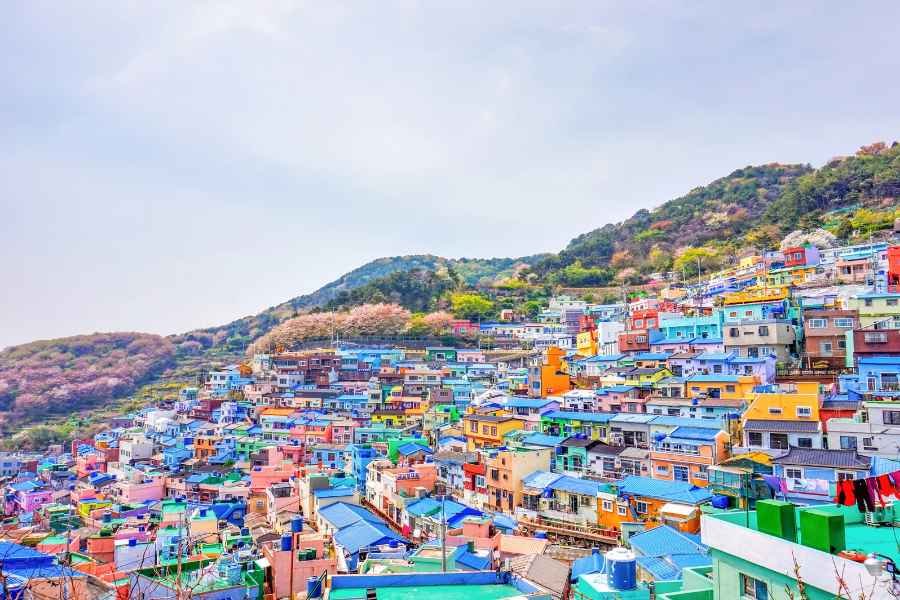
Busan’s mountainous, hilly geography means that places that look close on the map often involve real uphill and downhill walking. This is especially true for hillside neighborhoods like Gamcheon Culture Village or Huinnyeoul Culture Village, where comfortable shoes are essential.

When’s the Best Time to Go
Cherry blossoms in Busan bloom about 1-2 weeks earlier than in Seoul. If you plan your trip around Seoul’s typical cherry blossom timing, you might arrive in Busan after the blossoms have already fallen — so if cherry blossoms are on your list, push your Busan dates earlier than you would for Seoul.
Summer brings peak season at Haeundae and Gwangalli beaches, and thanks to Busan’s mild coastal climate, it’s genuinely a year-round destination — fall and winter included.
First-Timer Checklist
- Compare transportation options by total door-to-door time, not just ticket price.
- Remember that Busan is hilly terrain, and pack comfortable shoes for any route with a lot of walking.
- Bring the same transit card you used in Seoul. No need to buy a new one.
- If you’re chasing cherry blossoms, plan your dates 1-2 weeks earlier than you would for Seoul.
- Check travel times between key areas like Haeundae, Nampo-dong, and Gwangalli on a map app ahead of time — it makes building your itinerary much easier.
Now You’re Ready to Plan the Real Trip
Busan runs on a completely different rhythm than Seoul. Just knowing how to get there, how to get around, and when to visit is enough to start your trip without the day-one confusion.
Save this checklist, and keep an eye out for what’s coming next in this series — a full 3-day Busan itinerary, a regional guide, landmarks, markets, shopping, cafes, and nightlife — to help you build out a trip that actually makes the most of your time there.