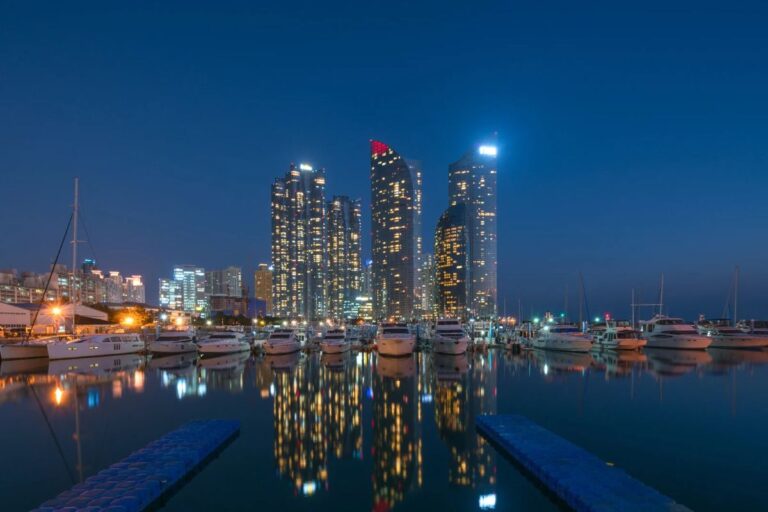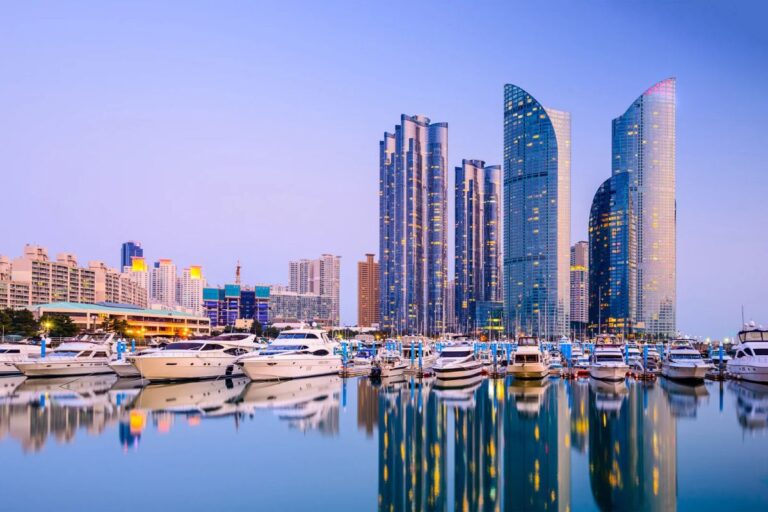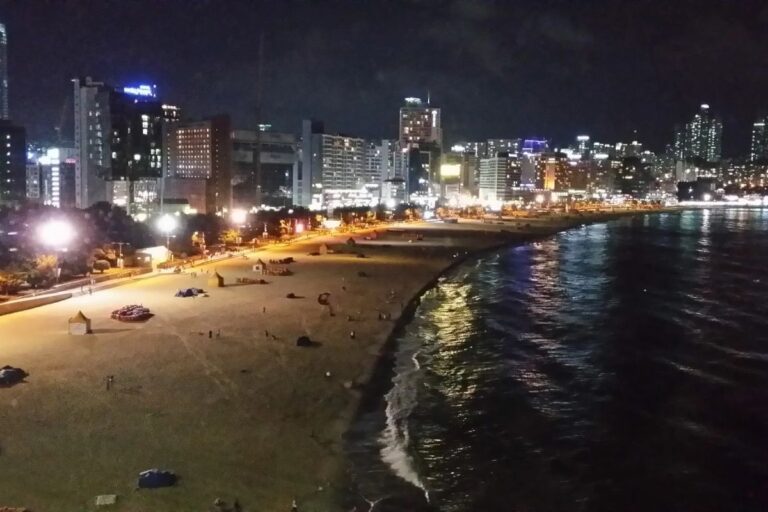

Busan becomes a completely different city once the sun goes down. During the day, a Busan trip revolves around beaches and landmarks. But the moment night falls, you get a whole different side of the city — the glow of tented food stalls in Gwangalli, the neon lights of Seomyeon, the loud, cheerful izakayas of the university district, and cafe alleys that quietly transform into softly lit bars after dark.
This guide covers the best areas to experience Busan’s nightlife properly, along with the cafe streets that have their own distinct charm by day and by night.
Gwangalli — Drinks With the Ocean Right in Front of You
People aren’t exaggerating when they say Gwangalli’s nights are more beautiful than its days. Once it’s fully dark, the entire length of Gwangan Bridge lights up, and that light reflects across the calm night water. We already covered the Gwangan Bridge night view itself in an earlier guide, so here we’ll go deeper into exactly where and how to enjoy that view best.
Millak Waterside Park — The Classic Tented-Bar-and-Sashimi Combo
Millak Waterside Park, right next to Gwangalli, is something of a symbol of Busan’s nightlife. Along the waterside park, rows of tented food stalls (pojangmacha) and raw-fish centers (hoe-senter) let you snack on fresh sashimi and seafood while sipping a drink with the Gwangan Bridge night view laid out right in front of you. The typical move is to buy sashimi at one of the raw-fish centers during the day and carry it over to a tented stall to eat on the spot — that exact combination is a uniquely Busan kind of night out you won’t easily find anywhere else.
Beachfront Cafes and Bars in Gwangalli
If the tented-stall vibe feels like too much, the stylish rooftop bars and cafes lining the beach are a perfectly good alternative. Sitting at a floor-to-ceiling glass bar with a cocktail in hand, taking in the Gwangan Bridge view, can be a highlight of your entire Busan trip on its own.
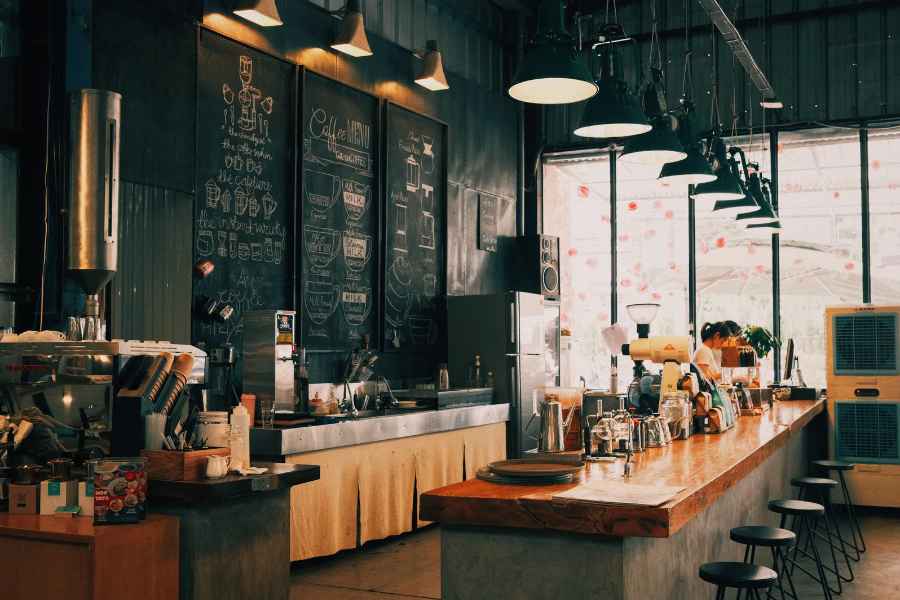
Seomyeon — The Beating Heart of Busan’s Nightlife
Seomyeon is the neighborhood where Busan’s nights stay alive the longest. Every alley radiating out from the underground shopping district is packed with bars, karaoke rooms, and tented food stalls, and every kind of night out happens here — from office workers’ after-work dinners to travelers out for an evening on the town.
Jeonpo Cafe Street — A Completely Different Face by Day and by Night
Jeonpo Cafe Street lives up to its name as a cafe alley by day, but the whole mood shifts once the sun sets. This used to be an old ironworks district, and it’s since transformed into a hotspot packed with distinctive cafes, small bars, and restaurants. The street’s biggest draw is that you can enjoy it twice in one day — coffee and dessert in the afternoon, then a cocktail at a bar in the very same alley that evening.
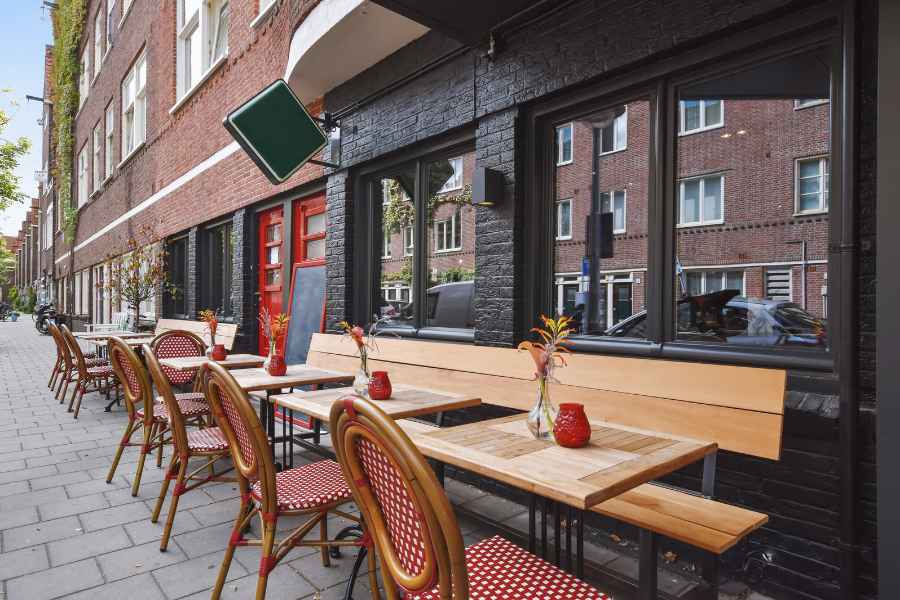
Seomyeon’s Back-Alley Drinking Culture
Head into Seomyeon’s back alleys and you’ll find Busan’s signature lively drinking culture in full swing. Alley after alley is lined with spots famous for gopchang (grilled intestines), grilled shellfish, and other classic drinking-food dishes. If you want a genuinely local night out with more locals than tourists around you, nowhere beats Seomyeon’s back alleys.
Kyungsung/Pukyong University Area — A Young Night Out
The stretch between Kyungsung University and Pukyong University, facing each other, is where Busan’s youngest energy comes alive at night. Think of Seoul’s Sinchon or Hongdae university districts and you’ll get the idea right away. The narrow alleys between the two campuses are packed tight with cheap, tasty izakayas, tented stalls, clubs, and live music venues, and the deeper the night gets, the more the whole area fills up with students and young travelers.
What Makes This Area Special
This area’s biggest strength is price. Because it’s a university commercial district, prices are set with students’ wallets in mind, so you can enjoy food and drinks noticeably cheaper here than in Seomyeon or Haeundae. That doesn’t mean the atmosphere is lacking, either. From quirky-concept izakayas to small indie live venues to retro-styled bars that double as vintage shops, the sheer density of distinct personalities packed into these narrow alleys is what makes this area unique.

Practical Tips
This area is especially well-suited to solo travelers or anyone who just wants a casual drink. Since students make up the main customer base, plenty of spots are comfortable for single visitors, and it’s a neighborhood built for spontaneous nights — walk the alley, duck into whatever catches your eye. It’s an easy subway ride from Seomyeon, so it fits naturally into an evening plan.
Haeridangil — A Charming Alley Born Behind an Old Railway Line
Haeridangil sits in Haeundae-gu’s U-dong neighborhood, right behind the old Donghae Nambu Line’s former Haeundae Station. It’s just across one main road from Haeundae, but plenty of visitors head straight back after seeing the flashy beach scene, leaving this alley still relatively under the radar.
A Neighborhood Born When the Railway Disappeared
This alley’s name and identity trace back to a railway line. After the Donghae Nambu Line that once ran through here was decommissioned, cafes, shops, and restaurants with a young, distinctive sensibility began moving in one by one, along the old rail corridor and the alleys behind it. Over time, people naturally started calling this alley “Haeridangil,” and today it’s quickly emerging as one of Haeundae’s newest hotspots.
Where World Food and Cozy Cafes Coexist
Haeridangil’s defining trait is its variety. From restaurants serving exotic menus like Thai food and dim sum, to distinctive concept spaces like drawing cafes where you can sketch as you sip, the alley packs in a genuinely wide range of personalities in a small footprint. It’s a completely different pace from Haeundae’s lively beach scene — a place built for a slower stroll.
Practical Tips
It works well as a cafe-hopping route by day and a quiet dinner-and-drinks spot at world food restaurants in the evening. If you’re staying in Haeundae, it’s within easy walking distance for an evening stroll, so setting aside just half a day is enough to explore it properly.
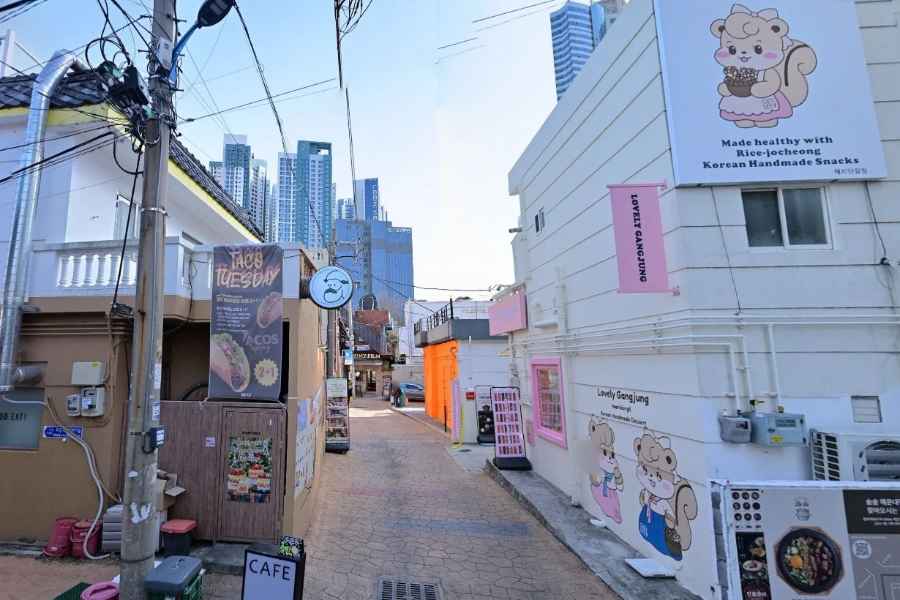
Mangmi-dangil and F1963 — From Wire Factory to Cultural Space
Mangmi-dangil, in the Mangmi-dong area of Suyeong-gu, is a gallery-and-cafe alley that’s been quietly picking up buzz over the past few years. Distinctive cafes, galleries, and concept shops have been moving into an old residential neighborhood one by one, creating a new atmosphere that’s emerging as a quiet alternative for travelers worn out by Busan’s busier tourist spots.
The Story of How a Factory Became a Cultural Space
Right next to Mangmi-dangil sits F1963, widely considered Busan’s most iconic example of adaptive reuse architecture. The site originally housed the “Suyeong Factory,” the very first factory that gave rise to Kolon Kiswire (Koryo Wire), which actually manufactured steel wire here for 45 years, from 1963 to 2008. The “F” in the name stands for Factory, and “1963” is simply the year that factory was completed — the space was reborn as today’s cultural complex around the 2016 Busan Biennale.
The biggest draw here is that the factory’s original structural frame and machinery weren’t torn down — they were preserved as-is. The complex now includes Seokcheon Hall, a space for exhibitions and performances; Book Tower, an installation space centered on Eastern and Western classical wisdom; F1963 Square, an outdoor venue for cultural events; and gardens like the bamboo forest, the maple garden, and the moonlight garden. It operates as a combined space bringing together a large bookstore, cafes, and galleries all in one place.
Practical Tips
Since you can sip coffee, browse books, and take in an exhibition all in the same visit, it’s worth clearing out half a day for this area. A natural flow is to explore a few galleries and cafes on Mangmi-dangil first, then move on to F1963 and wrap up the day with a walk through its gardens.
How to Combine It All Into One Evening
Busan’s nightlife spots and cafe alleys connect naturally into one continuous evening. For example, you could spend the afternoon relaxing over coffee and dessert on Jeonpo Cafe Street, have a cocktail at a bar in that same alley come evening, then head to Seomyeon’s back alleys as midnight approaches to keep the energy going. If you’d rather have a quiet evening, a cafe tour through Haeridangil or Mangmi-dangil is a great choice, and if you want a dazzling night view to close things out, Gwangalli and Millak Waterside Park are hard to beat.
Find Your Kind of Night at a Glance
| Area | Vibe | Best For |
|---|---|---|
| Gwangalli / Millak Waterside Park | Ocean night views, tented-stall culture | Pairing a night view with sashimi and seafood |
| Seomyeon | Lively, wide variety of bars | Wanting a loud, energetic scene late into the night |
| Kyungsung/Pukyong University area | Young, affordable izakayas | Enjoying a long night out on a budget |
| Haeridangil | Quiet, local-feeling alleys | A quiet evening near Haeundae |
| Mangmi-dangil / F1963 | Cozy cafes, cultural complex | Combining coffee with exhibitions and books |
Plan Your Busan Nights This Way and You’ll Never Be Bored
Busan carries two faces — a beach city by day, and a lively, buzzing city by night. The sparkling night view at Gwangalli, the boisterous energy of Seomyeon, the young pulse of the university district, and the charming cafes tucked into alleys throughout the city — save this area-by-area list and pick the kind of night that matches your travel style.
If you have a favorite bar or cafe from your own visit, share it in the comments — it’ll help the next traveler planning their trip. Coming up next in this series: Busan’s traditional markets and shopping spots.