Planning a Busan trip works much better when you don’t treat “where to stay” and “what to see” as two separate decisions. If you stay in Haeundae but keep shuttling back to Nampo-dong for sightseeing — or the reverse — you’ll burn a lot of time on transit that adds nothing to your trip.
As covered in an earlier guide, Busan is squeezed into a narrow strip between mountains and the sea, so places that look close on a map often require going over a hill or taking a long way around. That’s why it pays to think about which attractions naturally pair with each neighborhood right from the moment you pick where to stay.
This guide walks through four of Busan’s key neighborhoods, covering what each is like to stay in, how easy it is to get around from there, and which attractions naturally come along with that choice. Pick the right area, and your accommodation and sightseeing line up on their own — no wasted time bouncing across the city.
Haeundae — Ocean-View Stays, Plus an Observation Deck and a Temple
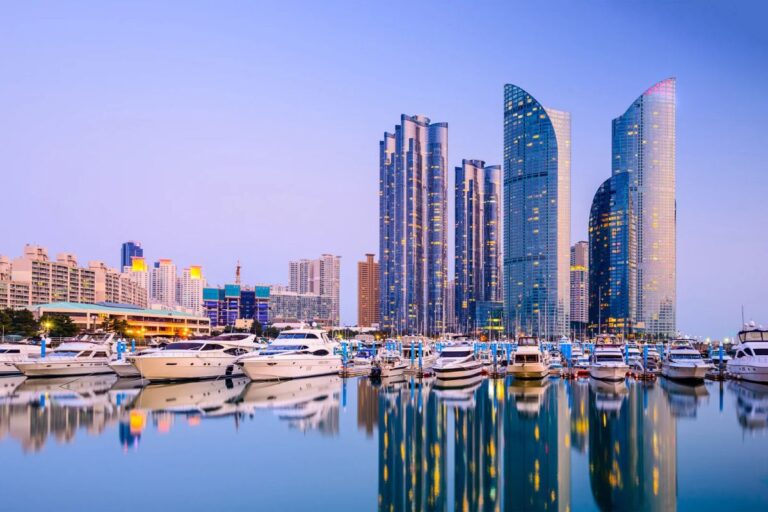
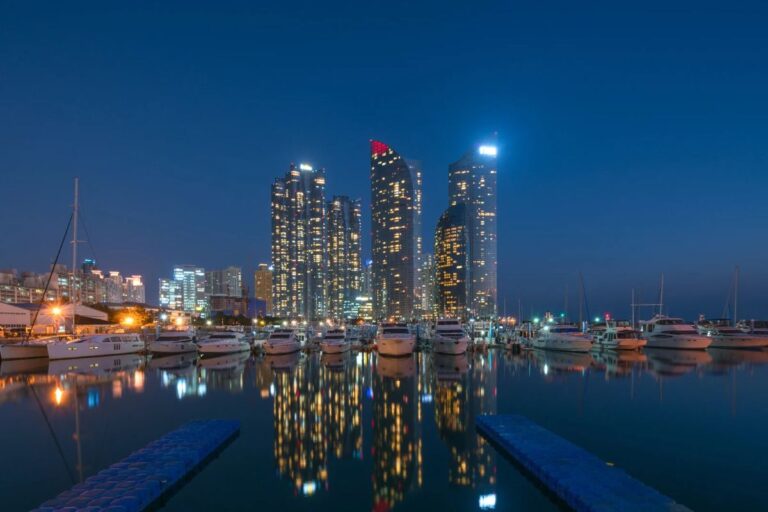
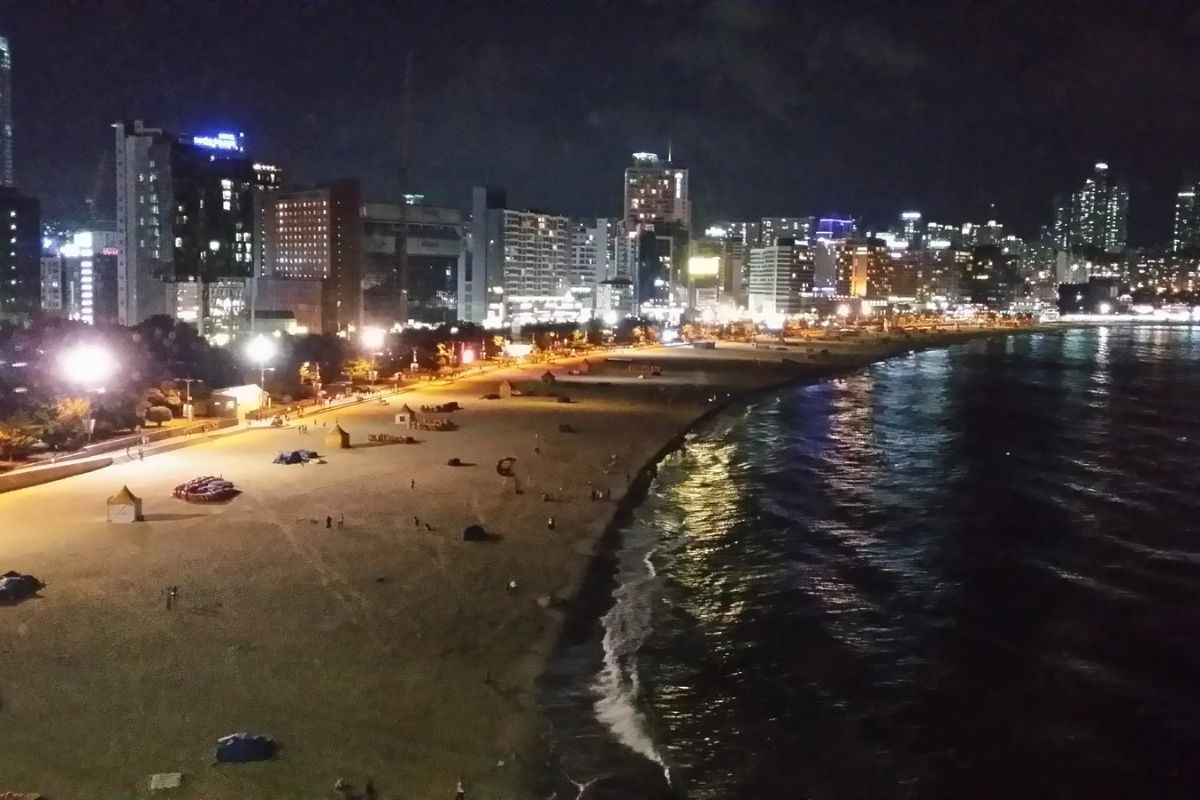
Haeundae is the neighborhood most first-time visitors choose, and the reasons are obvious. Large hotels and resorts line the beachfront, making it the easiest place in Busan to find a room where you can open the curtains and see the ocean.
You’ve also got both Haeundae Station and Centum City Station on Line 2 nearby, so transit isn’t bad either, and everything from Starbucks to convenience stores to Shinsegae Centum City — a department store registered in Guinness World Records as the largest in the world — is within walking distance, which makes it an easy landing spot for first-timers.
Attractions That Naturally Pair With Haeundae
Busan X the SKY, the observation deck near the top of Haeundae’s tallest landmark tower, gives you a full view of Haeundae Beach, Gwangan Bridge, and the city below. At nearly 100 stories up, there’s even a glass-floor skywalk section you can walk across — a great photo spot and a memorable experience in its own right.
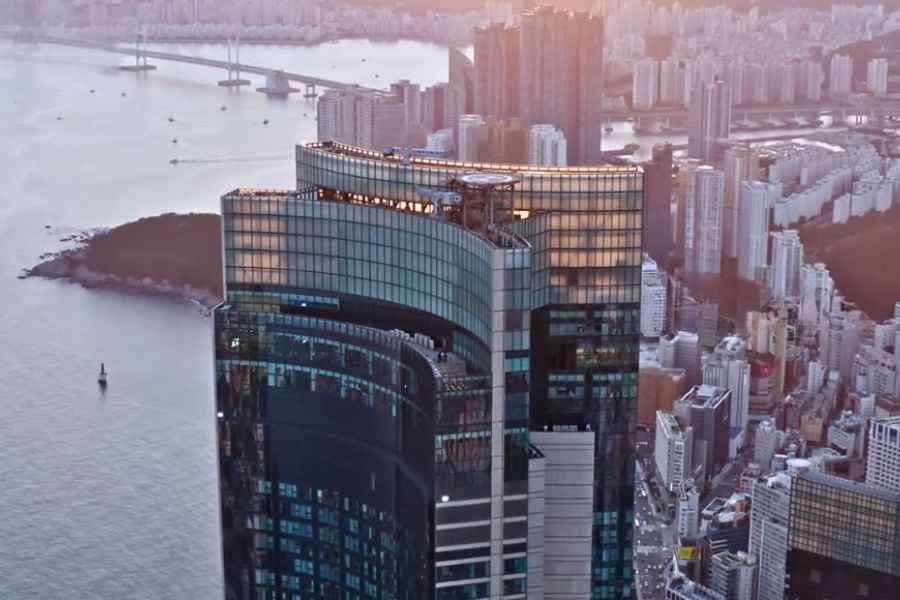
The views look completely different by day and by night, so picking a clear day makes the visit worthwhile.
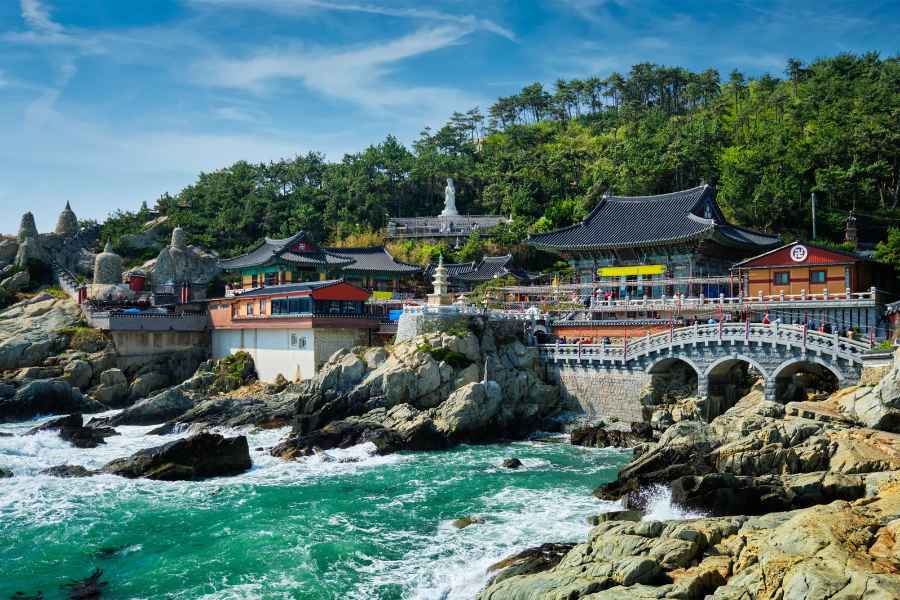
A bit further out is Haedong Yonggungsa Temple. Most Korean temples sit deep in the mountains, but this one is a rare exception, built right on coastal rocks where you can pray with the sound of waves in the background.
It’s said to have been founded in 1376 during the Goryeo dynasty by the monk Naong, and it’s also known as a sunrise spot, with an especially striking view when the sun comes up over the water behind the temple. Just note there are a lot of stairs, so comfortable shoes matter here.
Practical Tips
If you’re staying in Haeundae, it’s worth keeping your first day light — a beach walk and the Dongbaekseom Island trail are plenty, without rushing into longer trips. Busan X the SKY is most efficient to visit around sunset, so you catch both the daytime and nighttime views in one trip, and Haedong Yonggungsa is best reached by taxi or a tour bus rather than public transit if you’re timing it for sunrise.
There are real downsides too. Downtown Busan (Seomyeon, Nampo-dong) is 30-plus minutes away by subway, and prices here run noticeably higher during peak season. If your trip is centered on the beach and the views, Haeundae is ideal — but if you want to fully explore the old downtown too, factor in the travel time.
Seomyeon — A Transit Hub With Easy Access to Nightlife and a Temple
Seomyeon sits at the crossing point of Busan’s Subway Lines 1 and 2, making it a genuine transit hub. You can reach almost anywhere in the city with no transfer, or at most one, which makes it the most efficient base camp if you’re planning to explore a different area each day. Accommodation here also tends to be more reasonably priced than Haeundae, which makes it appealing if you want both transit convenience and value.
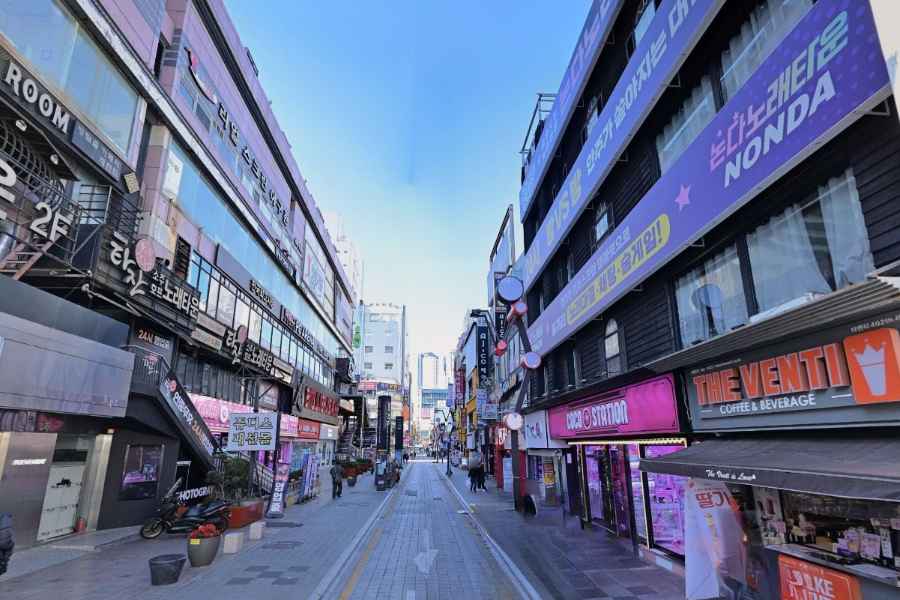
Seomyeon Is Also a Destination in Its Own Right
Seomyeon isn’t just a convenient place to sleep — it’s a destination on its own. Underground shopping arcades, Jeonpo Cafe Street, food alleys, and bars and clubs that stay open late make it the most practical choice if you want to stay out and active into the evening.
We’ll go deeper into Busan’s nightlife and cafe scene in the next guide, but it’s worth factoring “how do I want to spend my evenings” into your choice of neighborhood from the start — and if the answer is “actively,” Seomyeon is a strong candidate.
Attractions That Naturally Pair With Seomyeon
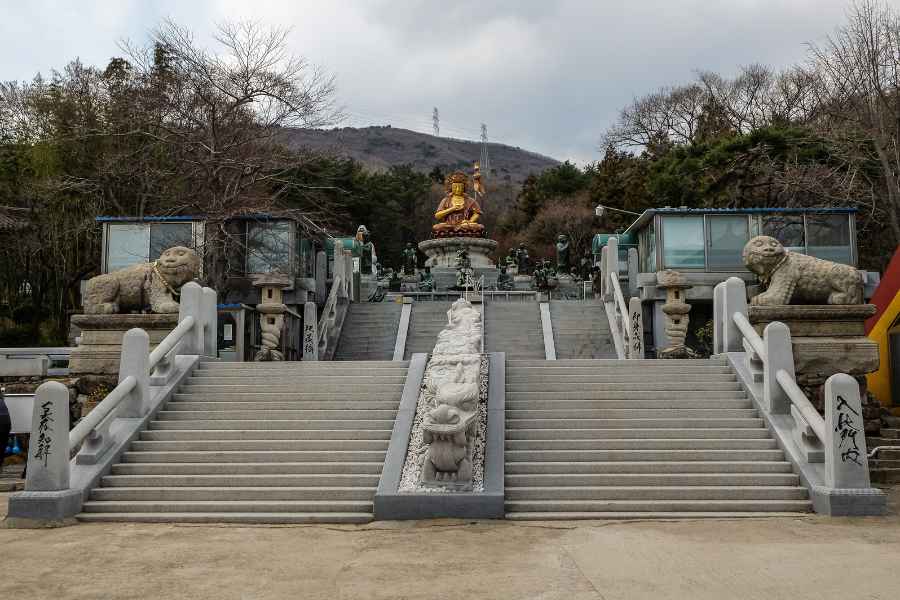
From here, a short subway ride also gets you to Beomeosa Temple, a thousand-year-old temple in the heart of the city. Founded in 678 during the Silla dynasty by the monk Uisang, Beomeosa is considered one of Korea’s Three Jewel Temples of Buddhism.
Nestled on the slopes of Geumjeongsan Mountain, its biggest draw is that it feels like a deep mountain temple even though it’s right in the middle of the city. If you’re worn out from an ocean-heavy itinerary, a quiet walk through Beomeosa makes for a refreshing change of pace.
Practical Tips
If Seomyeon is your base, an efficient rhythm is to take the subway to Beomeosa in the morning, then spend the afternoon and evening in Seomyeon itself for shopping, food, and cafes. Just keep in mind that ocean views aren’t part of the deal here, and being a busy commercial district, it can stay fairly loud into the late evening.
Nampo-dong — Budget-Friendly Old Downtown, Plus Markets and History
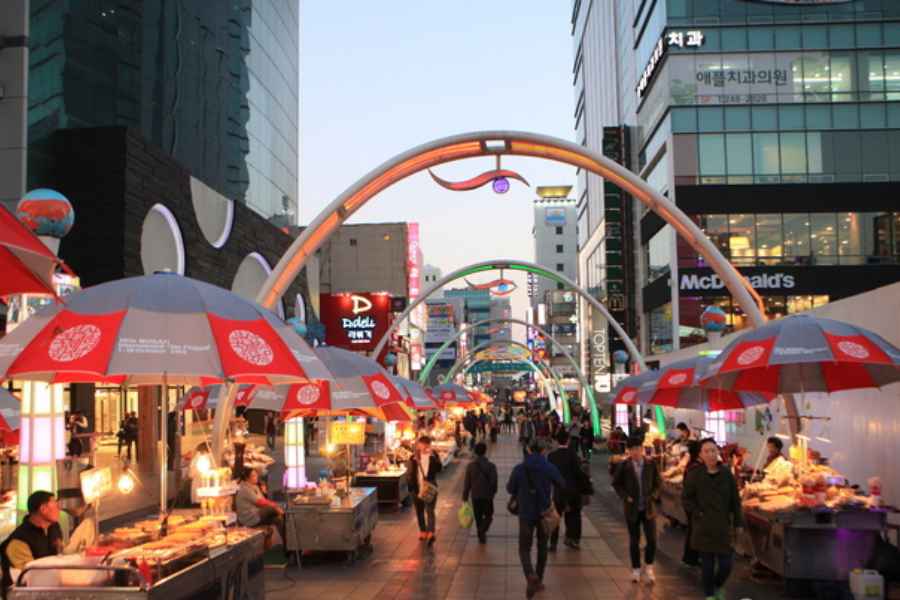
Nampo-dong is Busan’s oldest commercial district, with Jagalchi Market, Gukje Market, and BIFF Square all within walking distance of each other. The old alleyways and aging buildings give it a distinct atmosphere, and accommodation here tends to be cheaper than in Haeundae or Seomyeon, making it especially popular with budget-conscious travelers. It’s also close to the Busan International Passenger Terminal, so it’s a convenient base for visitors arriving by ferry from Japan and elsewhere.
Attractions That Naturally Pair With Nampo-dong
A short trip from Nampo-dong reveals a different layer of Busan’s story. The standout is the UN Memorial Cemetery, the only United Nations cemetery in the world, built to honor UN forces who died during the Korean War.
It’s not a flashy tourist spot, but the carefully maintained lawns and monuments create a quiet, reflective atmosphere — meaningful for anyone interested in the Korean War and the international coalition behind it. Right nearby are the Busan Museum of Art and the Busan Cultural Center, so you can turn the day into a full culture-and-history outing.
Of course, Nampo-dong itself is packed with walkable attractions too — Jagalchi Market, Gukje Market, Yongdusan Park, and BIFF Square — dense enough to fill a full day without needing to travel anywhere else. We’ll cover these market highlights in more depth in the upcoming Busan markets and shopping guide.
Practical Tips
If you’re staying in Nampo-dong, a good rhythm is to soak up the energy of Jagalchi Market early in the morning, then shift to somewhere quieter like the UN Memorial Cemetery in the afternoon. The downside is that things get noticeably quiet at night. If you want an active evening scene, Seomyeon is the better bet — Nampo-dong is really at its best for daytime sightseeing and market exploring.
Gwangalli — Night-View Stays, Plus a Skywalk and Coastal Trail
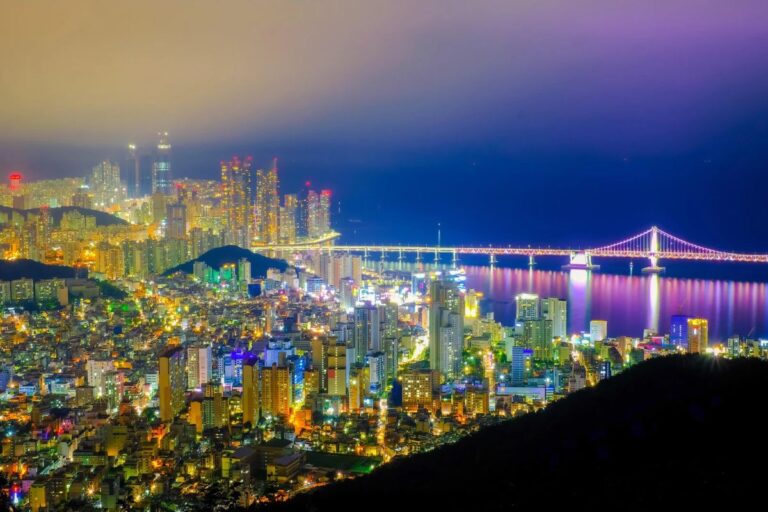
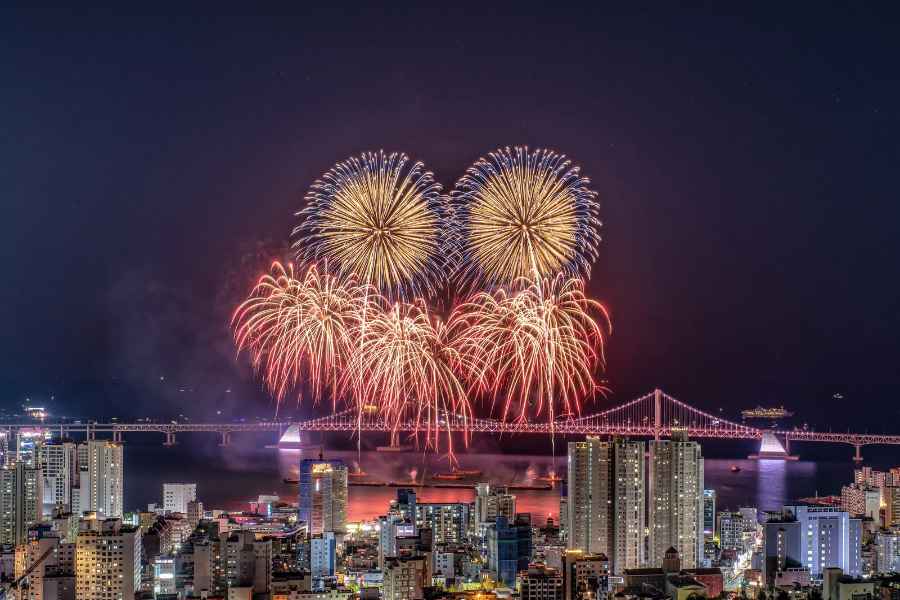
Gwangalli is quieter than Haeundae, but it has one undeniable advantage: the night view of Gwangan Bridge. Cafes and restaurants with a distinct, laid-back vibe line the beach, and the area is especially popular with younger travelers and couples. There aren’t as many large resorts as in Haeundae, but that means more chances to find a small, characterful hotel or guesthouse.
Attractions That Naturally Pair With Gwangalli
Staying in Gwangalli puts you within easy reach of the Igidae Coastal Trail and the Oryukdo Skywalk. As the name suggests, Oryukdo Skywalk lets you walk across a glass floor suspended over the water — with waves visibly breaking right beneath your feet, it’s famously nerve-wracking if you’re afraid of heights. From the skywalk you get a view of Oryukdo, the islets that lend Busan one of its most recognizable symbols (the name comes from the fact that they appear as six islets at low tide and five at high tide).
It also connects naturally to a walk along the Igidae Coastal Trail. This trail follows the coastline and offers one of the few stretches in the city where you can experience raw, undeveloped ocean scenery. Starting at Oryukdo Skywalk and walking the coastal trail, you can make your way all the way back to Gwangalli on foot.
Practical Tips
If you’re staying in Gwangalli, a natural flow is to spend the day at Oryukdo Skywalk and the Igidae Coastal Trail, then head back to Gwangalli in the evening for beachside cafes and the Gwangan Bridge night view. Just note that Seomyeon and Nampo-dong are a bit of a subway ride away, so Gwangalli works best if your plans are centered on this area and its nearby attractions.
How to Split Neighborhoods Based on Trip Length
If your trip is short (2 nights, 3 days or less), it’s more efficient to lock in one neighborhood and build your sightseeing around it. If you have more time (3 nights, 4 days or more), it can be worth switching accommodation once to experience two different sides of the city.
For example, you might spend the first two nights in Haeundae enjoying the beach and the views, then move to Nampo-dong for your remaining nights to soak up the old downtown and market atmosphere. Switching hotels mid-trip might feel like a hassle, but in a city with as much neighborhood-to-neighborhood variety as Busan, it can genuinely make the whole trip more satisfying.
Find Your Neighborhood and Attractions at a Glance
| Neighborhood | Best For | Attractions That Naturally Pair | Downsides |
|---|---|---|---|
| Haeundae | Ocean views, relaxed vacationing | Busan X the SKY, Haedong Yonggungsa Temple | Travel time to downtown, higher prices |
| Seomyeon | Efficient transit, nightlife | Beomeosa Temple | No ocean view, busy commercial noise |
| Nampo-dong | Budget-friendly, old downtown feel | UN Memorial Cemetery, Jagalchi/Gukje Markets | Quiet at night |
| Gwangalli | Night views, cafes, couples’ trips | Oryukdo Skywalk, Igidae Coastal Trail | Travel time to Seomyeon/Nampo-dong |
The Real Answer Is Planning Your Stay and Sightseeing Together
Busan’s neighborhoods each have such a distinct character that picking accommodation separately from sightseeing tends to backfire. If you want an efficient itinerary, pair Seomyeon with Beomeosa Temple. For relaxed ocean views, pair Haeundae with Busan X the SKY.
If you’re budget-conscious but still want some history, pair Nampo-dong with the UN Memorial Cemetery. And if night views and a bit of a thrill are what you’re after, pair Gwangalli with Oryukdo Skywalk.
Save the comparison table above, and decide on your neighborhood and nearby attractions together. Just matching your neighborhood choice to your trip length and travel style can cut your transit stress in Busan by more than half. Up next in this series: Busan’s nightlife and cafe scene.
- The Perfect 3-Day Busan Itinerary: See It All Without Rushing
- Busan for First-Timers: The One Mistake Almost Everyone Makes