
Paying with a Seoul subway foreign credit card has been possible since March 17 this year, and if you’re staying 3 days or more, the Climate Card short-term pass is usually the better deal. There are limits on what a foreign card can buy, and a fee of about 3.7% applies. Whether you come out ahead depends on how many rides you take per day.
This guide covers how to pay with a Seoul subway foreign credit card, short-term pass prices, where the pass works and where it doesn’t, and the refund rules, based on official Seoul city information and news reports. Everything was checked on October 10, 2026. It’s the transit chapter of our [guide to Korea apps that work without a Korean phone number](internal link: hub post).

The Short Answer: 4 Ways to Pay, Compared
| Method | Foreign card works? | Best for |
|---|---|---|
| Single-journey ticket | Yes (3.7% fee) | One or two rides a day |
| Climate Card short-term pass | Yes (3.7% fee) | 2 to 7 days, frequent rides |
| Mobile T-money (iPhone) | Mastercard and some others | iPhone users whose card is supported |
| Regular T-money (cash top-up) | Cash only at machines | Backup if your card fails |
Seoul Subway Foreign Credit Cards: Possible Since March 17
According to the official announcement from the Seoul city government, since March 17, 2026 you can use Visa and Mastercard credit and debit cards issued overseas at 440 new ticket machines in 273 stations on Lines 1 to 8. Before that, even foreign visitors had to feed cash into the machines.
The service fee averages 3.7%. On a ₩5,000 one-day pass, that’s roughly ₩185 extra. It isn’t much, but better to know ahead of time.
The first month’s numbers are in. According to Herald Business, an average of about 9,158 people a day used the service between March 17 and April 17. Visa was the most-used foreign card, and Climate Card short-term pass top-ups roughly doubled from the same period the year before.
What a Foreign Card Can and Can’t Buy
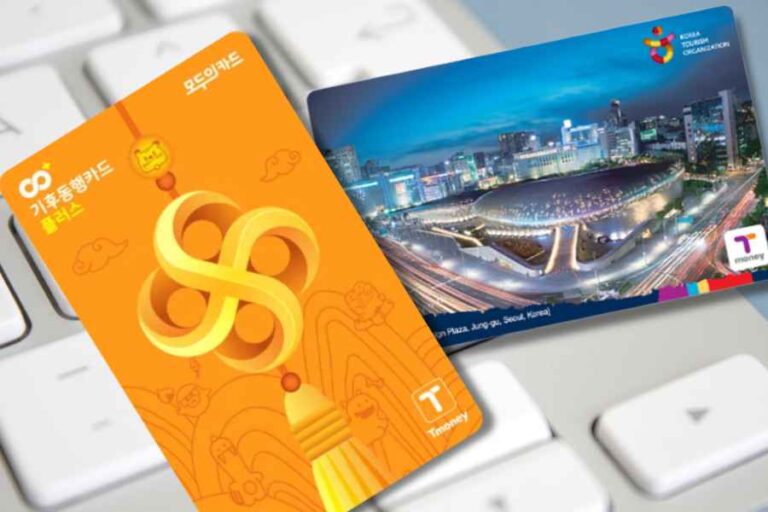
Per the report, a foreign-issued card can do three things: buy a single-journey ticket, buy a Climate Card, and top up a short-term pass (1, 2, 3, 5 or 7 days). It appears you can’t top up a regular T-money balance with a foreign card at the machines. The report’s wording is brief on this point, so double-check on site.
So bring a little cash for the days your card doesn’t work. Single-journey tickets carry a ₩500 deposit, which you can get back at the deposit refund machine at the station where you exit.
Climate Card Short-Term Pass: Prices and Where It Works
Per the official Seoul guide, these are the short-term pass prices. The physical card costs ₩3,000 on top.
| Pass | Price |
|---|---|
| 1 day | ₩5,000 |
| 2 days | ₩8,000 |
| 3 days | ₩10,000 |
| 5 days | ₩15,000 |
| 7 days | ₩20,000 |
Where You Can Ride
According to the official guide, the subway pass works across Seoul and some parts of the metropolitan area, but the Shinbundang Line and GTX are excluded. Buses include Seoul-registered city, local, village, night and circular buses. Regional buses that come from outside Seoul are excluded. Check routes on the Seoul Bus Information System.
Ttareungi bikes and the Hangang river bus are not included in the short-term pass. If you exit outside the covered area, you’re charged the fare from your boarding station, and one untagged exit is recorded.
For the Airport Railroad, Seoul’s September 2024 announcement says the pass worked at six Seoul stations (Seoul Station, Gongdeok, Hongik University, Digital Media City, Magoknaru, Gimpo Airport) and that you could get off at Incheon Airport. You can’t board at Incheon Airport. This may have changed, so check before you plan an airport trip around it.
Why the Validity Period Is Confusing
The official Seoul guide says the usage period starts on the day you top up, with an example that a one-day pass topped up that day works until the last train that day. Some guides describe the one-day pass as “24 hours,” so the sources disagree.
That means buying in the evening can waste money. You can’t top up a short-term pass in advance, so do it right before your first ride. Read the notice on the machine screen too.
Which Pass Pays Off: How Many Rides Per Day to Break Even
The comparison is simple: the ₩3,000 card plus the pass price versus the ₩1,550 base fare for a single ride × number of rides. ₩1,550 is the fare after the June 2025 increase, and fares rise with distance, so treat this as a rough guide. I left out the 3.7% fee because it applies to both options.
| Length of stay | Pass total (card included) | Break-even |
|---|---|---|
| 1 day | ₩8,000 | 6 or more rides a day |
| 2 days | ₩11,000 | 4 or more rides a day |
| 3 days | ₩13,000 | 3 or more rides a day |
| 5 days | ₩18,000 | 3 or more rides a day |
| 7 days | ₩23,000 | 3 or more rides a day |
The takeaway: the one-day pass is easy to lose money on, and the pass pays off from 3 days. The ₩3,000 card cost weighs heavily on a single day.
If your day is “hotel → sight → restaurant → hotel,” that’s around 3 rides. If you transfer a lot or take buses often, the pass wins even more. Bus coverage is the big difference from a single-journey ticket.

When Is a Single-Journey Ticket Better?
A single-journey ticket suits you if you’re only in Seoul briefly or rarely take the subway. For example, if it’s one ride from the airport to your hotel and two or three rides on a sightseeing day, the pass’s ₩3,000 card cost isn’t worth it.
On the downside, each ticket has a ₩500 deposit, and you have to find the refund machine when you exit. Forget it and the ₩500s pile up. If you’re riding three or more times a day for several days, that hassle costs more than the pass.
You can also mix the two. Use a single-journey ticket to get to your hotel on arrival day, then buy a 3-day pass at a station near your hotel the next morning. That beats buying a pass on arrival and wasting half a day of it.
How to Buy: Step by Step
- Find a new machine. Foreign cards work only at the newly installed ticket machines. The Seoul city government said staff would be available on some days at Seoul Station, Myeongdong and Hongik University stations.
- Switch to English and pick the short-term pass. On your first purchase you may need to press “buy Climate Card” and “top up” separately.
- Pay with your foreign card. If a notice about the service fee appears, confirm it.
- Top up right before your first ride. As explained above, the period starts on the top-up day.
The physical card is also sold at convenience stores (GS25, CU, 7-Eleven, Emart24). I couldn’t confirm whether foreign cards work there, so bring cash too.
When Payment Fails
JoongAng Daily reported a traveler whose top-up failed at one station but worked at the machine on the other side. So if one machine fails, try another. There was also a report that short-term passes sold out early at Myeongdong Station on launch day.
If it still fails, fall back to a single-journey ticket, Mobile T-money on iPhone, or a cash-topped-up T-money card. Other payment options that work without a Korean number are covered in our [hub guide](internal link: hub post).
Can You Get a Refund?
Per the official Seoul guide, you must apply for a refund before the usage period ends. The refund is the card balance minus the fares you’ve used and a ₩500 fee.
Many foreign visitors don’t have a Korean bank account. The guide says foreigners without a Korean account can get a cash refund at T-money’s headquarters. For questions, call the T-money customer center at 1644-0088.
One caution: there’s a note saying the ₩3,000 physical card cost is not refundable. I couldn’t confirm that on the official page, so it’s safer to treat it as money you won’t get back. You can keep the card and top it up again on a future trip.
5 Common Mistakes
- Buying a one-day pass in the evening: if it’s valid until the last train that day, you have little time left.
- Trying to top up in advance: short-term passes can’t be topped up ahead of time.
- Exiting outside the covered area: the Shinbundang Line, GTX and regional buses cost extra.
- Assuming Ttareungi and the Hangang river bus are included: they aren’t in the short-term pass.
- Expecting the mobile Climate Card to work: the mobile card centers on domestic cards, so a physical card is the better choice for visitors.
Checklist Before You Go
- Decide how many days you’ll be in Seoul and how many rides a day you’ll take
- Compare a single-journey ticket for 1 to 2 days against a pass for 3 or more
- Bring a foreign card and a little cash as a backup
- Top up right before your first ride (no advance top-ups)
- Remember that the Shinbundang Line, GTX, regional buses, Ttareungi and the Hangang river bus aren’t covered
- Request a refund before the period ends; foreigners can get cash at T-money headquarters
The Seoul subway foreign credit card service only opened this year, so you may run into small glitches on site. Save this guide, and read the notice on the machine screen once more before your first ride.
If you’re still planning your Seoul days, our [3-day Seoul itinerary](internal link) and [Seoul subway beginner’s guide](internal link) pair well with this one.