August in Seoul is genuinely brutal. Temperatures above 30°C, humidity that makes the air feel solid, and a sun that drains you within twenty minutes of being outside. Most tourists spend August shuffling between air-conditioned convenience stores wondering where the afternoon went.
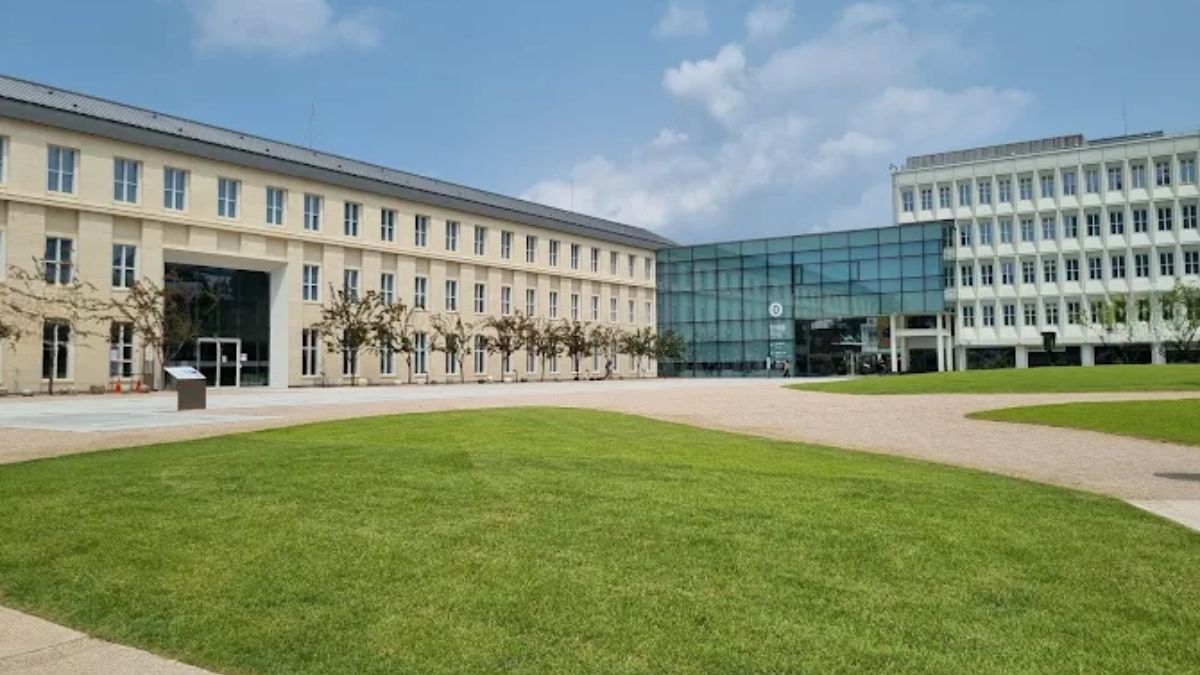
Here’s a better option. One minute on foot from Anguk Station, right next to Gyeongbokgung Palace, there’s a seven-building museum with full air conditioning and zero admission fee. Celadon pottery from the Goryeo Dynasty. Joseon-era embroidered folding screens. Lacquerware so intricate it takes a moment to process what you’re looking at. All of it free, all of it indoors, all of it open right now.
This is SeMoCA — the Seoul Museum of Craft Art. It opened in 2021 and remains one of the most undervisited spots in a city full of tourists. This guide tells you everything you need to arrive, stay as long as you want, and leave with a clear sense of why Korean craft is worth taking seriously.
What Is SeMoCA?
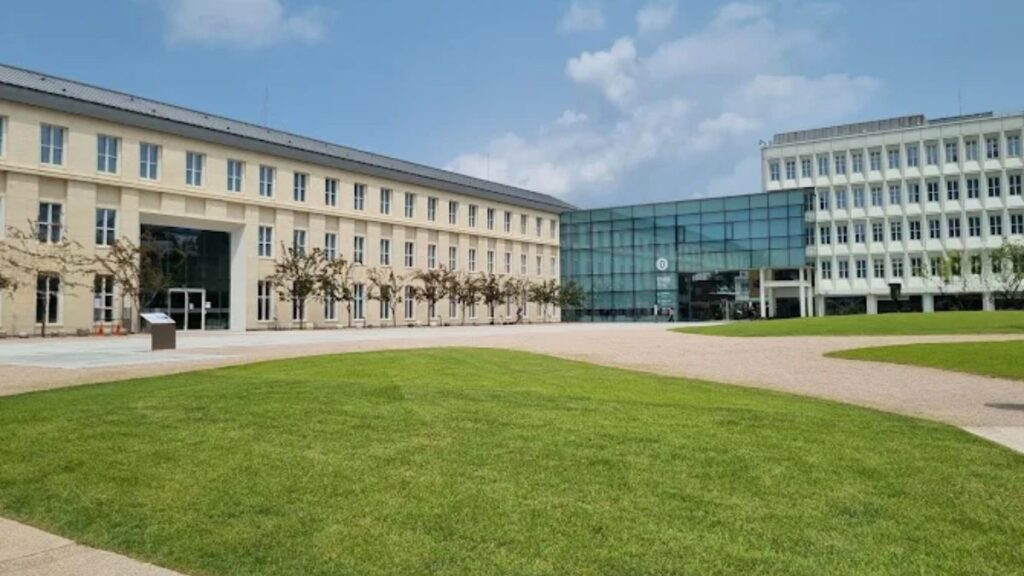
SeMoCA stands for Seoul Museum of Craft Art (서울공예박물관). It’s the first public museum in Seoul dedicated entirely to Korean craft — built and operated by the Seoul Metropolitan Government on the site of the former Pungmun Girls’ High School, which was renovated and reopened in July 2021.
The campus spans seven independent exhibition buildings, running permanent collections alongside rotating special exhibitions. The range covers ceramics, metalwork, textile, wood and lacquer, glass, and paper craft — essentially the full breadth of Korean handwork across a thousand years of history. From the lacquerware of the Goryeo Dynasty to the embroidery folding screens of the Joseon period to artisans still living and working in Korea today, it’s a genuinely beautiful collection.
The official website runs in Korean, English, Japanese, and Simplified Chinese.
And the most important fact: every exhibition is free. No tickets, no reservation required for general admission.
Essential Information — Check This Before You Go
| Official name | Seoul Museum of Craft Art (SeMoCA / 서울공예박물관) |
| Address | 4 Yulgok-ro 3-gil, Jongno-gu, Seoul |
| Phone | +82-2-6450-7000 |
| Admission | Free — all exhibitions |
| Hours (Tue–Sun) | 10:00 AM – 6:00 PM (last entry 5:30 PM) |
| Friday | 10:00 AM – 9:00 PM (extended evening hours) |
| Closed | Every Monday, January 1st |
| Open on public holidays | Yes |
| Website | craftmuseum.seoul.go.kr/eng |
Seoul Museum of Craft Art Address
Address : 4, Yulgok-ro 3-gil, Jongno-gu, Seoul, Republic of Korea
Getting There
By subway: Line 3 (Orange Line) to Anguk Station, Exit 1. Walk straight — the museum entrance is 50 meters from the exit. It takes under a minute.
From Gyeongbokgung Palace: 7–10 minutes on foot heading northeast. From Changdeokgung Palace: 15 minutes on foot.
It would be easy to walk right past SeMoCA for popular nearby spots like Bukchon Hanok Village and Insadong — but the walk from either of those back to the museum is short enough that combining all three in one day is entirely realistic.
Why August at SeMoCA Makes Particular Sense
To be straightforward: August in Seoul is one of the harder months to be a tourist. Average temperatures run above 30°C with humidity that adds another layer of difficulty. Thirty minutes of outdoor walking at 2 PM is enough to exhaust most people.
SeMoCA solves that problem structurally. All seven exhibition buildings are fully air-conditioned, and the route between buildings is designed to minimize outdoor exposure. You can spend two to three hours here and barely feel the August heat — the indoor-to-outdoor ratio is strongly in your favor.
A practical note for August specifically: this is Korea’s school summer vacation period. The children’s museum program books up fast. If you’re traveling with kids, check the English website and reserve the children’s program before you arrive — walk-in availability during August is not guaranteed.
Best times to visit in August: Right at opening (10:00 AM) on any weekday, or weekday afternoons after 2:00 PM. Weekend afternoons tend to be busiest. Friday evenings after 6:00 PM offer a genuinely different experience — the extended hours run until 9:00 PM, the crowds thin out, and the museum atmosphere at night is noticeably more relaxed.
What You’ll Actually See — Exhibition Guide
SeMoCA divides its content between permanent collections and special exhibitions, with several of both running simultaneously across the seven buildings.
Permanent Collection — Korean Craft from the Beginning
The permanent galleries move chronologically through Korean craft history, starting from the earliest clay vessels and building forward through the Goryeo and Joseon dynasties into the modern era.
Three things that are worth slowing down for:
Celadon Ceramics (청자 / Cheongja) Goryeo-era celadon has a particular shade of blue-green — described in historical texts as “the color no one can name” — that photographs simply don’t reproduce accurately. The depth of the glaze and the precision of the inlaid decoration are qualities that only register when you’re standing directly in front of the piece. Plan to spend more time here than you expect.
Embroidery (자수 / Jasu) The Joseon-period embroidered folding screens in the collection are among the finest examples of Korean textile art anywhere. Each panel is built from hundreds of thousands of individual stitches in silk thread, with color gradations achieved by blending threads of slightly different shades. The technique is distinct from embroidery traditions elsewhere in Asia and worth examining closely.
Najeon Chilgi — Lacquerware with Mother-of-Pearl Inlay (나전칠기) This is a Korean craft form with no direct equivalent anywhere else. Thin slices of abalone shell are cut into minute pieces and pressed into layers of lacquer to build up a design — a process so labor-intensive that a single piece can take months. The museum showcases a variety of artworks, including ceramics, textiles, and metalwork, highlighting both traditional techniques and modern interpretations. The lacquerware section is where that modern context becomes clearest.
Current Special Exhibitions — Running Now (July 2026)
The following special exhibitions are currently running at SeMoCA.
Blooming Color Glazes — Exhibition Building 1, through August 2, 2026 A special exhibition featuring ceramic works donated by the late artist Kwon Soon-hyung, focused on the visual possibilities of colored glazes. Closing soon — if you’re visiting in August, this is one to prioritize.
From Lacquer Tree to Lacquerware — Exhibition Building 3, through August 2027 A long-running special exhibition tracing the entire process of Korean lacquer craft — from tree cultivation through finished object. The depth of the explanation here makes it genuinely educational rather than just visual.
Folded Time, Unfolded Memory — Andong Palace — Exhibition Building 1, through July 26, 2026 A special exhibition drawing on Joseon royal craft traditions. Note the closing date — if you’re reading this in late July, this one is finishing imminently.
Exhibition schedules can change. Always check craftmuseum.seoul.go.kr/eng before your visit for the current program.
6 Practical Tips for First-Time Visitors
① Use the Free Lockers at the Entrance
Free lockers are available at the museum entrance. Use them. The route through all seven buildings involves a significant amount of walking, and carrying a heavy backpack or daypack for two to three hours adds up quickly. Leave large bags here and move through the exhibitions with just your phone and a small bag.
② Check English Docent Availability in Advance
Regular guided tours run in Korean. For English-language docent tours, call ahead (+82-2-6450-7000) or check the English website to confirm whether an English tour is scheduled on your visit date. On days without an English docent, the English exhibition labels and the official website’s exhibition descriptions are detailed enough to follow comfortably as a self-guided visit.
③ Photography Rules — Read the Signs
Visitors can capture the beauty of the exhibits, but be mindful of any ‘no photo’ signs. Most of the galleries allow personal photography without flash. Some individual works or sections of special exhibitions are marked “No Photo” — those signs are there for conservation reasons and should be followed. As a baseline: no flash, no tripod, and be aware of other visitors when shooting.
④ Children’s Museum Program — Book Early in August
SeMoCA runs a dedicated children’s program in a separate section of the campus. It’s excellent for families with younger kids — hands-on, designed to hold attention, and free. August is Korean school vacation season, which means this program fills up faster than at any other time of year. If you’re bringing children, reserve online before you travel.
⑤ Friday Evenings Are Genuinely Worth It
The Friday late hours (open until 9:00 PM) aren’t just logistically convenient — the experience is different. Arriving at 6:00 PM means the daytime crowds have largely gone, the light through the gallery windows has changed, and the outdoor spaces between buildings have a different quality in the early evening. If your schedule allows a Friday visit, plan it for after 6.
⑥ Bring a Small Amount of Cash for the Craft Shop
Inside the museum, there’s a shop selling work by contemporary Korean craft artists — ceramics, textiles, small lacquerware pieces, and more. While admission is free, some craft vendors might prefer cash for purchases. Cards are accepted at most points, but having ₩10,000–20,000 in cash on hand saves any awkwardness at the counter.
A Half-Day Itinerary Built Around SeMoCA — August Edition
This itinerary is designed to keep outdoor exposure minimal. All stops are within walking distance or a short taxi ride from each other.
Morning (10:00 AM – 1:00 PM)
10:00 AM — Arrive at SeMoCA at opening Opening time is the quietest period of the day, particularly on weekdays. Start with Exhibition Building 1 and move through the permanent collection without rushing. The ceramics gallery alone can hold your attention for forty minutes if you let it. Plan for two to three hours total.
12:00 PM — Lunch at the museum café or Anguk-dong The museum has an on-site café for drinks and light food. For a broader meal option, a five-minute walk toward Anguk Station puts you in a cluster of cafés and restaurants occupying renovated hanok (traditional Korean house) buildings. The interiors alone are worth the detour — many of them maintain original wooden beams and courtyard layouts while serving contemporary menus. All air-conditioned.
Afternoon (2:00 PM – 5:00 PM)
2:00 PM — Choose your next stop
Option A: Insadong (인사동) — Better for August Fifteen minutes on foot or five minutes by taxi. Insadong is a traditional culture street packed with galleries, craft shops, tea houses, and independent design studios — the majority of which are indoors. For August, this is the more practical choice. Ssamziegil (쌈지길), a multi-story open-air complex within Insadong, houses independent designer shops and cafés across four floors arranged around a spiral walkway. It’s genuinely interesting to explore and largely sheltered from direct sun.
Option B: Bukchon Hanok Village (북촌 한옥마을) — Better in cooler weather Ten to fifteen minutes on foot from the museum. A preserved neighborhood of Joseon-era tile-roofed houses on hillside lanes — one of Seoul’s most photographed areas. Beautiful in any season, but the uphill walking and direct sun make August afternoons harder than they need to be. If you go, arrive early and keep the walk short.
4:00 PM — Gyeongbokgung Palace or National Folk Museum of Korea Seven to ten minutes on foot from SeMoCA. By 4:00 PM in August, the worst of the midday heat has passed, making a brief walk through the palace grounds manageable. Alternatively, the National Folk Museum of Korea sits inside the Gyeongbokgung compound and is free to enter — a large, well-organized indoor museum covering Korean traditional daily life across centuries. It pairs naturally with SeMoCA as a second free museum on the same day.
Before You Go — Complete Checklist
- Check current exhibitions at craftmuseum.seoul.go.kr/eng — special exhibitions change regularly
- If bringing children, book the children’s program online — August bookings fill fast
- Consider a Friday evening visit — open until 9:00 PM, less crowded after 6
- Wear comfortable shoes — seven buildings means more walking than it sounds
- Bring a light layer — indoor temperature is 20–22°C; outside is 30°C+; the gap is real
- Small amount of cash — ₩10,000–20,000 for the craft shop
- Charge your phone or camera — there’s a lot worth photographing in the areas where it’s permitted
- Anguk Station, Line 3 (Orange), Exit 1 — 50 meters, one minute on foot
- Use Naver Map, not Google Maps — Google Maps transit directions don’t work reliably in Korea
One Last Thing
Three words summarize SeMoCA: free, cool, and beautiful. Finding all three in the same place during August in Seoul is rarer than it should be.
The particular shade of blue-green in a Goryeo celadon glaze doesn’t translate in photographs. The density of silk threads in a Joseon embroidery screen doesn’t register on a screen. A thousand years of Korean craft made by hand, by people who spent lifetimes learning a single technique — that kind of thing has to be stood in front of.
It’s one minute from Anguk Station Exit 1. It costs nothing to enter. No other item on your Seoul itinerary offers that combination.
For more local guides to getting the most out of Seoul, check the related posts below.