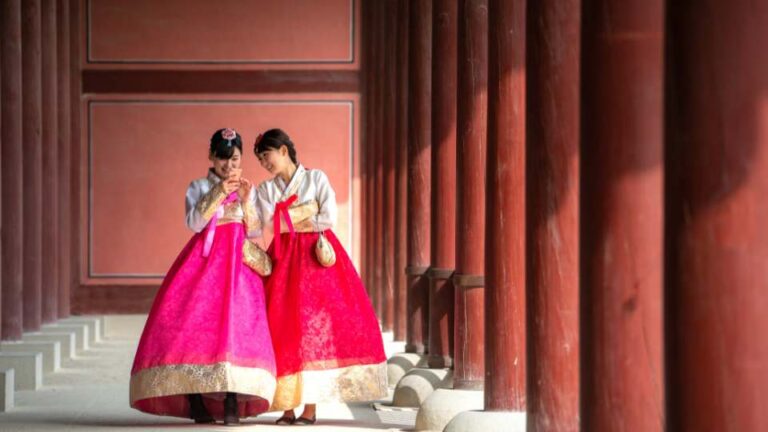

Blood type personality Korean dating culture explained.
Meet someone new in Korea, and after their name and age, there’s a good chance you’ll hear one more question. “What’s your blood type?” At first, it sounds like harmless small talk. But in Korea, this single question can quietly shape first impressions, dating decisions, and even how someone is perceived at work. For foreigners, this might feel unusual — so where did it come from, and how much does it actually affect relationships in Korean society?
This guide covers where blood type personality theory came from, how it genuinely shows up in Korean relationships, and how to handle it gracefully if someone asks you.
Where Did Blood Type Personality Theory Come From?
The idea of linking blood type to personality dates back to the 1920s, when Japanese scholar Takeji Furukawa published a paper arguing for a connection between blood type and personality. The theory exploded in popularity in Japan during the 1970s through a series of books by Masahiko Nomi, a writer with no medical background.
From there, it crossed into Korea. In Korea, the idea gained mainstream traction following a 2004 broadcast survey that connected blood type to personality. It quickly worked its way into TV shows, films, and pop songs — and became a recognizable part of everyday social shorthand.

Korea’s Actual Blood Type Distribution — The Numbers
Here’s something interesting: the real-world rarity of each blood type in Korea lines up surprisingly well with how each type is perceived culturally.
Researchers at Yonsei University’s Severance Hospital analyzed genomic data from over 72,000 individuals and found that the ABO blood type distribution in Korea breaks down to approximately 34.65% Type A, 27.22% Type B, 27.05% Type O, and 11.08% Type AB — figures that align closely with statistics from the Korean Red Cross.
In other words, roughly one in three Koreans is Type A, while Type AB is the rarest at about one in ten. Some analysts have pointed out that this rarity may have shaped how each type’s social image developed over time.
How Blood Type Affects Real Relationships in Korea
Dating — The First-Date Blood Type Question
On Korean dating apps, blood type sometimes appears as one of the first questions asked. Ask someone in their 20s their blood type and most will answer immediately — often followed by their own opinion on whether that type makes for good or bad romantic compatibility.
The numbers back this up. A 2017 Gallup Korea survey found that roughly six in ten Korean adults (58%) believed blood type was connected to personality to some degree. Type O came out as the most preferred blood type by a wide margin at 49%, followed by Type A (20%), Type B (16%), and Type AB (6%).
“Type B Man” — The Most Controversial Label
The sharpest edge of blood type personality theory centers on Type B — particularly when it comes to men.
The phrase “Type B man” (B형 남자) became cultural shorthand in Korea for an irresponsible, selfish romantic partner. Some women explicitly state on dating profiles that they won’t date Type B men. In Japan, where the same phenomenon exists, this is sometimes referred to as “blood-type harassment.”
In that same Gallup survey, Type B was the blood type women said they least wanted to date, at 32% — ahead of Type A (30.1%), Type AB (12.5%), and Type O (6.4%).
In the Workplace
There have been periodic reports of Korean companies asking applicants to list their blood type on job applications, or factoring it into hiring decisions. Type B applicants reportedly face the most disadvantage, tied to stereotypes about being selfish or unreliable. This discriminatory dimension has drawn criticism from academics and the public within Korea, though the practice itself hasn’t disappeared.
How Each Blood Type Is Perceived in Korea
| Blood Type | Population Share | Cultural Image in Korea | Romantic Compatibility |
|---|---|---|---|
| Type A | ~34.65% | Careful, conscientious, perfectionist, loyal — but can come across as anxious | Often clashes with Type B |
| Type B | ~27.22% | Passionate, creative, free-spirited — though also stereotyped as moody or selfish | Pairs well with O and AB |
| Type O | ~27.05% | Confident, social, natural leader — seen as the “all-rounder” | Generally compatible with most types |
| Type AB | ~11.08% | Unique and multi-talented — carries a dual image of “genius or oddball” | Adapts well to all types |
This table reflects the cultural images widely held in Korean society — it is not a scientifically validated personality classification.
Is There Any Science Behind This? And What About MBTI?
This part matters, so let’s be direct about it.
There is no credible scientific evidence supporting blood type personality theory. Multiple large-scale studies have found no correlation between blood type and personality traits. The theory exists purely as a cultural phenomenon — not a scientific one.
This is part of why MBTI has rapidly taken over much of this cultural space in recent years. With only four categories, blood type felt too limited to capture the complexity of modern individuals for many people — while MBTI’s 16 types offered a more detailed framework for self-analysis. By early 2026, an estimated 93% of Koreans aged 18 to 35 had taken an MBTI test.
That said, the blood type question hasn’t disappeared. It still survives as a casual icebreaker on first meetings, or as the setup for a joke — “of course, you’re Type B, that explains it.”
If You’re a Foreigner in Korea, Here’s How to Handle It
If someone asks “What’s your blood type?” in Korea, there’s no need to overthink it.
Most Koreans treat this roughly the way Westerners treat zodiac signs — a fun conversation starter, not a serious evaluation. That said, if you want to connect more naturally with Korean friends or a partner, it’s worth knowing your own blood type ahead of time and referencing the table above. A line like “I’m Type A, so I love making plans” can be a surprisingly effective conversation opener.
On the flip side, if someone jokes “that’s such a Type B thing to do,” don’t take it personally. It’s an old cultural cliché within Korea itself, and rarely reflects any real judgment of who you are.
If you want to understand Korean social culture more deeply, it’s worth getting familiar with both blood type personality theory and the now-dominant MBTI culture — together, they’ll make conversations with Korean friends and colleagues click in ways you wouldn’t expect.
Korean Blood Type Personality — 5 FAQs
Q1. What does each blood type “mean” in Korean culture?
The widely held cultural images break down roughly as follows. Type A is seen as careful, organized, and perfectionist — though sometimes anxious. Type B carries a dual image: passionate and free-spirited on one hand, moody or unreliable on the other. Type O is viewed as confident, social, and naturally suited to leadership. Type AB is seen as unique and multi-talented, with a reputation for being either brilliant or a bit “out there.” None of this is a scientific classification — it’s a culturally constructed framework.
Q2. What’s the most popular blood type in Korea?
According to a 2017 Gallup Korea survey, Type O ranked as the most preferred blood type at 49% — by far the highest. Type O has long been associated with an extroverted, friendly personality that fits well with Korea’s collectivist culture, partly reinforced by its medical reputation as the “universal donor” type. This same ranking held in earlier surveys from 2002 and 2012 as well.
Q3. Why does “Type B man” have such a negative reputation?
The negative image around Type B men spread through Korean media in the early 2000s and solidified into a stereotype of an irresponsible, selfish romantic partner. The stereotype became strong enough that some dating profiles explicitly exclude Type B men — and this has consistently drawn criticism within Korea as a form of unfair discrimination.
Q4. Has blood type personality theory been scientifically proven?
No. Multiple large-scale academic studies have found no correlation between blood type and personality. Blood type is simply a genetic difference in antigen proteins in the blood — it has no established medical link to personality. Many people in Korea are also well aware that this is a cultural phenomenon, not a scientific one. Gazet
Q5. Is it okay for a foreigner to ask about blood type in Korea?
Yes, completely. Asking a Korean friend or colleague “What’s your blood type?” isn’t an awkward question at all — if anything, it can show that you understand Korean culture. The one thing to avoid is treating the answer as a definitive judgment of someone’s character (“oh, that explains everything about you”). Approach it the way most Koreans do — as a lighthearted topic of conversation, nothing more.