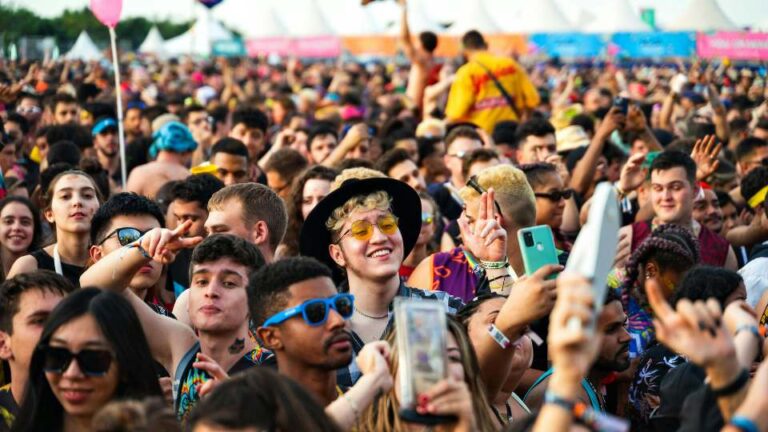
The world’s fastest country. Pali-pali (빨리빨리) — “hurry, hurry” — is one of the defining phrases of Korean culture. Among the fastest internet speeds on earth. Some of the longest working hours in the OECD. Competition that starts before kindergarten.
The results show up in the data. In a 2024 national survey, 73.6% of Koreans reported experiencing at least one mental health issue — including chronic stress, anxiety, or depressive symptoms — in the past year. That figure was 63.8% in 2022, meaning it climbed nearly 10 percentage points in just two years.
And yet here’s what’s fascinating. Koreans have developed their own ways of surviving this pressure — methods that are drawing serious attention from the rest of the world.
This post takes a deep look at four real mental wellness practices that Koreans rely on, where they come from, and how anyone can try them.
1. Korea Meong-ttae-ri-gi — The Art of Doing Absolutely Nothing
Korean Meong-ttae-ri-gi: A Culture Built Around Switching Off
The Korean word meong-ttae-ri-gi (멍때리기) means “zoning out.” Staring blankly into space. Sitting with an empty mind. Letting thoughts dissolve without chasing them.
One country decided to turn this into a competitive sport. That country is Korea.
Every year along the banks of Seoul’s Han River, the Hangang River Zoning-Out Competition is held. Participants sit for 90 minutes looking out at the water and do absolutely nothing. No smartphones allowed. Each person wears a heart rate monitor. The winner is whoever maintains the most stable heart rate throughout.
Why does this matter beyond the spectacle? The brain has a system called the Default Mode Network. It activates during rest — and it’s directly linked to creativity, self-awareness, emotional regulation, and the capacity for empathy. When we’re constantly stimulated, this network never gets a chance to run. Meong-ttae-ri-gi is the act of consciously switching it back on.
How to practice it in daily life: Put your phone down and look out the window for five minutes. Sit with your coffee and resist the urge to do anything at all. The goal isn’t emptiness — it’s permission. Permission to stop producing for a moment. That’s the whole practice. That’s enough to start.
2. Temple Stay — A 1,700-Year-Old Tradition Reimagined as a Mental Health Retreat
Temple Stay Korea Mental Health: One Night Can Change How You See Everything
It started with a practical problem. The 2002 FIFA World Cup. Hotels across Korea were completely full. The Jogye Order of Korean Buddhism opened the gates of temples nationwide to international visitors. That emergency accommodation solution became the Templestay program — and it never stopped growing.
Two decades later, the numbers are remarkable. In 2025, a total of 349,219 people participated in the Temple Stay program — a 5.1% increase from the previous year, setting an all-time record since the program launched in 2002. Of these, 55,515 were foreign visitors — surpassing 50,000 for the first time since 2018, reflecting a broader trend of both locals and international travelers seeking inner peace through spiritual tourism.
What actually happens during a Temple Stay? Wake-up at 3:00 AM → Morning Buddhist ceremony (예불) → Seated Seon meditation (참선) → 108 prostrations → Communal temple meal (발우공양) → Tea conversation with a monk (차담) → Forest walk → Rest.
The first morning feels disorienting. Possibly uncomfortable. But almost every participant says the same thing: by the second day, the silence stops feeling like deprivation and starts feeling like relief.
Why is it genuinely effective for mental health? Complete disconnection from digital devices — not suggested, but structurally enforced. A fixed daily rhythm that pulls the body into sync with natural time. 108 prostrations function simultaneously as full-body exercise and moving meditation. The tea conversation with a monk offers something rare: a space to speak honestly about the weight you’re carrying, with someone who isn’t trying to fix you.
What does it cost — and who is it for? One night costs between ₩50,000 and ₩100,000 (approximately $38–$75 USD) — a fraction of what comparable wellness retreats cost elsewhere in the world. Programs run at over 140 temples across Korea, with around 30 offering specialized English-language instruction. No religious affiliation is required. Approximately 40% of participants identify as non-religious or belong to a different faith entirely.
3. Ganhwa Seon — Korea’s Thousand-Year-Old Answer to an Overactive Mind
Ganhwa Seon Meditation for Stress: How a Single Question Empties the Mind
At the heart of Korean Buddhist practice is a meditation method called Ganhwa Seon (간화선). The Jogye Order maintains this tradition across 100 Seon meditation centers nationwide. Every year, approximately 2,000 monks and nuns enter intensive 100-day meditation retreats — either the summer retreat (ha-angeo) or the winter retreat (dong-angeo) — at one of these centers.
The practice works like this. A teacher gives the practitioner a hwadu (화두) — a question to hold. The most well-known hwadu is “What is this?” (이뭣고). The practice is designed to cut through intellectual reasoning, turning the mind toward direct insight rather than conceptual answers. Koreahealth
“In this moment — who am I?” You carry this question while sitting, while walking, while eating, while lying down before sleep. You’re not searching for an answer. The question itself becomes an anchor — something that keeps the mind from drifting into the past or the future.
Can an ordinary person practice this? Yes. The seated meditation sessions included in most Temple Stay programs offer the most accessible entry point. Smartphone meditation apps are also increasingly offering content rooted in Korean Seon tradition, translated into modern, non-religious formats.
If Western mindfulness is about paying attention to the present moment, Ganhwa Seon is about questioning who is present in this moment. The angle is different. The outcome is similar. Fewer scattered thoughts. A deeper capacity to stay where you actually are.
4. Forest Therapy — The Country Where Nature Is a Medical PrescriptionKorean Forest Bathing Healing Forest: Where the Trees Do the Work
Korea’s Forest Service officially operates a national Forest Therapy (산림치유) program. Across the country, designated Healing Forests (치유의 숲) are staffed by state-certified Forest Therapy Instructors who guide structured wellness programs through the trees.
In late 2025, Chungcheongbuk-do Province launched a series of new nature-based healing routes connecting ancient Buddhist mountain temples with certified healing forests — creating full-day immersion experiences under the initiative tagline: “Wellness begins where nature breathes.”
Is there actual evidence it works? Yes. A 2025 study published in Healthcare (PMC) by researchers at Chungbuk National University confirmed that forest therapy services in South Korea have demonstrated measurable mental and physical health effects, and called for a more systematic prescription model to integrate them with medical services.
The mechanism involves a combination of phytoncides (natural antimicrobial compounds released by trees), negative ions in the air, and the neurological effect of natural sound — all of which have measurable impacts on the brain and the nervous system.
How do you experience it? The National Center for Forest Therapy in Yeongju, North Gyeongsang Province, is an official government wellness complex built around the rich forests of the Baekdudaegan Mountain Range. It offers healing trails, accommodation, and structured therapy programs. Programs at healing forests in the greater Seoul area can also be booked through the Korea Forest Service’s official website — making them accessible to visitors without traveling far from the capital. Ktriptips
What All Four of These Have in Common
Meong-ttae-ri-gi. Temple Stay. Ganhwa Seon. Forest Therapy. Four practices. Four different forms. But one shared principle.
Stopping.
In a society where moving faster, producing more, and pushing harder are treated as virtues, Korea’s traditional mental wellness culture points firmly in the opposite direction.
Stop for a moment. You don’t have to do anything. That’s where it begins.
You Can Start Right Now — No Retreat Required
Korea’s mental wellness culture doesn’t require money, a flight to Seoul, or any special equipment to begin.
Meong-ttae-ri-gi you can do right now, in your chair. A Temple Stay costs as little as $38 for one night — less than most hotel rooms in any major city. Forest therapy programs can be booked through Korea’s official Forest Service website. And Ganhwa Seon begins with a single question you can ask yourself at any moment.
This brings the K-Wellness series to a close. Part 1 explored why Koreans became so obsessed with fitness — Ounwan and the running crew culture. Part 2 broke down the five hottest workouts in Korea right now. Part 3 went inside the mental health practices that keep Koreans grounded amid enormous pressure.
The body and the mind, together — that’s the full picture of Korean wellness.
And today, just for five minutes: put the phone down. Zone out. Let your mind go quiet. That’s K-Wellness at its most essential.