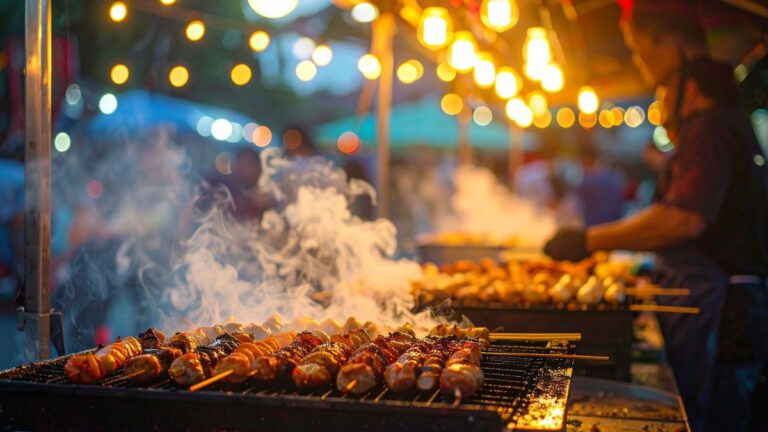
Gwangjang Market is still one of the best food experiences in Seoul. But if you walk in unprepared, it’s also a very easy place to get overcharged. Recent news reports have documented vendors charging foreign tourists 2,000 won for a single bottle of water, or asking for more than the price listed on the menu. This guide walks you through the mistakes first-timers make, and exactly how to avoid getting ripped off while still enjoying real Korean market food.
Why Gwangjang Market Is Still a Big Deal
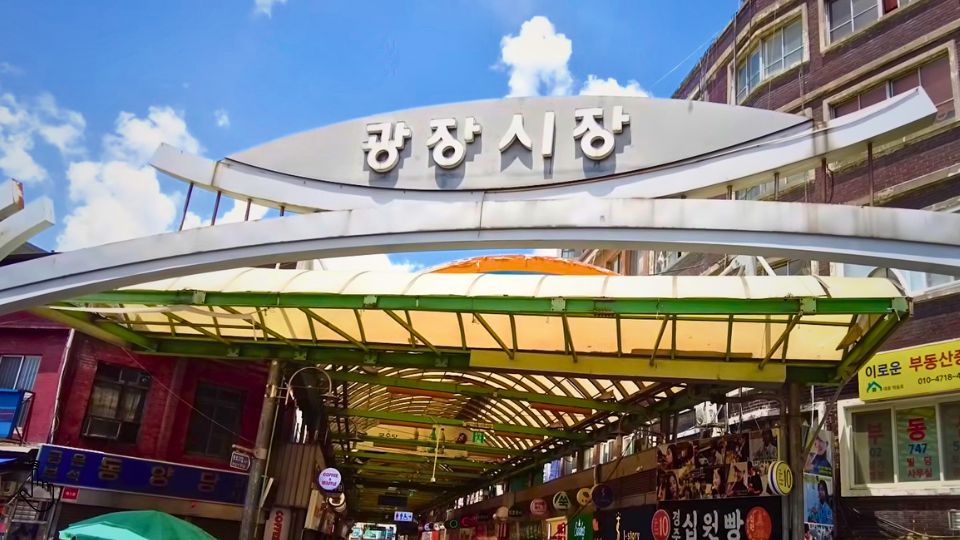
Gwangjang Market opened in 1905, making it the oldest permanent traditional market in Korea. Foreign visitor numbers exploded after it was featured on Netflix’s Street Food: Asia.
That’s where the problem starts. As the market suddenly became internationally famous, complaints about overcharging tourists grew right along with it. In one recent case, a vendor sold an unlabeled bottle of water to foreign tourists for 2,000 won and, when questioned, explained it was “because there are a lot of foreigners here.” Before that, there were reported cases of sundae (blood sausage) listed at 8,000 won on the menu being charged at 10,000 won, and jeon (savory pancake) platters served in portions far smaller than what customers expected to pay for.
That said, you don’t need to avoid Gwangjang Market. If you know what to watch for, it’s absolutely possible to eat well here at a fair price, with all the energy of a real Korean traditional market. Here’s how to do it right.
The 3 Mistakes First-Timers Make Most Often
1. Sitting down at a stall with no visible price list
Gwangjang Market’s food alley is a mix of fixed-price stalls and vendors without posted prices. If you don’t see a price list, always ask the price before you sit down or start ordering. This matters most at the busiest stalls near the central crossroads, where crowds are thickest.
2. Assuming card payment will work
Seoul City, Jongno-gu, and the merchant association have been pushing card terminal installations and multilingual QR menus, but plenty of stalls still only accept cash. Some vendors will visibly push back if you ask to pay by card. If a specific payment method matters to you, confirm it before you order.
3. Assuming water or side dishes are automatically free
In most Korean restaurants, water is free by default. But there have been documented cases at Gwangjang Market of vendors charging foreign customers specifically for bottled water. Before you ask for water or an extra side dish, it’s worth a quick check on whether it’s actually complimentary.
⚠️ The Overcharging Problem You Need to Take Seriously
This is the most important section in this guide. Overcharging at Gwangjang Market isn’t a one-off issue — it’s a pattern that has repeated for years. The recent reported cases follow a familiar shape:
- Charging more at the counter than what’s listed on the menu
- Adding toppings (like extra meat) you never asked for, then charging for them
- Serving noticeably smaller portions than what’s pictured or advertised
- Charging foreign customers specifically for things Korean customers wouldn’t normally pay for, like tap water
Local and national authorities are aware of the problem. The Ministry of SMEs and Startups, Seoul City, Jongno-gu, the Korea Small Business Institute, and the merchant association have been running a joint task force focused on standardizing price displays, improving hygiene standards, and building better guidance infrastructure for foreign visitors. Still, none of this is fully in place yet on the ground, which means the most reliable protection is being careful yourself.
Your Overcharging Prevention Checklist
- Prioritize stalls with a visible price list. If there isn’t one, ask “How much is this?” before you order.
- Confirm the final price before you order. Prices can shift depending on toppings, set combinations, or party size.
- Check your food the moment it arrives. If the portion looks noticeably smaller than what’s pictured or what’s at the next table, ask about it right away.
- Ask for a receipt or offer to pay by card. A legitimate vendor has no reason to refuse either.
- If something feels off, speak up politely on the spot. Most honest vendors — and the market itself — are receptive to resolving issues directly.
The most important thing to remember is that the majority of vendors here are honest. A handful of bad actors shouldn’t color your view of the entire market, but you should absolutely go in with your guard up.
How to Actually Order: Mayak Gimbap, Bindaetteok, Yukhoe
Mayak Gimbap — the line is worth it
Mayak gimbap is Gwangjang Market’s single most famous dish. You’ll get a plate with several small rolls, meant to be dipped in mustard sauce. The most well-known stalls always have a line, so if you want to skip the wait, go on a weekday before 11:30 AM.
Bindaetteok — follow the smell, not just a seat
Bindaetteok is a savory pancake made from ground mung beans mixed with vegetables. Stalls right at the market’s busiest central crossroads tend to charge more simply because of foot traffic, so it’s worth checking a few stalls in the quieter side alleys too. Whichever stall you choose, confirm the price before ordering.
Yukhoe — freshness matters most
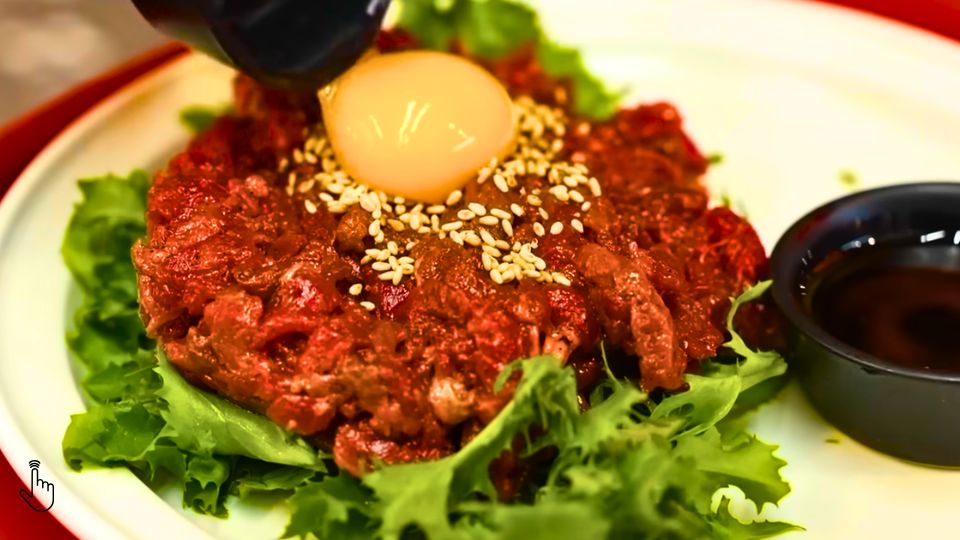
Yukhoe is seasoned raw beef, and with raw meat, hygiene and turnover speed matter. Choosing a stall with high customer turnover is your best indicator of freshness. Prices vary significantly depending on the cut and portion size, which makes this dish one where confirming the price up front is non-negotiable.
Why It’s Still Worth Going
After all this focus on overcharging, it’s worth saying clearly: Gwangjang Market is still one of Seoul’s best traditional-market food experiences. It’s an easy walk from Jongno 5-ga and Euljiro 4-ga stations, and it pairs naturally with a walking route through Insadong or Dongdaemun. Plenty of stalls run on fixed pricing, and plenty of vendors are genuinely kind to visitors.
In the end, it comes down to how carefully you go in. Remember the checklist in this guide, and you can enjoy an authentic Korean market food experience without the overcharging headache.
Save This Checklist Before You Go
Gwangjang Market can either turn into a regret or become one of the most memorable parts of your Seoul trip — the difference is preparation. Bookmark this guide or screenshot the checklist before your visit. If you’ve been and have your own experience or a stall recommendation, drop it in the comments — it genuinely helps the next reader.
Promotion: Seoul Tour – Gyeongbokgung Palace, Hanok Village, and Gwangjang Market

This post is part of an affiliate marketing program, and I receive a commission for it.