The Seoul subway is safe. Not “relatively safe” or “safe enough for tourists.” It is one of the most thoughtfully engineered urban transit systems on the planet. First-time visitors, solo travelers heading home after midnight, people lugging overloaded suitcases — all of them ride it without incident, every single day.
This post explains exactly why. Not feelings or impressions — systems, data, and the specific design decisions that make Seoul’s subway different from almost anywhere else you’ve ridden.
Why New Yorkers Wait for the Subway Pressed Against the Wall
In 2026, a video went quietly viral — and then loudly viral on Korean news. It showed subway commuters in New York standing with their backs flat against the station wall, waiting for their train.
The reason was simple: no platform screen doors. Of New York’s 472 subway stations, only a handful have the glass barriers that separate the platform from the tracks. The rest remain open — and a pattern of platform-pushing incidents has made standing near the edge genuinely risky. Pressing against the wall isn’t paranoia. It’s a rational response to an infrastructure gap.
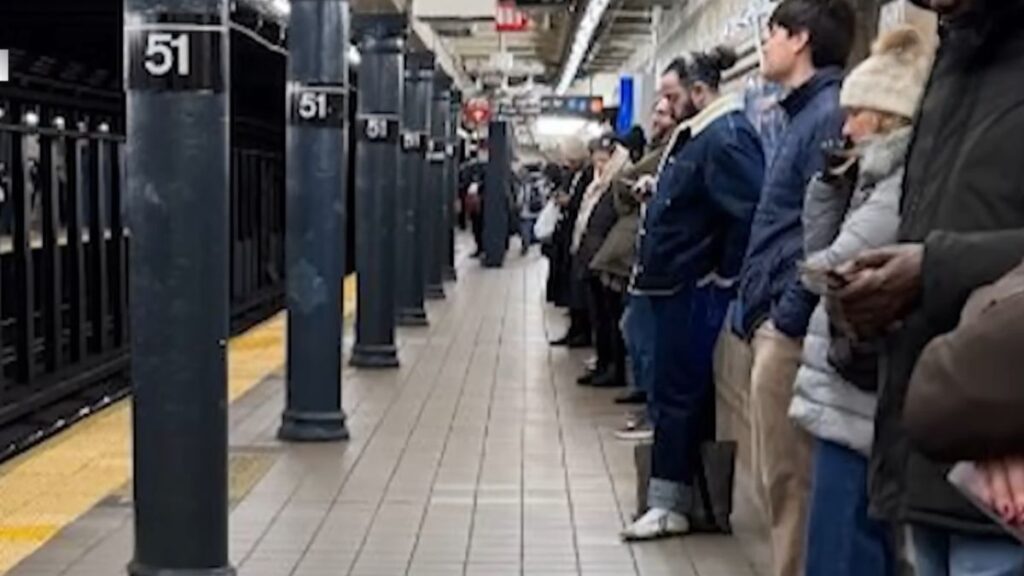
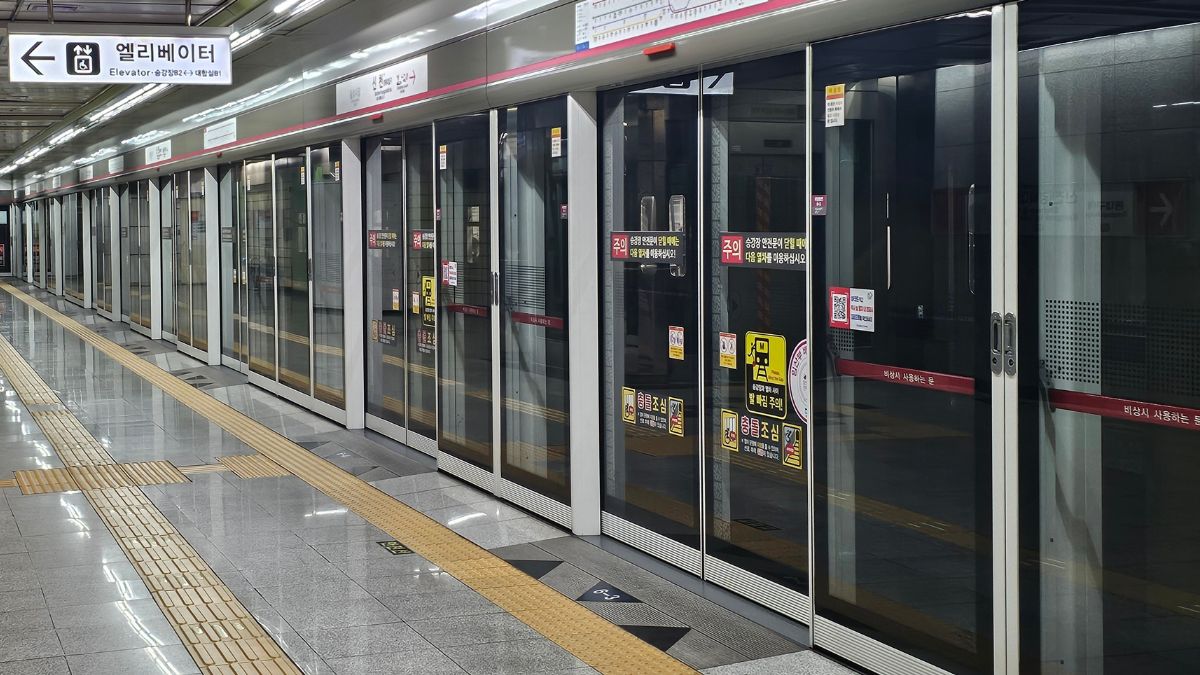
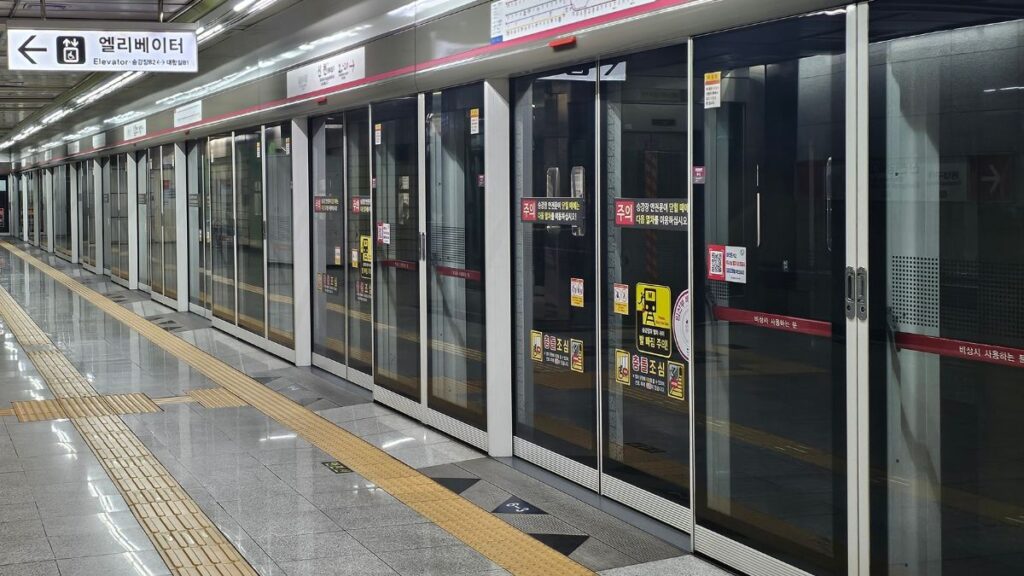
Seoul has no equivalent scene. Every line of the Seoul Metro runs with full platform screen doors installed. A solid glass and metal barrier separates you from the tracks at all times. The doors only open when a train arrives and aligns precisely with them. TripAdvisor — the world’s largest travel platform — listed riding the Seoul subway as one of the must-do experiences when visiting Korea. The infrastructure is a significant part of why.
5 Reasons the Seoul Subway Is Actually Safe
1. Platform Screen Doors — Installed Across Every Line
Seoul’s subway system completed full platform screen door installation across all lines, from Line 1 through Line 9 and beyond. Before a train arrives, the platform and tracks are completely separated by a barrier you cannot accidentally fall through or be pushed into.
Falls, pushes, and collision accidents are structurally prevented — not managed after the fact, but eliminated by design. Platform-related fatalities dropped significantly after installation was completed. This is the kind of safety that doesn’t depend on anyone’s behavior. The system itself handles it.
2. CCTV in Every Car and on Every Platform
Every single train car and every platform in the Seoul subway system has CCTV coverage. There are no blind spots. Footage is monitored in real time, with immediate response capability when anything unusual is detected.
Measured by camera density, Seoul’s subway ranks among the most monitored transit systems in the world. What this means practically: whether you’re riding at 10 AM or 11 PM, you are never in a space that isn’t being watched. That matters, especially when traveling alone.
3. Staff at Every Station + Emergency Call Buttons Everywhere
Every Seoul subway station has staff on duty at all times. If you need help, you can walk to the service window and ask. For language assistance, eleven high-traffic stations — including Gangnam, Myeong-dong, Hongik University, and Itaewon — now operate a real-time AI interpretation service covering 13 languages at customer service desks.
Every platform and every restroom also has an emergency call button that connects directly to the station control room with one press. No smartphone needed, no number to remember. Help is one button away, at any hour.
4. Korea’s Crime Rate — The Numbers Behind the Feeling
The deepest reason Seoul’s subway is safe is the same reason Seoul itself is safe: South Korea has one of the lowest violent crime rates among all OECD member nations.
Petty theft is rare enough that stories about it feel remarkable. Travelers leave wallets on seats and return to find them untouched. Laptops sit on tables in cafes while their owners use the restroom. Part of this is strong legal deterrence. But a larger part is a cultural emphasis on communal safety — a shared norm that makes taking someone else’s belongings genuinely uncommon. The subway is an extension of that culture.
5. Cleanliness and Punctuality — Safety of a Different Kind
Safety isn’t only about crime. A system that works predictably, every time, is a form of safety too. Seoul’s subway operates with some of the highest on-time rates of any metro system in the world.
Trains are air-conditioned in summer and heated in winter, with underfloor warming in the seats. Ventilation is well-maintained. The smell and discomfort that characterize subway rides in many other cities are mostly absent here. When you know exactly what you’re getting, and it consistently delivers, that’s a kind of safety that’s easy to undervalue until you’ve experienced a system that doesn’t.
After Midnight — Your Complete Late-Night Transport Guide
The Seoul subway runs from approximately 5 AM to midnight daily — exact last train times vary by line and direction, and the gap between the last train’s listed time and actual departure can be shorter than you expect. Before a late night out, check last train times on KakaoMetro or Subway Korea app before you leave, not when you’re already running for the platform.
When the subway stops, you have three good options.
① Night Buses (N-Buses) Seoul operates a network of night buses (야간버스, prefixed with “N”) running from approximately 1 AM to 5 AM on major routes across the city. Your T-money card or Climate Card works on them exactly as it does on the subway — no separate ticket, no additional setup. Look for the “N” before the route number at any bus stop.
② Kakao T Taxi The Kakao T app is the standard way to book a taxi in Seoul, and it’s also the safest. The driver’s name, vehicle plate number, and your full route are logged in the app before the ride begins. You can share your live route with someone at home. International credit and debit cards are accepted. Late-night availability is generally good, even in the early hours.
③ Jjimjilbang (Korean Sauna) If you miss the last train and don’t want to deal with transport at 1 AM, staying overnight at a jjimjilbang is a legitimate option — not just a tourist novelty. Korean locals do this regularly. For around ₩10,000–15,000, you get a heated room, a locker, and access to sauna facilities until morning. It’s cheaper than a taxi in some directions, and considerably more interesting.
5 Mistakes Foreigners Make on the Seoul Subway
The subway is safe. But there are a few things that will make you conspicuous in the wrong way if you don’t know them in advance. None of these are dangerous — just socially awkward at best, and genuinely disrespectful at worst.
① Never Sit in the Priority Seats
At each end of every car, you’ll find seats upholstered in a darker color — red, navy, or dark blue. These are priority seats (노약자석), reserved strictly for elderly passengers, people with disabilities, and anyone who needs them.
Do not sit here even if the seats are completely empty and the car is not crowded. If an elderly passenger boards and you don’t immediately stand, you will be corrected — directly and without hesitation. This is the single most common uncomfortable moment for foreign visitors on Seoul’s subway, and it is entirely avoidable.
② Leave the Pink Seats Empty Too
In the middle section of each car, there is typically a bright pink seat. This is the pregnant women’s priority seat (임산부석). The same rule applies — leave it empty. If a woman wearing a small pink pregnancy badge approaches, stand up immediately regardless of whether she looks visibly pregnant. Other passengers notice, even if they don’t say anything.
③ Keep Phone Calls Quiet
Seoul’s subway is noticeably quieter than most. Loud phone conversations, speakerphone calls, and videos playing without headphones all draw attention and disapproval. If you need to take a call, step to a less crowded area of the car and keep your voice low. Texting is always the smoother option.
④ Stand Behind the Yellow Tactile Line
The yellow textured strip on the platform floor is the safety line. Stand behind it — not on it, and not in front of it. It exists both as a safety barrier when trains arrive and as a tactile navigation guide for visually impaired passengers. Standing on the wrong side of it while a train enters the station is both dangerous and disruptive to the boarding flow.
⑤ Don’t Use Google Maps for Transit Directions
This one catches a lot of visitors off guard. Google Maps does not provide reliable subway or bus routing inside South Korea due to local mapping data regulations. You can search for places, but the transit direction feature breaks down. Many travelers have missed stops or taken wrong routes because they trusted it.
Before you arrive in Seoul, install Naver Map (available in English) and KakaoMap as your primary navigation tools. For subway-specific information — next trains, last trains, transfer timing, exit numbers — KakaoMetro is the most accurate option available.
Fares, Cards, and Apps — The Practical Breakdown
Current Fares (Updated June 2026)
| Ticket Type | Price |
|---|---|
| Base fare — card (T-money / Climate Card) | ₩1,550 for first 10 km |
| Single-use cash ticket | ₩1,650 + ₩500 refundable deposit |
| Distance surcharge | +₩100 per additional 5 km over 10 km |
| Children under 6 | Free with accompanying adult |
Fare updated June 28, 2026 — second phase of a planned increase. Still among the cheapest metro fares of any major world city.
Which Card Should You Get?
T-money Card — The Standard Choice Available at any convenience store (GS25, CU, 7-Eleven) for around ₩2,500–4,000. Load it with cash at the same store or at subway station machines. Works on the subway, city buses, and taxis. Remaining balance can be refunded at convenience stores before you leave. Simple, reliable, and understood everywhere.
Climate Card (기후동행카드) — Best for Frequent Riders Seoul’s unlimited-ride transit pass, launched January 2024. Covers all Seoul subway lines, city buses, and the Ddareungi bike-share system for a flat fee per period. Since March 2025, international credit and debit cards are accepted for purchase and top-up — a significant upgrade that removed the main barrier for foreign visitors. If you’re spending more than three or four days in Seoul and plan to move around a lot, the math usually favors this card.
3 Apps to Install Before You Land
| App | What It Does |
|---|---|
| Naver Map | Transit, walking, and address search — English interface available. Best all-around navigation tool in Korea |
| KakaoMetro | Subway-only: real-time next trains, last train alerts, transfer guidance, exit numbers |
| Kakao T | Taxi booking with route tracking — essential for late nights |
Emergency Numbers — Save These Before Arrival
| Situation | Number |
|---|---|
| Police | 112 |
| Fire / Medical Emergency | 119 |
| Korea Tourism Hotline (English, 24 hrs) | 1330 |
1330 is the number most travelers don’t know about and most wish they’d saved sooner. English, Chinese, and Japanese are all supported. The hotline handles directions, restaurant recommendations, medical emergencies, lost items, and transport questions. It is not a recording — there are real people on the other end, around the clock. Save it before your first day.
Before You Ride — Complete Checklist
- Get a T-money card or Climate Card — any convenience store on arrival, or airport
- Install Naver Map and switch to English interface
- Install KakaoMetro — check last train times before late nights out
- Install Kakao T — set up payment before you need a midnight taxi
- Save 1330 in your phone contacts
- Dark-colored seats at car ends = priority seats — do not sit, even if empty
- Pink seat in car middle = pregnant women — leave empty
- Stand behind the yellow tactile line on platforms
- Phone calls quiet, no speakerphone on the train
- Google Maps is not reliable for transit — use Naver Map instead
One Last Thing
A city where commuters press against walls to wait for trains made the news in 2025. In Seoul, that image is genuinely hard to picture. The glass barrier between you and the tracks has been there so long it feels obvious — a basic feature rather than an engineering achievement.
TripAdvisor called riding the Seoul subway a must-do experience in Korea. That’s not about novelty. It’s about what it feels like to use a transit system that was designed with real care for the people using it — and then maintained to the same standard.
If this is your first time, take the checklist above, install the apps before you land, and get a T-money card at the airport convenience store before you exit arrivals. After that, you’re ready. The system will do the rest.
For more practical guides to getting around Seoul like a local, check the related posts below.