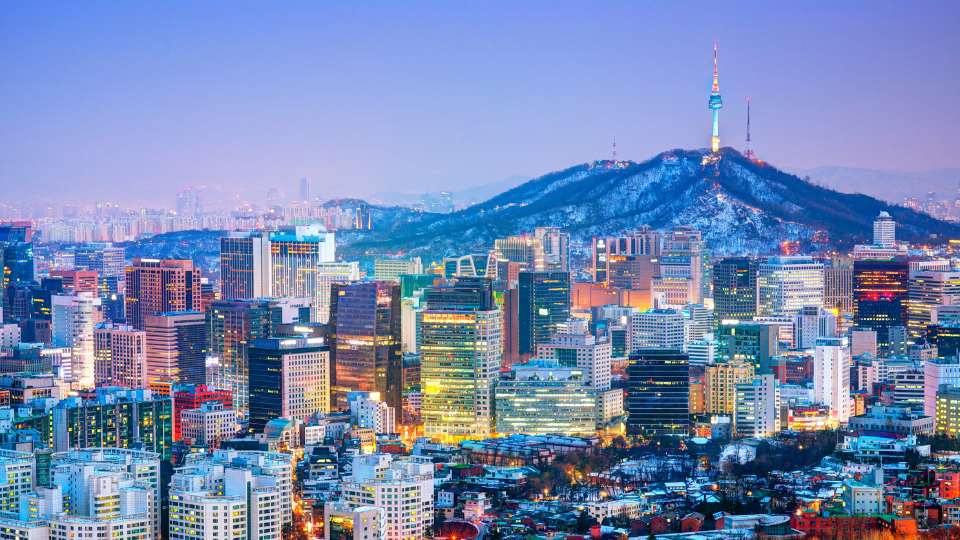
You searched for a Seoul travel itinerary — and found something too complicated and completely unrealistic. Search “Seoul itinerary 5 days” on Google and hundreds of articles come up. Most of them pack ten places into a single day, include sudden jumps between opposite ends of the city, and give you zero information about actual costs.
First-time visitors to Seoul need something different.
What you actually need is a route that accounts for travel distances, a realistic daily budget, and places that locals enjoy — not just tourists. This guide is written based on firsthand experience living in Seoul. Every cost estimate — transport, food, and entry fees — is based on real numbers.
3 Things to Prepare Before You Arrive in Seoul
1. T-money Transit Card
Seoul’s subway system is remarkably convenient for foreign visitors. One T-money card covers the subway, buses, and even some taxis. You can buy it immediately after arriving at Incheon Airport at any convenience store (CU or GS25). The card itself costs 4,000 KRW. The base subway fare is 1,400 KRW (as of 2025), which is 100 KRW cheaper than paying with cash.
2. SIM Card or eSIM
Traveling in Seoul without internet is nearly impossible. Maps, translation, food ordering, and taxi booking all happen on your smartphone. If you purchase your SIM or eSIM online before departure, you can skip the airport queues and connect the moment you land. See the related guide below for a full comparison of your options.
3. Install Naver Maps
Google Maps has poor accuracy in South Korea, particularly for public transit routes. Naver Maps or Kakao Maps is far more reliable. Both apps support English and provide real-time subway transfer information.
Seoul 5-Day Recommended Itinerary
Day 1 — Hongdae and Yeonnam-dong: The Living Energy of Seoul
Start your first day in Seoul at Hongdae. It is close to most visitor accommodations and is the best neighborhood to experience Seoul’s energy right away.
Recommended route:
- Hongdae Walking Street — street artists and busking performances
- Yeonnam-dong Gyeongui Line Forest Park — a tree-lined urban walkway often called Seoul’s High Line
- Hapjeong Cafe Street — independent cafes with distinctive design, popular for photos
Spend your evening at Hongdae’s pojangmacha (street food tent) alley. Tteokbokki runs about 3,000 KRW, chicken skewers 2,000 KRW, and soondae 3,000 KRW — a full evening of street food for very little.
Day 1 estimated cost: Transport approx. 5,000 KRW + Food 25,000–35,000 KRW
Day 2 — Gyeongbokgung Palace and Bukchon Hanok Village: 500 Years of Joseon History
For one of the most memorable days of your trip, spend the morning at Gyeongbokgung Palace and the afternoon at Bukchon Hanok Village. The two locations are a 15-minute walk apart.
Recommended route:
- Gyeongbokgung Palace — entry fee 3,000 KRW, free entry when wearing hanbok
- National Folk Museum of Korea — located inside the palace grounds, free admission, displays of traditional Korean daily life
- Bukchon Hanok Village — arrive before 9 AM to enjoy the village without crowds
- Insadong Traditional Street — traditional craft shopping and traditional tea houses
Local tip: Hanbok rental shops line the street in front of Gyeongbokgung. Rental runs approximately 20,000–30,000 KRW for 2 to 3 hours. Wearing hanbok grants free palace entry, which partially offsets the rental cost.
Day 2 estimated cost: Transport 3,000 KRW + Entry fee 3,000 KRW + Food 20,000–30,000 KRW
Day 3 — Myeongdong and Namsan Seoul Tower: Shopping and City Views
Myeongdong is Seoul’s largest shopping district. If K-beauty products are on your list, this is a non-negotiable stop.
Recommended route:
- Olive Young — Korea’s largest health and beauty retailer, with frequent sale items
- Innisfree, Etude House, and Laneige flagship stores
- Myeongdong Cathedral — Seoul’s most striking Gothic structure, free entry
- Namsan Seoul Tower — cable car round trip 10,500 KRW, or hike up in about 30 minutes
- N Seoul Tower observatory — entry fee 21,000 KRW, best visited at night for the skyline view
K-beauty shopping tip: The Myeongdong Olive Young flagship is the largest location with the widest selection. Installing the Beauty Points app gives you additional discount coupons available to foreign visitors.
Day 3 estimated cost: Transport 3,000 KRW + Cable car 10,500 KRW + Shopping costs vary
Day 4 — Gangnam and COEX: The Heart of Modern Seoul
Gangnam, made internationally famous by “Gangnam Style,” is Seoul’s most modern and sophisticated district.
Recommended route:
- Starfield COEX Library — free entry, 18-meter-high bookshelves that make for a striking photograph
- Bongeunsa Temple — located directly beside COEX, a quiet retreat in the middle of the city, free entry
- Apgujeong Rodeo Street — center of Korean fashion, a frequent spot for celebrity sightings
- Cheongdam-dong Luxury District — flagship stores for Gucci, Chanel, Louis Vuitton, and others
Local tip: COEX connects to an underground shopping mall, making it an ideal destination on a rainy day. The Starfield Library is open from 10:30 AM to 10:00 PM with no admission fee.
Day 4 estimated cost: Transport 4,000 KRW + Food 20,000–40,000 KRW
Day 5 — Han River Park and Departure: Seoul’s Final Impression
Spend your last day at the Han River, one of Seoul’s most iconic settings, and let the city send you off at its own pace.
Recommended route:
- Banpo Han River Park or Yeouido Han River Park
- Chicken and beer picnic by the river — order through the Baemin app for direct delivery to the park, approximately 22,000–30,000 KRW
- Convenience store cup ramen on an outdoor bench — about 3,000 KRW and one of the most genuinely local experiences you can have
- From Yeouido, take Line 9 directly to the airport, approximately 45 minutes
Local tip: The Baemin (Baedal Minjok) app offers a “Han River Delivery” service that brings chicken, pizza, and tteokbokki directly to designated spots in the park. This is real Seoul local culture.
Day 5 estimated cost: Transport 5,000 KRW + Food 25,000–35,000 KRW
5-Day Total Estimated Cost Summary
| Category | Estimated Amount (KRW) |
|---|---|
| Transport (5-day total) | Approx. 20,000–25,000 |
| Food (5-day total) | Approx. 110,000–170,000 |
| Key entry fees | Approx. 30,000–50,000 |
| Shopping | Personal budget varies |
| Total (excluding shopping) | Approx. 160,000–245,000 |
Accommodation, flights, and airport transfer costs are not included.
5 Foods You Must Try in Seoul
These are dishes locals eat regularly. The best versions are found in neighborhood restaurants, not tourist-facing establishments.
Samgyeopsal and Soju — Korea’s most common dining-out meal. One serving runs approximately 15,000–20,000 KRW. For two people, expect around 40,000–50,000 KRW total.
Naengmyeon — Essential in summer. There are two styles: Pyongyang naengmyeon (mild broth) and Hamheung naengmyeon (spicy). One bowl is approximately 12,000–15,000 KRW.
Sundubu Jjigae — A soft tofu stew that works perfectly as a morning meal. Approximately 9,000–12,000 KRW.
Convenience Store Samgak Kimbap — 1,200 KRW per piece. A triangular rice roll that captures everyday life in Korea better than almost anything else.
Tteokbokki — The definitive street food. One serving costs 3,000–5,000 KRW.
Why You Should Start Planning Your Seoul Trip Right Now
Seoul rewards preparation. When choosing accommodation, look for a location within a 5-minute walk of a subway station in Hongdae, Myeongdong, or near Gangnam Station. That single decision saves both time and money across the whole trip.
Spring (March through May) and autumn (September through November) are peak seasons in Seoul. During these periods, accommodation prices can more than double and reservations at popular restaurants become essential. Fix your travel dates now and book your accommodation and SIM card in advance.
For SIM card and eSIM options at Incheon Airport, see the guide below. You need internet the moment you arrive to use this itinerary effectively.