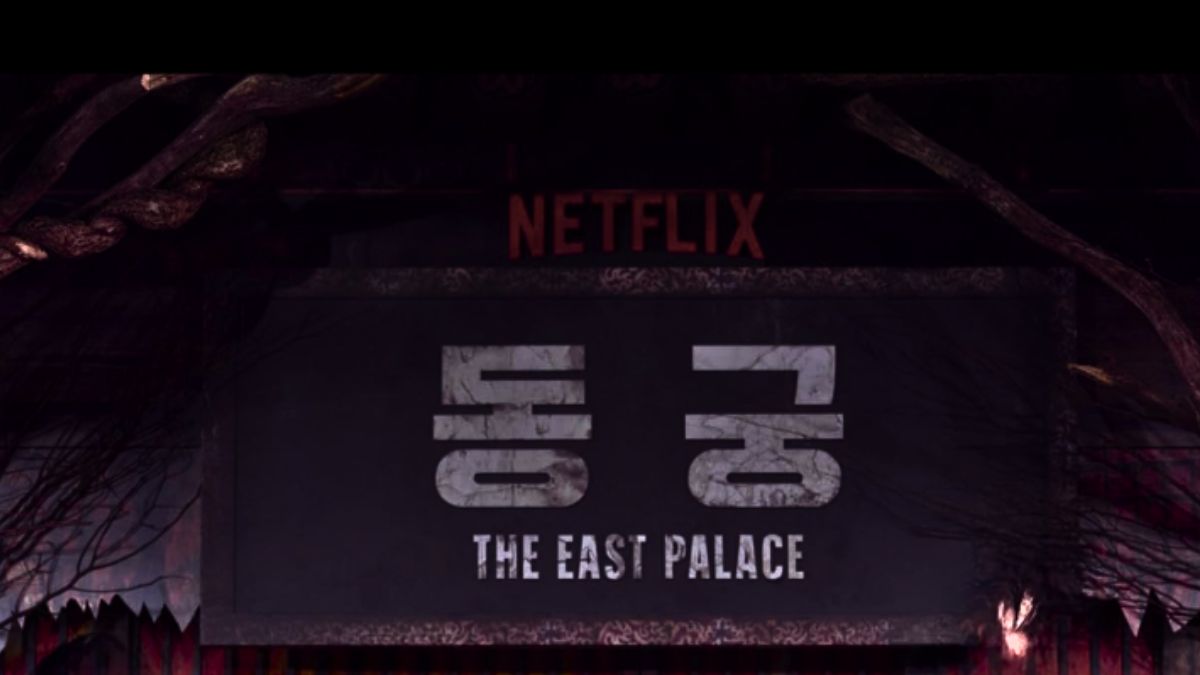
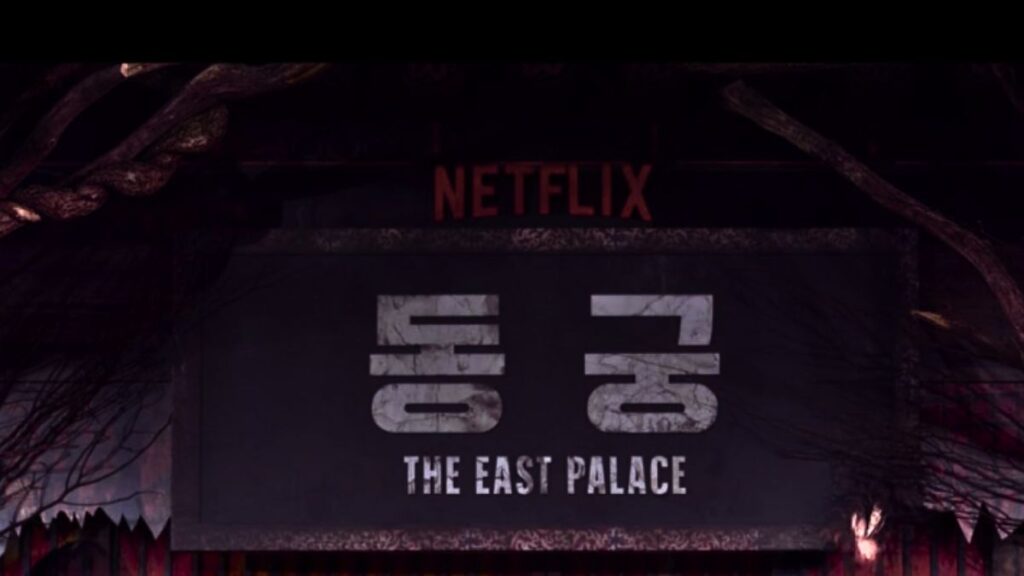
The East Palace (동궁, Donggung) is Netflix’s newest Korean dark fantasy series — and it’s one of the most atmospheric supernatural K-dramas to arrive in years.
Starring Nam Joo-hyuk in his first major role after completing military service, Roh Yoon-seo as a court lady cursed with the ability to hear the dead, and Cho Seung-woo as the King who sets everything in motion, the 8-episode series launched on Netflix on July 17, 2026.
If you enjoy Korean historical dramas (sageuk) but have always wanted one that leaned into the supernatural — something closer to Kingdom meets Alchemy of Souls — this is the show you’ve been waiting for.
What Is The East Palace?
According to the official Netflix description, the premise is deceptively simple: the king secretly summons two extraordinary individuals to investigate a curse haunting the Crown Prince’s palace.
One is Gu-cheon — an arrogant, formidable ghost slayer who can physically transform into a spirit and traverse the spectral realm to kill ghosts with his sword. The other is Saeng-gang — a court lady born with the involuntary ability to hear and communicate with the dead, a gift she has spent her entire life treating as a curse.
Together, they enter the East Palace (동궁) — the residence of the Crown Prince — to uncover the source of a darkness that has been killing off the royal bloodline. What they find goes far deeper than a simple haunting.
https://www.youtube.com/watch?v=-0E39zVbEZc
What Is “Sageuk” — and Why This One Is Different
For viewers new to Korean historical dramas, sageuk (사극) refers to any Korean period drama set in historical or historical-adjacent eras, typically the Joseon Dynasty (1392–1897). Traditional sageuk focus on court politics, succession battles, and romance.
The East Palace disrupts this formula entirely. Rather than political maneuvering, the central conflict is supernatural — a world where spirits (귀, gwi) coexist with the living, and where certain gifted individuals can cross the boundary between both worlds. The Joseon-style palace setting creates a claustrophobic, high-stakes backdrop for the ghost story.
The Dual World at the Heart of the Series
The series operates on a dual reality: the physical world of the royal court, where human ambition, betrayal, and power struggles unfold, and the spirit realm, where the unresolved grief, rage, and injustice of the dead manifest as supernatural threats.
This duality is the show’s key structural idea. The spirits aren’t random — they’re the direct consequence of specific human failures. When people in power cause irreversible harm to the vulnerable, the East Palace says those sins don’t disappear. They become something else entirely.
The Cast: Three Characters Worth Knowing Before You Start
Gu-cheon (구천) — Nam Joo-hyuk
Nam Joo-hyuk plays Gu-cheon, the series’ central figure — described in the official Netflix synopsis as “proud and powerful,” a ghost slayer who can physically transform into a spirit to hunt and kill ghosts with a sword.
This is Nam Joo-hyuk’s first major role following his 18-month mandatory military service, which he completed in September 2024. The role marks his first Netflix original appearance, and early viewer reactions have noted how significantly the physical and tonal demands of the role differ from his earlier work.
Gu-cheon is not a traditional hero. He’s arrogant, morally complex, and operates between two worlds simultaneously — a character design that gives Nam Joo-hyuk considerably more dramatic range than the romantic leads he was known for previously.
Saeng-gang (생강) — Roh Yoon-seo
Roh Yoon-seo plays Saeng-gang, a court lady (궁녀, gungnyeo) who was born with the ability to hear the voices of the dead. Unlike Gu-cheon’s learned, combat-focused abilities, Saeng-gang’s power is passive and involuntary — she cannot turn it off.
Court ladies in Joseon were women who served the royal family in the palace, often from a young age, and were bound to palace life. Saeng-gang’s position makes her simultaneously an insider (she knows the palace, its people, its secrets) and an outsider (her abilities mark her as fundamentally different from everyone around her).
Her character carries significant dramatic weight: what she considers a lifelong curse becomes, in the context of the East Palace investigation, the most valuable tool they have.
The King — Cho Seung-woo
Cho Seung-woo plays the King — the figure who sets the entire plot in motion. When the princes of the kingdom begin dying mysteriously and rumors spread that a pond spirit is eliminating the royal bloodline, the King initially dismisses the supernatural explanations. But when his last remaining heir falls ill, he makes the decision to call in Gu-cheon and Saeng-gang.
This is Cho Seung-woo’s first appearance in Netflix original content — a significant casting note for Korean drama fans who know him from acclaimed theatrical and film work. The King is a character who occupies a morally complicated position: simultaneously the one who needs saving and the one whose own failures may have contributed to the curse.
The Curse: What the Story Is Really About
The plot of The East Palace is a detective story with supernatural stakes, structured across eight episodes.
The surface mystery — why are the Crown Princes dying? What is the pond spirit? — unfolds gradually. But the series makes clear early that the supernatural threat is not random. The curse is connected to specific events in the palace’s past, specific choices made by specific people with power, and the suffering those choices created for those without it.
This is the show’s most interesting thematic decision: the spirits in The East Palace are not evil in the traditional horror sense. They are the residue of injustice. The haunting is a symptom. The disease is human greed and corruption.
When Gu-cheon and Saeng-gang investigate the East Palace, they’re not just fighting ghosts. They’re excavating buried truths that powerful people wanted kept hidden.
Why The East Palace Is Getting Significant Attention
A Creative Team With Proven Genre Credentials
The series is directed by Choi Jung-kyu, whose previous credits include The Devil Judge and Children of Nobody — both of which dealt with moral ambiguity and systemic injustice, themes that carry directly into The East Palace.
The writing team of Kwon So-ra and Seo Jae-won previously collaborated on Bulgasal: Immortal Souls and The Guest — two of the most well-regarded Korean supernatural dramas of recent years. Fans of either show will recognize their approach: layered mythology, morally complex characters, and horror that emerges from human behavior rather than simple monster-of-the-week plotting.
How It Compares to Other Korean Supernatural Dramas
If you liked Kingdom: The period setting, the palace politics, and the sense of an unseen threat systematically dismantling the ruling order will feel familiar. The East Palace replaces zombies with a more psychological, mythology-rooted supernatural threat.
If you liked Alchemy of Souls: The world-building around supernatural abilities, the dynamic between two gifted individuals forced into partnership, and the romantic undertones layered into the primary mission will resonate.
If you liked The Witcher (for non-Korean drama viewers): The monster-hunting protagonist who operates outside conventional society, the morally neutral stance toward the supernatural, and the episodic-yet-overarching mystery structure are comparable.
What Makes This Show Different from Typical Sageuk
Most Korean historical dramas, even excellent ones, center on one of three conflicts: political succession, romantic love against social barriers, or military/national crisis.
The East Palace centers on a fourth conflict: the moral debt created by power. The ghosts are not random. The curse is not arbitrary. The series proposes that unchecked ambition and the sacrifice of powerless people to protect the powerful creates something that doesn’t simply disappear when those involved die or are forgotten.
That makes it a ghost story, yes. But it’s also a story about accountability — about what happens to a system when the harm it causes is never acknowledged.
Should You Watch It?
If you are new to Korean drama: The East Palace is a high-production-value entry point, but it requires some patience with mythology-building in the first two episodes. If you’ve watched Squid Game or All of Us Are Dead and want to explore Korean genre television further, this is an excellent next step — with the caveat that the pacing is slower and more atmospheric than either of those.
If you are a K-drama veteran: The creative team’s track record, the casting, and the conceptual ambition of the premise make this essential viewing for the year. Whether it fully delivers on that ambition across 8 episodes is something viewers are actively debating.
If you’re specifically a fan of Korean occult or supernatural content: This is the most ambitious Korean palace ghost story to reach international streaming, and it’s worth watching on that basis alone.
Practical Viewing Info
| 🎬 Title | The East Palace (동궁, Donggung) |
| 📺 Platform | Netflix (worldwide) |
| 📅 Release Date | July 17, 2026 |
| 🎞️ Episodes | 8 episodes |
| 🌐 Language | Korean (subtitles available in multiple languages) |
| 🎭 Genre | Dark fantasy, supernatural period drama |
| 👥 Cast | Nam Joo-hyuk, Roh Yoon-seo, Cho Seung-woo |
| 🎬 Director | Choi Jung-kyu |
| ✍️ Writers | Kwon So-ra, Seo Jae-won |
💡 If you want to watch the writers’ previous work first: Start with The Guest (2018, tvN) for a dark, multi-perspective supernatural thriller, or Bulgasal: Immortal Souls (2021–2022, tvN/Netflix) for a longer-form supernatural drama with similar mythology ambitions.
One Final Thought
Korean dark fantasy television has been building toward something like The East Palace for several years. The genre vocabulary — the spirits, the Joseon setting, the supernatural abilities, the tension between human corruption and supernatural consequence — is well-established by now.
What this series contributes is a tighter, more intentional use of those elements. The East Palace isn’t haunted arbitrarily. It’s haunted because of what happened there. And the job of Gu-cheon and Saeng-gang is less about exorcism than it is about excavation.
Eight episodes is a focused, manageable commitment. If you’re going to watch one Korean supernatural period drama this year, this is the one to prioritize.
🇰🇷 Trend Culture covers K-drama, K-pop, Korean food, and Korean lifestyle for international audiences. More content coming soon.