
If you’ve watched any K-drama, you’ve seen the scene: someone orders “chimaek” — fried chicken and a tall glass of draft beer. A lot of international viewers assume this must be a healthier choice than American fast food, simply because it shows up so often and feels more like comfort food than a “junk food” run. But when you actually calculate the calories and sodium in a typical chimaek set — half a fried chicken plus one glass of draft beer — and compare it to a Big Mac meal, the results are surprising.
In this article, we’ll break down the real nutritional numbers using data from the Korea Consumer Agency, the Ministry of Food and Drug Safety (MFDS), and McDonald’s official nutrition data, and compare them directly with American fast food.
How Many Calories and How Much Sodium Is Really in a Chimaek Set?
To evaluate chimaek nutritionally, there are two things to look at: the sodium in the chicken, and the calories in the beer.
Sodium in Half a Fried Chicken — Korea Consumer Agency Findings
The Korea Consumer Agency tested 11 franchise chicken brands and found that a whole fried or roasted chicken contained an average of 2,624mg of sodium, ranging from a high of 4,584mg to a low of 1,791mg — a 2.6-fold difference between brands. Seasoned (yangnyeom) fried or roasted chicken was even higher, averaging 3,315mg per whole chicken, with the highest brand reaching 5,011mg.
Dividing these numbers in half, a serving of just half a fried chicken contains roughly 1,300mg of sodium on average, and a half seasoned chicken comes in at roughly 1,650mg. Korea’s Ministry of Food and Drug Safety, citing World Health Organization guidance, recommends adults limit daily sodium intake to 2,000mg — about 5g of salt. In other words, eating just half a fried chicken can already use up around 65% of your entire day’s recommended sodium limit, and with seasoned chicken, that figure can exceed 80% — in a single meal.
Calories in a Glass of Draft Beer — Alcohol Has Calories Too
A 500ml glass of draft beer contains roughly 215–220 kcal on average. Even before you touch any food, the beer alone is already close to the calorie count of a small meal. Add half a fried chicken on top of that — typically estimated at around 800–1,150 kcal depending on the brand — and a full chimaek set lands somewhere in the range of roughly 1,000–1,350 kcal in total.
How Does This Compare to a Big Mac Meal? The Results May Surprise You
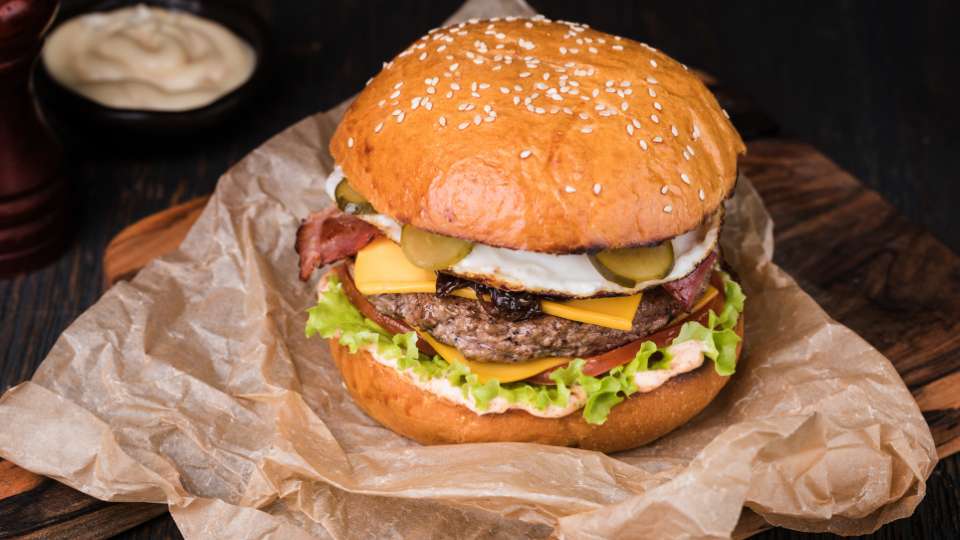
According to McDonald’s Korea’s official nutrition data, one Big Mac contains 505 kcal and 1,059mg of sodium, while a medium order of French fries adds 352 kcal and 181mg of sodium. Combined, a “Big Mac + medium fries” comes to roughly 857 kcal and 1,240mg of sodium. Mcdonalds
Chimaek Can Actually Have More Sodium
Half a fried chicken alone (about 1,300mg of sodium on average) already contains more sodium than a single Big Mac (1,059mg). If it’s seasoned chicken, half a chicken can exceed even the Big Mac + fries combo (1,240mg). That’s a very different picture from the assumption that “chimaek must be healthier than fast food.”
The Calories Don’t Hold Back Either
Calories tell a similar story. A full chimaek set (roughly 1,000–1,350 kcal) can come out higher than a Big Mac + fries combo (857 kcal). This comes down to the fat from deep-frying combined with the alcohol calories in beer — together, “fried food plus alcohol” adds up faster than you might expect, even when the portion size feels similar.
Brand Matters a Lot — Same Chicken, 2.6x More Sodium
Here’s an important point: not all fried chicken is created equal. In the Korea Consumer Agency’s study, sodium content for the same type of fried chicken varied by up to 2.6 times depending on the brand. That means the sodium content of “one chimaek set” can vary dramatically depending on which chicken brand you choose. The chicken you see in a K-drama isn’t necessarily the same as the chicken on your table.
So, Should You Avoid Chimaek Altogether?
None of this data means “never eat chimaek.” Enjoying it once during a trip to Korea is perfectly fine. But as covered in our previous article, more than one in three Korean adults is now classified as obese, and nearly half the population eats a late-night snack at least once a week. When chimaek becomes a daily habit, it’s far from a “light” choice — for either sodium or calories.
If you want to see exactly where you stand, try logging today’s chimaek set into a calorie and sodium tracker app. Seeing the actual numbers tends to reveal just how vague the assumption “this should be fine” really was. Simply comparing brands and choosing one with lower sodium, or ordering 3–4 pieces instead of a half chicken, can meaningfully cut your sodium intake for that meal. One small choice like that can be the first step toward changing the whole pattern.