
Seoul Cafe – The First Thing Visitors Notice About Seoul Is the Cafes. They’re on every corner. In basements. On rooftops. Down alleys that don’t appear on maps. And they’re full — not with people grabbing a coffee and leaving, but with people who have settled in for hours.
Most visitors assume this is just a coffee boom, the kind that hits every major city eventually. It isn’t. In Seoul, cafes function as infrastructure. They’re where students study until midnight, where freelancers run their workdays, where friends meet because apartments are too small to host anyone. Understanding that changes how you experience the city entirely.
The Numbers Behind Seoul’s Cafe Obsession
This guide covers why Korean cafe culture works the way it does, what to order when you sit down, which neighborhoods are worth exploring on foot, and how to plan a day around cafes without wasting time or money.
Korea coffee culture can be summed up in one number: 405. That is how many cups the average Korean adult drinks every year — more than one per day, every single day. The global average is 152 cups. South Korea consumes nearly three times as much coffee as the rest of the world, putting it at number two globally according to Euromonitor, trailing only France.
The consumption figure alone does not explain what you see on the ground. As of early 2025, South Korea had roughly 95,000 coffee shops across a country smaller than Kentucky. There are more cafes in Korea than convenience stores — and Korea already has one of the densest convenience store networks on the planet.
In Seoul specifically, there are 24,295 registered cafes, including 6,184 franchise locations. The rest are independently operated — which is part of why the variety is so high.
The South Korea coffee market was valued at USD 13.67 billion in 2025 and is projected to grow at a compound annual rate of 9.70% through 2035, reaching an estimated USD 34.50 billion.
This is not a trend. It is a mature, deeply embedded industry — and Seoul is its center.
Why Koreans Spend Hours in Cafes
The explanation lies in what urban researchers call the third space.
Seoul has around 90,000 cafes because Korean culture uses them as essential third spaces — places to study, meet friends, conduct business, and spend hours without pressure to leave quickly. Small apartment sizes, competitive student study culture, and a strong aesthetic and social media culture all drive constant demand for new cafe concepts.
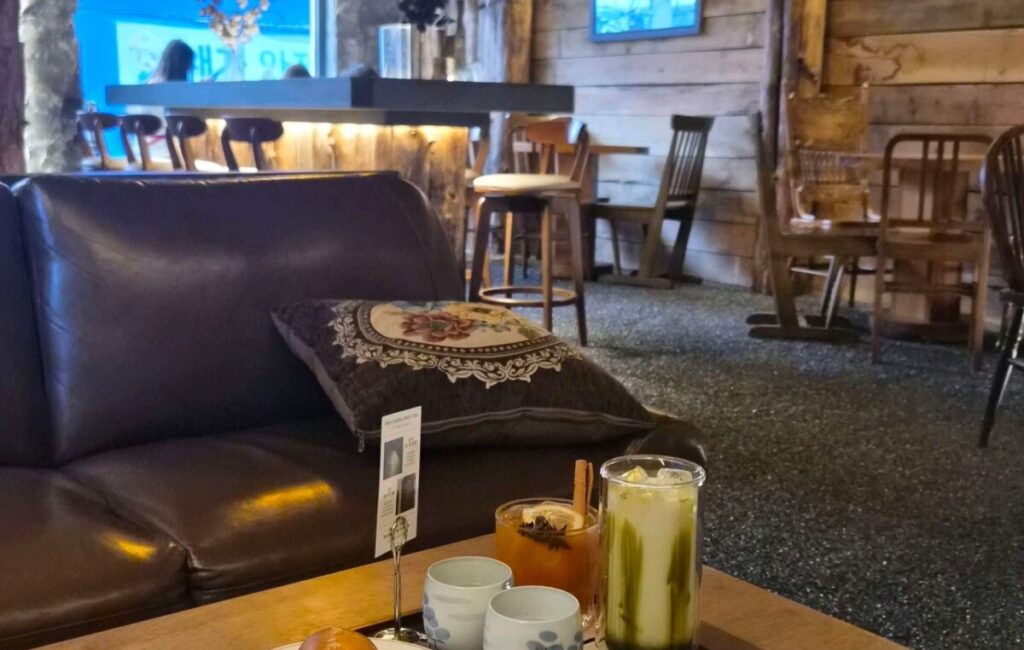
Unlike many Western countries where coffee shops are primarily morning pit stops, Korean cafes are extensions of living rooms in a city where apartments are small and personal space is at a premium. Most Seoul cafes do not open until 10 or 11 AM and stay open late into the evening — some until midnight or beyond. The vibe shifts throughout the day: quiet morning studiers give way to afternoon socializers and evening couples. Many cafes have designated study zones with power outlets and no-talking rules alongside social areas buzzing with conversation.
The Korean cafe industry in 2026 is defined by the keyword B.E.Y.O.N.D — Better Community, Everyday Wellness, Your Moment, Original Local, Nature Forward, and Digital Transformation. Cafes are evolving from simple consumption spaces into community hubs, wellness destinations, and cultural platforms where design, technology, and human connection converge.
For visitors, this means one practical thing: you are never in the way by staying a long time. Sitting for two or three hours with a single drink is normal. Nobody will rush you.
5 Types of Cafes You Will Find in Seoul
Specialty Coffee Cafes
Seoul’s specialty coffee scene is competitive at a world level. What makes neighborhoods like Mangwon-dong different from better-known cafe districts like Seongsu or Yeonnam is the local, residential feel — these cafes serve the people who actually live there, which tends to produce higher standards and lower prices than purely tourist-facing spots.
Converted warehouse cafes in Seongsu-dong, gallery-cafes in Hannam-dong, and small roasteries in Mangwon-dong all operate with single-origin beans and precise extraction methods. A standard Americano at this level runs between 4,000 and 6,000 won.
Concept and Themed Cafes
Themed cafes sit at the extreme end of the spectrum. Where most cafes compete on minimalism or artisanal sourcing, themed cafes compete on how deeply they can pull you into a fictional or fantastical world. The density of these spaces in neighborhoods like Hongdae and Yeonnam-dong is not accidental — these areas attract young Seoulites and international visitors who want novelty, photo opportunities, and shareable experiences.
Korea may be the world capital of themed cafes. There are character cafes built around webtoons and animation, board game cafes, study cafes that charge by the hour, raccoon and meerkat cafes, sheep cafes, and even a corgi cafe near Sookmyung Women’s University.
In a 2023 sample, 38% of cafe customers cited social media visibility or Instagram appeal as a reason to visit — which explains why new concept cafes continue to open at the rate they do.
Hanok Cafes
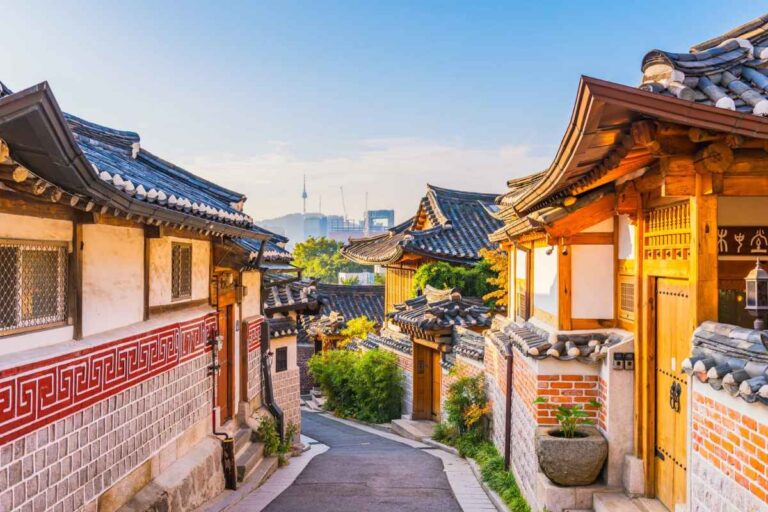
Ikseon-dong turns Seoul’s oldest urban hanok village, built in the 1920s, into a maze of traditional Korean houses serving espresso and bingsu. The contrast of old architecture and modern cafe culture is photogenic in a way that is specific to Seoul.
Tteuran in Ikseon-dong occupies an 80-year-old hanok and specializes in persimmon-leaf tea and bamboo-leaf bingsu. Coffee Hanyakbang in Insadong offers a creative fusion of traditional Korean herbal medicine and modern cafe culture, with a menu featuring jujube lattes, ssanghwa tea blends, and ginseng-infused drinks — traditional medicinal ingredients reimagined as cafe beverages.
If you are spending time around Gyeongbokgung Palace or Bukchon Hanok Village, a hanok cafe is a natural addition to the route. Arrive before 10 AM or after 5:30 PM to avoid the busiest tour group window.
Dessert Cafes
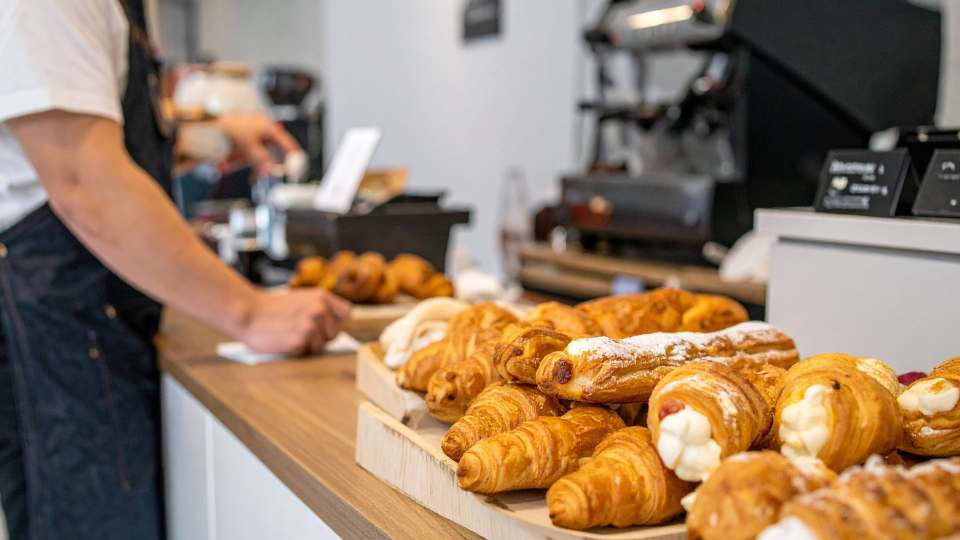
The concept of going to a cafe specifically for dessert — with coffee as secondary — is completely normal in Korea. Korean dessert cafes take this seriously: bingsu shops offer shaved ice with toppings ranging from 10,000 to 22,000 won for elaborate constructions with red bean, mango, strawberry, or matcha; tteok cafes serve traditional rice-based sweets in modern plating; and the croissant-waffle hybrid croffle had its moment and stuck.
Cafe Bora’s purple taro latte and desserts have become an Instagram institution with consistent queues. Expect to wait on weekends.
Study Cafes
Study cafes operate on a subscription-based model — you pay by the hour, usually 1,500 to 2,500 won per hour, for a seat in a library-quiet environment. Phone calls are not permitted. Each seat typically has a power outlet and a dedicated lamp. These cafes are primarily used by locals, but they are a practical option for travelers who need several hours of uninterrupted laptop work without spending on multiple drinks.
What to Order — Korean Cafe Drinks Explained
Dalgona: The whipped coffee foam that went viral globally originated from Korean street stalls and has become a permanent cafe fixture. Sugar, instant coffee, and hot water are whipped until foamy and spooned over cold or hot milk. Most cafes serve a refined version of the original.
Einspanner: Espresso topped with a thick layer of lightly salted whipped cream. The drink has Austrian origins but developed independently within Korean cafe culture. The contrast between the cream’s mild saltiness and the espresso bitterness is the point.
Goguma Latte (Sweet Potato Latte): A sweet, earthy drink made from sweet potato puree. A good first choice for travelers who do not drink coffee — available at most independent cafes.
Bingsu: Bingsu starts with finely shaved milk ice — not regular ice. The texture is more like fresh snow. Classic patbingsu comes with sweetened red bean paste, rice cakes, and condensed milk. Modern variations include mango, matcha, and injeolmi (roasted soybean powder) toppings. Prices range from 10,000 to 22,000 won for elaborate versions.
Seasonal menus are a strong feature of Seoul cafe culture. Spring brings strawberry lattes and cherry blossom-themed drinks. Summer is dominated by iced Americano and bingsu. Autumn introduces sweet potato lattes, persimmon drinks, and warm grain-based beverages. Winter brings hotteok lattes, citron tea, and rich chocolate drinks.
Many cafes also have strong non-coffee options: matcha lattes, hojicha lattes, yuzu tea, and traditional rice drinks are common.
Neighborhood Guide — Where to Go Cafe Hopping
Seongsu-dong
The fastest-growing cafe district in Seoul. Former shoe factories and printing warehouses along the red-brick streets have been converted into specialty roasteries and concept cafes. The neighborhood combines cafe hopping naturally with pop-up store culture and K-beauty flagships — a full day is easy to fill here. Accessible via Line 2, Seongsu Station.
Ikseon-dong
Seoul’s oldest urban hanok village, now reimagined as a trendy cafe and restaurant district. Sip specialty coffee in a traditional Korean house. The contrast of old architecture and modern cafe culture is deeply photogenic. Narrow alleys reward slow exploration. Best visited on weekday mornings before tour groups arrive.
Yeonnam-dong
Next to Hongdae, Yeonnam-dong is the small-cafe specialist. Old two-story houses along the Gyeongui Line Forest Park have been converted into one-of-a-kind shops, often with the owner living upstairs. Strong brunch culture on weekends. Lower prices than Gangnam or Hannam. Good for a full afternoon of walking and cafe stops.
Mangwon-dong
Mangwon-dong is still a neighborhood that happens to have excellent coffee, rather than a coffee destination that has forgotten it is a neighborhood. The cafes serve the people who actually live here, which tends to produce higher standards and lower prices than purely tourist-facing spots. Quieter than Seongsu or Yeonnam, and genuinely local in character. Line 6, Mangwon Station, Exit 1.
Hannam-dong
Hannam-dong, perched on the slope between Itaewon and the Han River, has emerged as one of Seoul’s premium cafe zones. Independent flagship cafes — many run by baristas with international competition backgrounds — are spread across the hillside streets. The area also has a high concentration of gallery-cafe hybrids where you are drinking coffee in what functions as an art space. More spread out than Ikseon-dong, so it rewards wandering rather than a tight route.
Price Guide
| Cafe Type | Americano | Signature Drink | Dessert |
|---|---|---|---|
| Budget chains (Mega Coffee, Compose) | ₩1,500–₩2,000 (~$1.10–$1.50) | ₩2,500–₩3,500 | — |
| Standard independent cafe | ₩4,000–₩5,500 (~$3–$4.20) | ₩6,000–₩8,000 | ₩6,000–₩12,000 |
| Specialty coffee roastery | ₩5,000–₩7,000 (~$3.80–$5.30) | ₩8,000–₩12,000 | ₩8,000–₩15,000 |
| Premium concept cafe | — | ₩10,000–₩18,000 | ₩15,000–₩22,000 |
A few practical notes. Free Wi-Fi is almost standard in Seoul cafes — check the walls or ask at the counter for the password. There is no tipping culture. Most cafes operate on a counter-order system: place your order, pay, take a number, and your drinks are brought to you. Nobody will ask you to leave or offer a pointed look after an hour. Staying is expected.
A City That Runs on Cafes
Seoul gives you too many options and that, in the end, is the point.
A specialty roaster in a converted Seongsu-dong warehouse. An 80-year-old hanok in Ikseon-dong serving jujube lattes. A tiny owner-operated space in a Yeonnam-dong alley where the person making your coffee lives one floor above. These are not tourist attractions in the traditional sense — they are the texture of the city itself.
Build unscheduled time into your Seoul itinerary and let the cafes fill it. You will almost never need to plan more than a minute ahead. Walk until something looks interesting, go in, and stay as long as you like. That is exactly what everyone else is doing.
If you want a more structured introduction, cafe hopping tours are bookable through Klook and GetYourGuide, pairing local guides with neighborhood walks across Seongsu-dong, Ikseon-dong, and Yeonnam-dong. For a first visit where the goal is to understand the culture rather than just find a good cup, a guided tour covers more ground more efficiently than going alone.