That Photo You’ve Seen a Hundred Times? You Could Be Fined for Recreating It Now
Bukchon Hanok Village is still one of the most searched photo destinations in Seoul. But the way this neighborhood operates has changed significantly in the past two years. Some alleys are only accessible during specific hours, and overstaying can result in a fine. Chartered tour buses now face restrictions too. A lot of travel content online hasn’t caught up with these changes.
This guide covers what actually applies in Bukchon as of 2026 — and how to enjoy the neighborhood properly within those rules. If you’d rather not get stopped by a warden mid-photo, read this before you go.
What Bukchon Hanok Village Actually Is
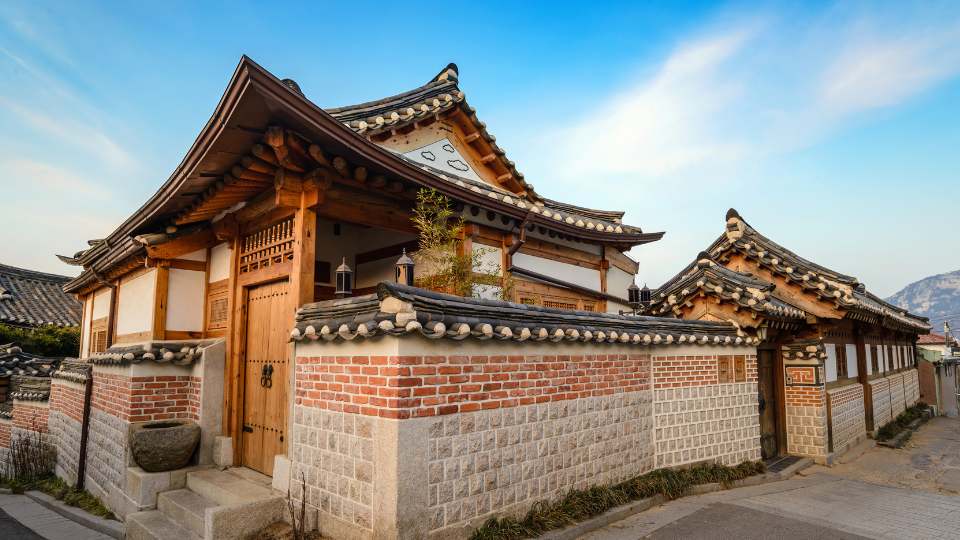
Located between Gyeongbok Palace and Changdeokgung Palace, the two main royal palaces of the Joseon Dynasty, Bukchon has served as the traditional heart of Seoul for over 600 years. During the Joseon era, the area was a residential district for aristocrats and high-ranking government officials, who chose it for its location on the southern slopes of Mount Bugak — a spot traditionally believed to bring prosperity. A family register from 1906 recorded that 43.6% of the area’s population belonged to this elite class.
While Seoul’s rapid 20th-century modernization led to the loss of many traditional structures elsewhere, Bukchon preserved its identity through the efforts of both residents and the city government. Today it remains one of the few places where visitors can walk through a dense neighborhood of traditional Korean houses. About 900 hanok remain, and many are still private homes.
This is exactly why the new 2026 rules exist. Bukchon is someone’s home before it’s a tourist attraction.
The Rules You Need to Know in 2026
Curfew Hours — 5 PM to 10 AM
The central area where most tourists gather is designated as a “Special Management Area” — informally called the Red Zone — and tourist access is strictly limited to 10:00 AM to 5:00 PM. If you remain in this area after 5 PM, or enter during restricted hours, you face a fine of 100,000 won. Local guides known as “Bukchon Guardians” patrol the area as 5 PM approaches and will ask visitors to leave.
The main streets with cafes, shops, and restaurants are exempt from this time limit. The restriction specifically applies to the residential hanok alleys, such as Bukchon-ro 11-gil — plan your schedule to exit those areas by 5 PM.
Silent Tourism — Keep Your Voice Down
The most famous street, Bukchon-ro 11-gil, is a strictly monitored quiet zone. Sound travels easily through the thin walls of traditional houses, and shouting or playing loud music is strictly prohibited. Staff members hold signs reading “Quiet Please,” and visitors are asked to lower their voices especially while taking photos or filming.
Group Size and Filming Restrictions
Official guidance limits group visits to a maximum of 10 visitors. Microphones, megaphones, and loudspeakers are not permitted, and visitors are asked not to photograph or film the interiors of houses, even when doors are open.
Chartered Bus Restrictions — In Effect Since January 2026
Seoul began enforcing a chartered bus restriction in parts of Bukchon starting January 1, 2026, with fines starting at 300,000 won for violations.
Sunday Rest Day
On Sundays, certain zones operate under a “rest day” policy, giving residents a break from visitor traffic. It’s worth checking whether your planned route falls within one of these zones before you go.
Where to Go to Avoid the Crowds
The rules sound restrictive, but in practice you still get a seven-hour window — 10 AM to 5 PM — to explore. The real issue is that within those hours, some parts of Bukchon are packed while others are nearly empty.
Bukchon-ro 11-gil, the most photographed alley, is busy almost constantly. But that’s a small fraction of the neighborhood.
The west side of Bukchon is more residential, with the same hanok beauty and almost no crowds. Small private museums showcasing traditional crafts and embroidery sit in alleys that barely see any tourists. Where Bukchon meets Samcheong-dong, there are cafes inside hanok buildings — actual places to sit and rest.
Visiting right after opening, before the famous alleys fill up, gives you a completely different experience — most tour groups don’t arrive until around 11 AM. Seoul
Hanbok Rental — How to Actually Use It
Hanbok rental shops cluster near Anguk Station, with prices around 15,000–30,000 won for two hours.
Here’s the practical advice that matters: don’t rent hanbok specifically for Bukchon. Bukchon has too many hills and steep alleys to walk comfortably in hanbok for long.
Instead, build hanbok rental into a Gyeongbokgung Palace visit and route from there into Bukchon. Wearing hanbok gets you free palace entry, and a short walk through Bukchon afterward is far more comfortable than trying to navigate the hills in traditional clothing for hours.
A Practical Half-Day Route
9:30 AM — Start at Anguk Station, Exit 3. Rent hanbok if you want it.
10:00–11:00 AM — Tour Gyeongbokgung Palace (free entry in hanbok).
11:00–11:30 AM — Walk from Gyeongbokgung to Bukchon.
11:30 AM–1:00 PM — Walk Bukchon’s main alleys before the midday crowds peak.
1:00–2:00 PM — Rest at a hanok cafe near the Samcheong-dong border.
2:00–3:00 PM — Explore the quieter alleys of Gahoe-dong and Gye-dong, including small craft workshops.
Before 3:00 PM — Exit the Red Zone area, well ahead of the 5 PM cutoff.
Pre-Visit Checklist
| Item | Details |
|---|---|
| Red Zone visiting hours | 10:00 AM – 5:00 PM |
| Fine for overstaying | ₩100,000 |
| Chartered bus violation fine (since Jan 2026) | ₩300,000 |
| Maximum group size | 10 people |
| Information center hours | 9:00 AM – 6:00 PM, closed Sundays |
| Information center location | 37, Gyedong-gil, Jongno-gu, near Anguk Station Exit 2 |
| Hanbok rental cost | ₩15,000–₩30,000 for 2 hours |
The Bukchon Village Information Center offers services in English, Chinese, and Japanese. Stopping in before you start walking is worth the few minutes — staff can tell you which alleys are currently restricted.
More Than a Photo
What makes Bukchon worth visiting isn’t a single photo for Instagram. It’s the fact that this neighborhood has been someone’s home for 600 years — and still is.
The 5 PM curfew, the fines, and the silent tourism rules all carry one underlying message: people live here.
Visited within the rules, Bukchon remains one of the most beautiful walks in Seoul. Pair it with a hanbok visit to Gyeongbokgung in the morning, and plan to be out of the residential alleys with room to spare before 5 PM. That’s how Bukchon works in 2026.
Before you go, check the Bukchon Village Information Center’s current notices or the official Visit Seoul page. The rules are still being adjusted, and the zones can shift.